This page contains promotions (affiliate links) (Editorial & ad policy)
Nara itinerary: 5 ways to spend 2 days, with where to stay on each
Approximate, at the rate on 2026-10-02. You pay in yen.
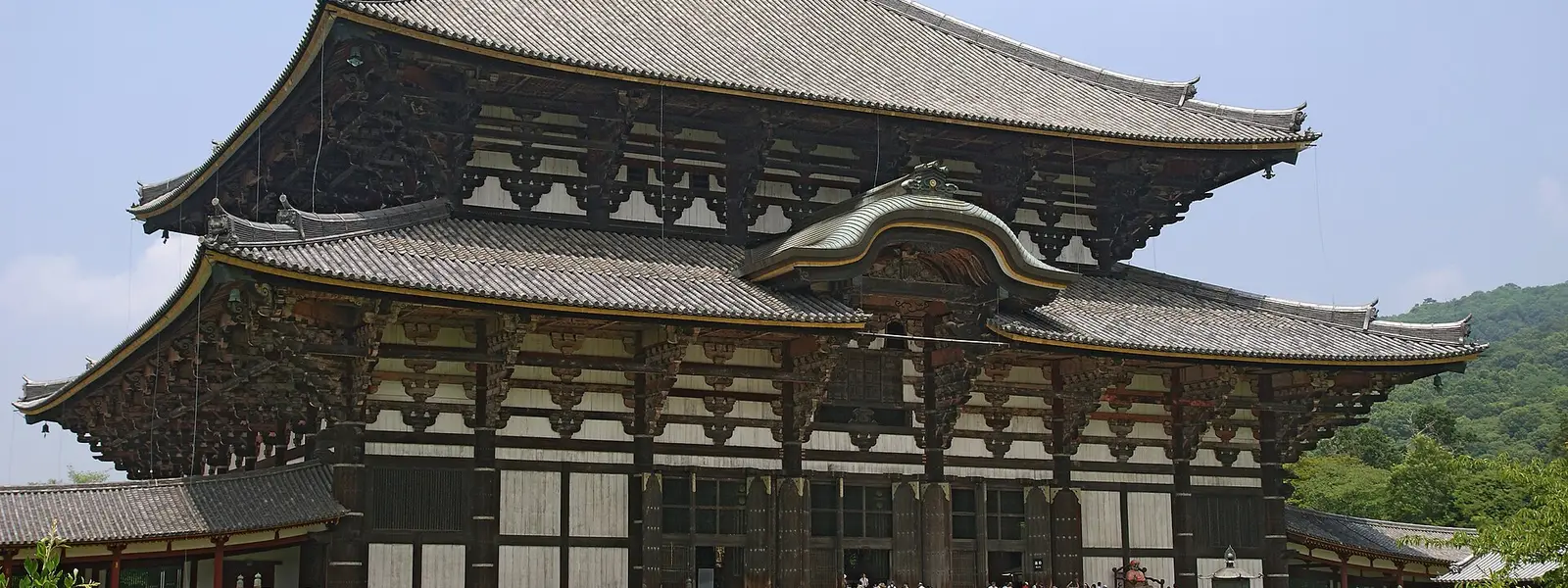
The deer of Nara Park, the Great Buddha of Todai-ji, Horyu-ji, the ancient tombs of Asuka. Most people do Nara as a day trip from Kyoto or Osaka, but the temples close around five, and Horyu-ji and Asuka sit a train and bus ride away from the park, so a single day covers less than you would think. And if you stay the night, you surely want to walk a temple approach in the quiet morning with the deer for company. So we built five itineraries by area and purpose, each with two hotels placed right on the route.
At a glance
- Five ways to spend two days in Nara: A for a first visit or with kids (Nara Park’s deer, Todai-ji, Kofuku-ji, Kasuga Taisha), B for couples (Naramachi, Ukimi-do, Shin-Yakushi-ji), C for the World Heritage temples (Yakushi-ji, Toshodai-ji, Horyu-ji), D for the tombs and temples of Asuka, E for the Yamanobe trail and Hase-dera
- Two hotels per plan (ten in all) from our scored fives, each within about 450 m in a straight line of where day 1 ends or day 2 begins
- The Great Buddha Hall is ¥800 for adults and Horyu-ji ¥2,000 (cash only at both). The Nara Park temples are a walk from Kintetsu-Nara Station; Asuka is covered on the Akakame loop bus with a one-day pass (¥750)
Pick your two days: five different routes
Each comes with two inns right on the route
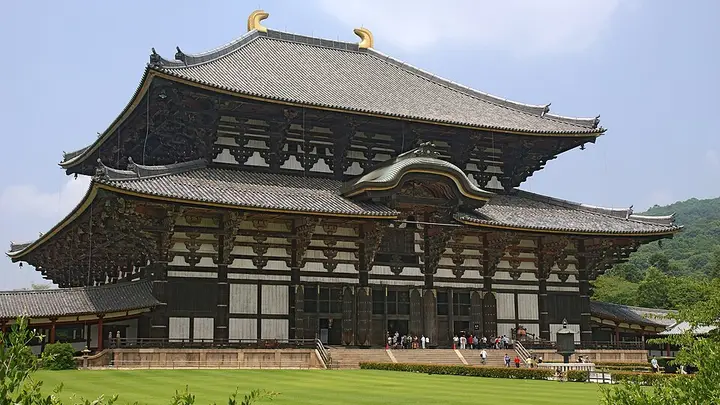 Plan A
the classic – the deer of Nara Park, Todai-ji, Kofuku-ji and Kasuga Taisha on foot
Good forFirst visit, families with children, anyone travelling by train and on foot
Besides the innabout ¥5,600–6,600 + travel there and back
Kintetsu-Nara Sta. → Nara Park (deer) → Todai-ji Great Buddha Hall → Nigatsu-do → Kofuku-ji → (night) → Kasuga Taisha → Kintetsu-Nara Sta.
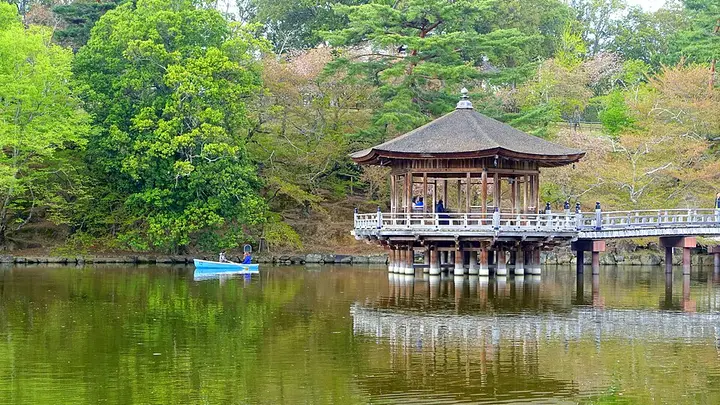 Plan B
for couples – Naramachi and Ukimi-do, staying in Takabatake
Good forCouples, friends travelling together, anyone who wants to stroll old streets slowly
Besides the innabout ¥4,800–5,800 + bus fare and travel there and back
Kintetsu-Nara Sta. → Sarusawa Pond → Naramachi → Gango-ji → Ukimi-do → (night, Takabatake) → Shin-Yakushi-ji → Shiga Naoya’s former house → (bus) Kintetsu-Nara Sta.
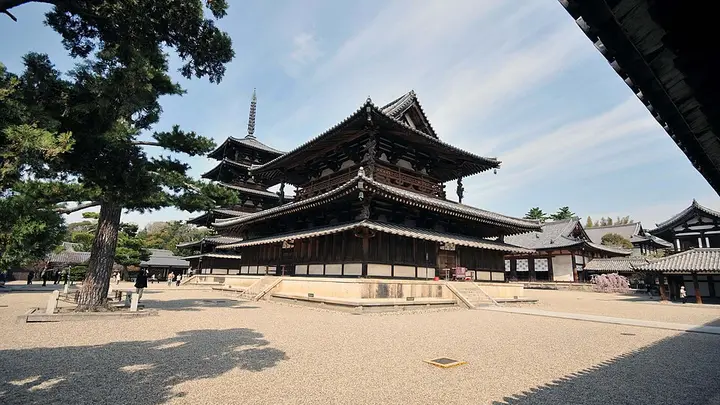 Plan C
the World Heritage temples – Yakushi-ji, Toshodai-ji and Horyu-ji
Good forAnyone who wants time with temples and Buddhist statues, or a second visit to Nara
Besides the innabout ¥7,000–8,000 + Kintetsu and JR fares and travel there and back
Nishinokyo Sta. → Yakushi-ji → Toshodai-ji → (Kintetsu) Kintetsu-Nara Sta. → (night, JR Nara Sta.) → (JR) Horyu-ji → JR Horyuji Sta.
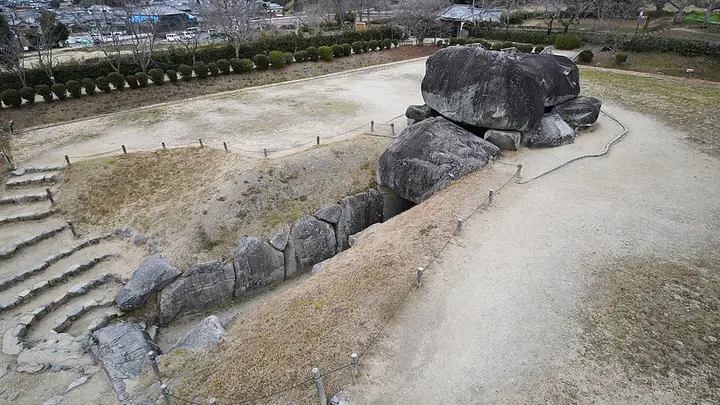 Plan D
Asuka village by the Akakame loop bus – Ishibutai tomb and Asuka-dera, staying in Kashihara
Good forHistory lovers, and anyone who wants to see Asuka village without a car
Besides the innabout ¥4,750–5,750 + Kintetsu fare and travel there and back
Kashiharajingu-mae Sta. → (Akakame bus) Ishibutai tomb → Asuka-dera → Amakashi Hill → (Akakame) Kashiharajingu-mae Sta. → (night) → Kashihara Jingu → (Kintetsu) Imai-cho → Yamato-Yagi Sta.
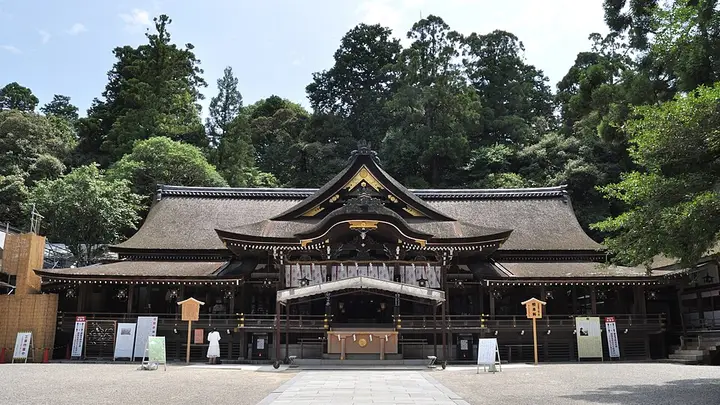 Plan E
Omiwa Shrine and the Yamanobe-no-michi trail, a night in Miwa or Sakurai, then Hase-dera
Good forWalkers, solo travellers, anyone after quieter old shrines and temples
Besides the innabout ¥3,500–4,500 + JR and Kintetsu fares and travel there and back
JR Miwa Sta. → Omiwa Shrine → Sai Shrine → (Yamanobe-no-michi) Hibara Shrine → Miwa (night, Miwa or Sakurai) → (Kintetsu) Hasedera Sta. → Hase-dera → Hasedera Sta.
Photos:663highland(CC BY 2.5) / Daderot(CC0) / Reggaeman(CC BY-SA 3.0) / Saigen Jiro(CC0) / Ocdp(CC0)・Wikimedia Commons
Getting there: Kintetsu-Nara Station is about 40 minutes from Osaka-Namba and 50 from Kyoto (Todai-ji). Nishinokyo Station, for Yakushi-ji, is about 40 minutes from Kyoto or Osaka-Namba with a change at Yamato-Saidaiji (Yakushi-ji). Horyu-ji is about 20 minutes on foot from JR Horyuji Station, Asuka is reached on the Akakame loop bus from Kashiharajingu-mae Station, and Hase-dera is 15 minutes on foot from Kintetsu Hasedera Station (the temples and Asuka village).
The plans in detail
Plan Athe classic – the deer of Nara Park, Todai-ji, Kofuku-ji and Kasuga Taisha on foot
Good for: First visit, families with children, anyone travelling by train and on foot
Day 1
- 110:00 Arrive at Kintetsu-Nara Station, about 40 minutes from Osaka-Namba or 50 from Kyoto ↗
↓ Getting there: east along Nobori-oji; about 20 minutes on foot to Todai-ji, entering Nara Park on the way - 210:20 Meet the deer in Nara Park. Deer crackers are ¥200 for a bundle of 10; feed them nothing else. The deer are wild animals and a national natural monument, so hand the crackers over one at a time without teasing ↗
- 310:45 Visit the Great Buddha Hall of Todai-ji: 8:00–17:00 from November to March, 7:30–17:30 from April to October, open every day. ¥800 for adults, ¥400 for primary-school children, cash only ↗
↓ Getting there: up the slope east of the hall to Nigatsu-do - 411:45 Visit Nigatsu-do, a National Treasure, open around the clock. Walk back down for lunch ↗
↓ Getting there: west through Nara Park to Kofuku-ji, about 1.3 km in a straight line - 514:30 See the temple’s Buddhist statues in the National Treasure Museum of Kofuku-ji: 9:00–17:00 (last entry 16:45), open every day. ¥900 for adults, ¥800 for junior-high and high-school students, ¥500 for primary-school children, cash only ↗
↓ Getting there: to the hotel: Kasuga Hotel is about 250 m from Kofuku-ji in a straight line, Iroha Grand Hotel about 420 m - Inn16:00 Check in near Kintetsu-Nara Station
Day 2
- 69:00 Check out and visit Kasuga Taisha: open 6:30–17:30 from March to October, 7:00–17:00 from November to February. The special visit to the main sanctuary (9:00–16:00, ¥700) takes you along corridors hung with lanterns to pray before the inner gate. The shrine holds some 3,000 lanterns donated since the Heian period ↗
↓ Getting there: walk west along the main approach to Kintetsu-Nara Station (the Nara Kotsu bus between Nara Station and Kasuga Taisha Honden takes about 11–15 minutes, + bus fare) - 711:30 Lunch near Kintetsu-Nara Station and head home ↗
Budget besides the inn (per adult): about ¥5,600–6,600 + travel there and back
Todai-ji Great Buddha Hall ¥800 + Kofuku-ji National Treasure Museum ¥900 + Kasuga Taisha special visit ¥700 + deer crackers ¥200 + two lunches ¥3,000–4,000
Tickets and transport: The Great Buddha Hall of Todai-ji is ¥800 for adults and ¥400 for primary-school children; Kofuku-ji’s National Treasure Museum ¥900 and ¥500 (cash only at both). Kasuga Taisha is free up to the worship hall; the special visit inside the corridors is ¥700. Deer crackers cost ¥200 for 10. Everything is on foot
Where to stay: two picks
Kasuga Hotel 73/100 in our scoring
About 250 m in a straight line from Kofuku-ji and 330 m from Kintetsu-Nara Station, a short walk from where day 1 ends. A ryokan whose building echoes the log-cabin style of the Shosoin storehouse, with a large bath and a garden open-air bath. Last check-in 19:00, check-out 10:00
Iroha Grand Hotel Kintetsu Nara Ekimae 75/100 in our scoring
About 260 m in a straight line from Kintetsu-Nara Station and 420 m from Kofuku-ji: 2 minutes on foot from exit 4, handy for the train home on day 2. Breakfast buffet with over 60 Japanese and Western dishes. No large bath. Luggage held before check-in and after check-out. Check-out 11:00
More places to stay for this plan
Plan Bfor couples – Naramachi and Ukimi-do, staying in Takabatake
Good for: Couples, friends travelling together, anyone who wants to stroll old streets slowly
Day 1
- 111:00 Arrive at Kintetsu-Nara Station and walk past Sarusawa Pond into Naramachi; Gango-ji is 15 minutes on foot from the station ↗
↓ Getting there: lunch in the lanes of Naramachi - 211:20 From Sarusawa Pond, head south into the townhouse lanes of Naramachi ↗
- 313:30 Visit Gango-ji: 9:00–17:00 (last entry 16:30), ¥700 (¥800 during the autumn special exhibition). Its Gokuraku-do and Zenshitsu halls, both National Treasures, are part of the World Heritage Site of ancient Nara. The temple was moved here from Asuka-dera, Japan’s first full temple complex, when the capital moved to Nara, and Naramachi’s street names still recall it ↗
↓ Getting there: to Sagi Pond in Nara Park; Ukimi-do is about 730 m away in a straight line - 415:30 Walk out to Ukimi-do, a hexagonal pavilion with a cypress-bark roof standing in Sagi Pond, and stroll around the water ↗
↓ Getting there: to the hotel: Nara Hotel is about 450 m from Ukimi-do in a straight line, SETRE Naramachi about 600 m - Inn16:30 Check in at your hotel in Takabatake; dinner in the hotel restaurant
Day 2
- 59:00 Check out and visit Shin-Yakushi-ji: 9:00–17:00, no closing days, ¥600. The main hall dates from the temple’s founding in the Nara period; inside, the Healing Buddha is ringed on a round earthen dais by the Twelve Heavenly Generals, the oldest and largest such set in Japan ↗
↓ Getting there: north through the quiet streets of Takabatake to Shiga Naoya’s former house, about 300 m in a straight line - 610:00 See the former house of the writer Shiga Naoya: 9:30–16:30 (last entry 16:00), closed 28 December to 5 January, ¥500. The glass-roofed sunroom where writers and painters gathered is still there ↗
↓ Getting there: city loop bus from the Wariishi-cho stop to Kintetsu-Nara or JR Nara Station (about 10 minutes, + bus fare) - 711:30 Lunch near Kintetsu-Nara Station and head home ↗
Budget besides the inn (per adult): about ¥4,800–5,800 + bus fare and travel there and back
Gango-ji ¥700 + Shin-Yakushi-ji ¥600 + Shiga Naoya’s former house ¥500 + two lunches ¥3,000–4,000
Tickets and transport: Gango-ji is ¥700 for adults (¥800 during the autumn special exhibition), Shin-Yakushi-ji ¥600, Shiga Naoya’s former house ¥500. The loop bus back costs extra
Where to stay: two picks
Nara Hotel 82/100 in our scoring
About 450 m in a straight line from Ukimi-do and 1.2 km from Shin-Yakushi-ji, so you can walk back from where day 1 ends. A classic hotel founded in 1909, with 114 rooms. About 15 minutes on foot from Kintetsu-Nara Station. Last check-in 23:00, check-out 11:00
SETRE Naramachi 70/100 in our scoring
About 410 m in a straight line from Gango-ji and 600 m from Ukimi-do, at the east edge of Naramachi, right by day 1’s lanes. A 32-room hotel built around a restaurant serving Nara produce; breakfast and dinner are both in the restaurant. No disposable toothbrushes and similar amenities. No parking. Check-out 11:00
More places to stay for this plan
Plan Cthe World Heritage temples – Yakushi-ji, Toshodai-ji and Horyu-ji
Good for: Anyone who wants time with temples and Buddhist statues, or a second visit to Nara
Day 1
- 110:00 Arrive at Nishinokyo Station on the Kintetsu line, about 40 minutes from Kyoto or Osaka-Namba with a change at Yamato-Saidaiji. Yakushi-ji is a minute’s walk away ↗
- 210:15 Visit Yakushi-ji: 9:00–17:00 (last entry 16:30), ¥1,000 for the Golden Hall, the Great Lecture Hall and the Toin-do ↗
↓ Getting there: walk north to Toshodai-ji, about 800 m in a straight line - 311:45 Visit Toshodai-ji: 8:30–17:00 (last entry 16:30), ¥1,000 for adults, ¥400 for junior-high and high-school students, ¥200 for primary-school children. Lunch nearby afterwards ↗
↓ Getting there: Kintetsu from Nishinokyo, changing at Yamato-Saidaiji, to Kintetsu-Nara, then walk to the hotel on the JR Nara side (+ fare) - Inn15:30 Check in by JR Nara Station
Day 2
- 49:00 Check out and take the JR Yamatoji Line from JR Nara to Horyuji Station ↗
↓ Getting there: about 20 minutes on foot from Horyuji Station, or the bus bound for Horyuji Sando to its last stop (+ bus fare) - 510:00 Visit Horyu-ji: 8:00–17:00 from 22 February to 3 November, 8:00–16:30 from 4 November to 21 February (last entry 30 minutes before). ¥2,000 for adults, ¥1,700 for junior-high students, ¥1,000 for primary-school children, covering the western precinct, the Daihozoin treasure hall and the eastern precinct. The western precinct is known as the oldest group of wooden buildings in the world ↗
↓ Getting there: lunch along the approach, then back to Horyuji Station - 613:30 Head home from JR Horyuji Station towards Osaka or Nara ↗
Budget besides the inn (per adult): about ¥7,000–8,000 + Kintetsu and JR fares and travel there and back
Yakushi-ji ¥1,000 + Toshodai-ji ¥1,000 + Horyu-ji ¥2,000 + two lunches ¥3,000–4,000 (fares Nishinokyo–Kintetsu-Nara and JR Nara–Horyuji extra)
Tickets and transport: Yakushi-ji is ¥1,000 for adults, ¥600 for junior-high and high-school students, ¥200 for primary-school children; Toshodai-ji ¥1,000; Horyu-ji (one ticket for the western and eastern precincts and the treasure hall) ¥2,000 for adults and ¥1,000 for primary-school children, cash only. Kintetsu and JR fares extra
Where to stay: two picks
Onyado Nono Nara 80/100 in our scoring
About 190 m in a straight line from JR Nara Station, a minute from the east exit, so on day 2 you walk straight onto the train for Horyu-ji. About 10 minutes on foot from Kintetsu-Nara. Natural hot-spring baths with an open-air bath and sauna; breakfast includes tea rice porridge and persimmon-leaf sushi. No tattoos in the baths. Check-out 11:00
Super Hotel Premier JR Nara 74/100 in our scoring
About 70 m in a straight line from JR Nara Station and linked to it by a deck, so on day 2 you reach the train dry even in rain. Separate natural hot-spring baths for men and women (15:00–9:30) and a welcome bar with free drinks. The cheapest rooms have a single 140 cm bed. Luggage held on the day of stay only. Check-out 11:00
More places to stay for this plan
Plan DAsuka village by the Akakame loop bus – Ishibutai tomb and Asuka-dera, staying in Kashihara
Good for: History lovers, and anyone who wants to see Asuka village without a car
Day 1
- 110:00 Arrive at Kashiharajingu-mae Station on the Kintetsu line and buy the Asuka loop-bus one-day pass (¥750); paper passes are sold at the central gate and the tourist information centre in the station. Board the Akakame loop bus at the east exit ↗
↓ Getting there: get off at the Ishibutai stop and walk 3 minutes - 210:30 See the Ishibutai tomb: 9:00–17:00 (last entry 16:45), open every day, ¥500. Said to be the grave of Soga no Umako, it is one of Japan’s largest square tombs, built from some 30 stones weighing about 2,300 tonnes in all. Lunch nearby ↗
↓ Getting there: Akakame bus towards Asuka-dera, about 1.4 km from Ishibutai in a straight line - 313:30 Visit Asuka-dera: 9:00–17:00 from October to March, 9:00–17:30 from April to September, open every day, ¥500. Built by Soga no Umako, it is Japan’s oldest full-scale temple, and the Asuka Great Buddha still sits where it was first placed ↗
↓ Getting there: walk west to Amakashi Hill, about 800 m in a straight line - 414:30 Climb Amakashi Hill (about 148 m) and look out from the summit platform over the three mountains of Yamato and the village. In the Asuka period the Soga leaders Emishi and Iruka are said to have lived here ↗
↓ Getting there: Akakame bus back to the east exit of Kashiharajingu-mae Station - Inn16:00 Check in at your hotel in Kashihara
Day 2
- 59:00 Check out and visit Kashihara Jingu, about 10 minutes on foot from the central exit of Kashiharajingu-mae Station. Open 6:30–17:00 in December and January, 6:30–17:30 in February, March, October and November, 6:00–18:00 in April and May ↗
↓ Getting there: Kintetsu Kashihara Line to Yagi-Nishiguchi, then about 5 minutes on foot to Imai-cho (+ fare) - 610:30 Walk the streets of Imai-cho, a preserved district about 600 m east to west and 310 m north to south with some 500 traditional buildings, the most of any such district in Japan. The lanes are narrow, so go on foot ↗
↓ Getting there: about 10 minutes on foot to Yamato-Yagi Station; lunch near the station - 713:00 Head home from Kintetsu Yamato-Yagi Station towards Osaka, Kyoto or Nagoya ↗
Budget besides the inn (per adult): about ¥4,750–5,750 + Kintetsu fare and travel there and back
Asuka loop-bus one-day pass ¥750 + Ishibutai ¥500 + Asuka-dera ¥500 + two lunches ¥3,000–4,000 (Kintetsu fare Kashiharajingu-mae–Yagi-Nishiguchi extra)
Tickets and transport: The Asuka loop-bus one-day pass is ¥750 for adults and ¥380 for children. Ishibutai tomb is ¥500 (¥200 for primary to high-school students), Asuka-dera ¥500 (¥250 for primary-school children). Kashihara Jingu and Imai-cho are free
Where to stay: two picks
Grand Mercure Nara Kashihara 65/100 in our scoring
About 120 m in a straight line from Kashiharajingu-mae Station and 690 m from Kashihara Jingu: a minute from the east exit, right where the Akakame bus drops you on day 1. A 209-room hotel with a hot-spring bath and sauna. For stays from 1 January 2027 the bathing tax is paid separately at the hotel. Check-out 11:00
Candeo Hotels Nara Kashihara 73/100 in our scoring
About 170 m in a straight line from Yamato-Yagi Station and 490 m from Imai-cho: 3 minutes from the station, so day 2’s Imai-cho is a walk away and you leave from the same station. Top-floor view bath with an open-air bath and sauna. All rooms non-smoking. Check-out 11:00
More places to stay for this plan
Plan EOmiwa Shrine and the Yamanobe-no-michi trail, a night in Miwa or Sakurai, then Hase-dera
Good for: Walkers, solo travellers, anyone after quieter old shrines and temples
Day 1
- 110:30 Arrive at Miwa Station on the JR Manyo-Mahoroba Line; Omiwa Shrine is about 5 minutes on foot ↗
- 210:45 Visit Omiwa Shrine. It has no main sanctuary: you pray from the worship hall straight to Mount Miwa behind it, a form older than shrine buildings, which is why it is called Japan’s oldest shrine ↗
↓ Getting there: about 15 minutes on foot to Sai Shrine - 311:30 Visit Sai Shrine, a subsidiary of Omiwa; you can take home water from its sacred medicine well ↗
↓ Getting there: north along the Yamanobe-no-michi to Hibara Shrine, about 25 minutes on foot - 412:30 Visit Hibara Shrine on the Yamanobe-no-michi; with neither main hall nor worship hall, you pray through its triple torii ↗
↓ Getting there: back the way you came to Miwa for lunch (30 minutes on foot from Hibara Shrine to JR Miwa Station) - Inn15:30 Check in at your inn in Miwa or Sakurai
Day 2
- 59:00 Check out and take the Kintetsu Osaka Line from Sakurai to Hasedera Station, where express trains stop ↗
↓ Getting there: 15 minutes on foot from Hasedera Station - 610:00 Visit Hase-dera: 8:30–17:00 from April to September, 9:00–17:00 in October, November and March, 9:00–16:30 from December to February, ¥500. Climb the 399 covered steps of the Noborio, first built in 1039, to the main hall, a National Treasure built out over the cliff on a timber frame ↗
↓ Getting there: lunch along the approach, then back to Hasedera Station - 713:00 Head home from Kintetsu Hasedera Station towards Osaka or Nagoya ↗
Budget besides the inn (per adult): about ¥3,500–4,500 + JR and Kintetsu fares and travel there and back
Hase-dera ¥500 + two lunches ¥3,000–4,000 (Kintetsu fare Sakurai–Hasedera extra)
Tickets and transport: Omiwa, Sai and Hibara shrines are free. Hase-dera is ¥500 for adults and secondary students, ¥250 for primary-school children. JR and Kintetsu fares extra
Where to stay: two picks
Machiya Guesthouse Miwa 86/100 in our scoring
About 300 m in a straight line from Miwa Station and 610 m from Omiwa Shrine, so you stay right where day 1’s walk ends. A 4-room townhouse with a cypress bath and rental bicycles. Rooms upstairs, toilet downstairs only. Doors close at 22:00; let them know if you will check in after 21:00
Kaikaro 91/100 in our scoring
About 120 m in a straight line from Sakurai Station, 1–2 minutes from the south exit of the JR and Kintetsu station, so on day 2 you step onto the Kintetsu train for Hase-dera. One JR stop from Miwa. A 7-room Japanese inn with a private family bath; meals in a dining room. No credit cards. On dinner plans, check in so you can be seated by 19:00
More places to stay for this plan
All our Nara fives
- Where to stay in Nara: 5 hotels within walking distance of the deer
- Hotels near Nara Station: 5 picked from 164
- Asuka and Kashihara, Nara: 5 places to stay, picked from 94
About this page
Travel times, prices and opening hours come from the official pages of each sight, the local tourist association and the transport operators (checked 2026-11-21). The inns are taken from our own scored fives (reviews, price and facilities across five criteria), two per plan, chosen because they sit on that plan’s route. Times and prices change, so check the official pages before you go.
Questions visitors ask
How much of Nara can you see in two days?
Todai-ji, Kofuku-ji and Kasuga Taisha in Nara Park fit into one day on foot (plan A). Horyu-ji and Nishinokyo (C), Asuka (D) and the Yamanobe trail with Hase-dera (E) are a train ride from the park, so one night lets you add one of these areas. The Great Buddha Hall closes at 17:00 from November to March, and Horyu-ji at 16:30 from 4 November to 21 February.
Can you get around Nara without a car?
All five plans work by train, bus and on foot. The Nara Park temples are a walk from Kintetsu-Nara Station, about 20 minutes to Todai-ji. In Asuka, the Akakame loop bus runs from Kashiharajingu-mae Station; the one-day pass is ¥750 for adults, the two-day pass ¥1,100. Imai-cho’s lanes are very narrow, and Kashihara city asks visitors to park outside the district and walk.
Which plan suits families with children?
Plan A. Children can feed the deer in Nara Park (crackers ¥200 for 10), and the Great Buddha Hall is ¥400 for primary-school children. The Nara City Tourism Association advises small children to feed the deer together with a parent and to touch them as little as possible. Everything is on foot, and both hotels are near Kintetsu-Nara Station.
What should you do in winter or on a rainy day?
In winter, closing times come earlier: the Great Buddha Hall opens 8:00–17:00 from November to March, Kasuga Taisha 7:00–17:00 from November to February, Hase-dera 9:00–16:30 from December to February. On a rainy day, plan A suits best, with the Great Buddha Hall and Kofuku-ji’s National Treasure Museum both indoors and short walks between them. Of plan C’s hotels, Super Hotel Premier is linked to JR Nara Station by a deck.
Sources
- https://www.todaiji.or.jp/information/haikan/
- https://www.todaiji.or.jp/access/
- https://www.todaiji.or.jp/information/nigatsudo/
- https://narashikanko.or.jp/feature/deer
- https://www.kohfukuji.com/info/info-guide/
- https://www.kasugataisha.or.jp/about/basic/
- https://www.kasugataisha.or.jp/guidance/index/
- https://gangoji-tera.or.jp/about/
- https://gangoji-tera.or.jp/access/
- https://narashikanko.or.jp/spot/detail_10105.html
- https://www.shinyakushiji.or.jp/guide/
- https://www.shinyakushiji.or.jp/access/
- https://www.naragakuen.jp/sgnoy/info/
- https://yakushiji.or.jp/forvisitors.html
- https://yakushiji.or.jp/access.html
- https://toshodaiji.jp/haikan.html
- https://www.horyuji.or.jp/annai/
- https://www.horyuji.or.jp/garan/
- https://www.asukamura.jp/kurashi_sumaitokurashi_road_bus_kame.html
- https://www.asukamura.jp/kurashi_sumaitokurashi_road_bus_otoku.html
- https://www.asuka-park.jp/area/ishibutai/midokoro/
- https://asukamura.com/sightseeing/asuka-dera/
- https://asukamura.com/sightseeing/amakashi-no-oka/
- https://kashiharajingu.or.jp/access/
- https://www.city.kashihara.nara.jp/soshiki/1063/gyomu/1/2/1/3830.html
- https://oomiwa.or.jp/jinja/goyuisho/
- https://yamatoji.nara-kankou.or.jp/01shaji/01jinja/03east_area/omiwajinja/access/
- https://yamatoji.nara-kankou.or.jp/18course/09naratabi-course/03east_area/ympdkbe2cj/1day/
- https://www.hasedera.or.jp/guide/rule.html
- https://www.hasedera.or.jp/guide/access.html
- https://www.hasedera.or.jp/guide/
- https://narashikanko.or.jp/spot/detail_10089.html
- https://www.naragakuen.jp/sgnoy/guidance/
- https://www.shinyakushiji.or.jp/junisinsho/
- https://kashiharajingu.or.jp/faq/