This page contains promotions (affiliate links) (Editorial & ad policy)
Kibune, Kurama & Ohara itinerary: 5 two-day plans in northern Kyoto
Approximate, at the rate on 2026-10-02. You pay in yen.
Kibune and Ohara are both in the hills of northern Kyoto, but they sit in separate valleys: Kibune and Kurama are on the Eizan Railway, Ohara on Kyoto Bus lines. Getting between them takes a change, and once the day-trippers leave in the late afternoon both go quiet, so where you sleep shapes the whole trip. You want to walk the shrines and temples in the morning, in mountain air, before the crowds. So we put together five itineraries for different kinds of trip, each with two inns on the route.
At a glance
- Five ways to spend two days in Kibune, Kurama and Ohara: A to stay in Kibune and hike to Kurama, B for summer kawadoko, C for Ohara’s Sanzen-in and Jakko-in, D to go from Kibune and Kurama on to Ohara, E for a slow winter stay in Ohara
- Two inns per plan from our scored fives. With only five, each is used in up to two plans (the two Kibune inns are 60–370 m in a straight line from the main shrine; the three Ohara inns are about 110–200 m from Sanzen-in or Jakko-in)
- Kurama-dera’s own guide gives 30 minutes on foot from the Main Hall to the Okuno-in Maoden and 20 minutes from there to Kifune Shrine. Ohara is about 70 minutes from Kyoto Station on Kyoto Bus 17, or about 20 minutes from Kokusaikaikan Station on bus 19
Pick your two days: five different routes
Each comes with two inns right on the route
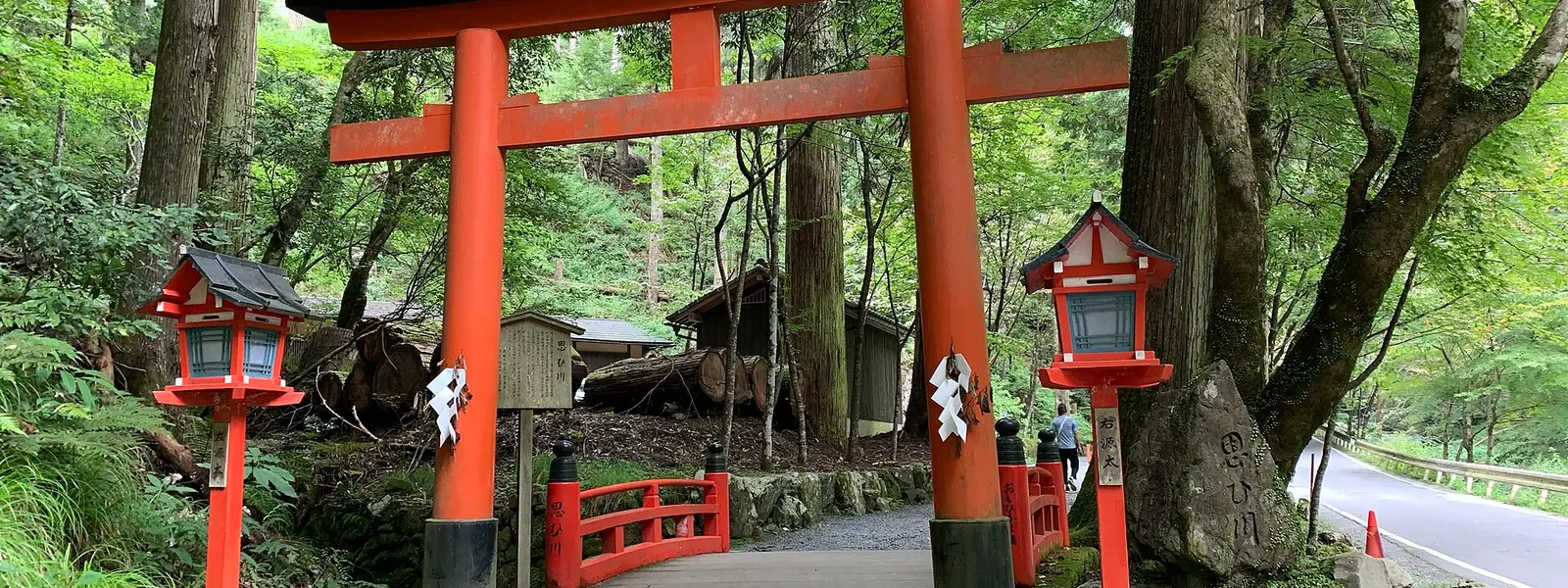
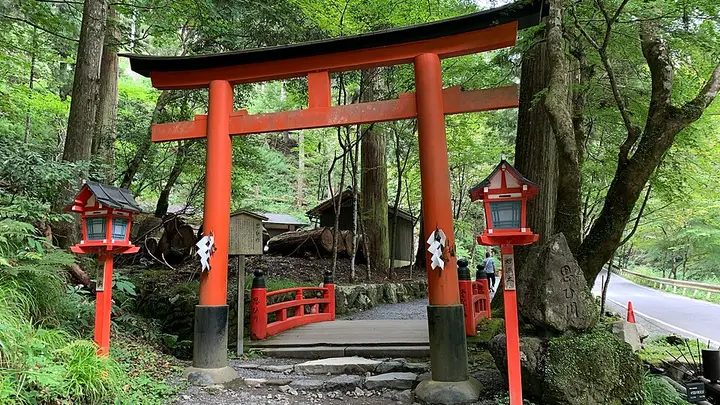 Plan A
the classic – Kifune Shrine’s three sanctuaries, a night in Kibune, and a morning hike over to Kurama-dera
Good forFirst-time visitors who can manage about an hour on a mountain path
Besides the innabout ¥3,700–4,700 + Eizan Railway and bus fares
Demachiyanagi Sta. → (Eizan Railway) Kibuneguchi Sta. → (bus) Kifune Shrine main sanctuary → Yui-no-yashiro → Okumiya → Kibune (night) → Okuno-in Maoden → Kurama-dera Main Hall → Kurama Sta. → (Eizan Railway) Demachiyanagi Sta.
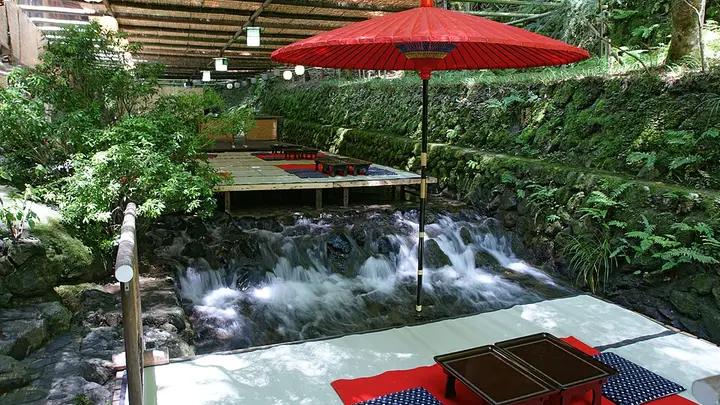 Plan B
summer – over the mountain from Kurama down to Kibune and dinner on the kawadoko
Good forAnyone who wants to dine on a platform over the river between May and September
Besides the innabout ¥3,700–4,700 + Eizan Railway and bus fares
Demachiyanagi Sta. → (Eizan Railway) Kurama Sta. → Kurama-dera Main Hall → Okuno-in Maoden → Kifune Shrine main sanctuary → Kibune (night, kawadoko) → Okumiya → (bus) Kibuneguchi Sta. → (Eizan Railway) Demachiyanagi Sta.
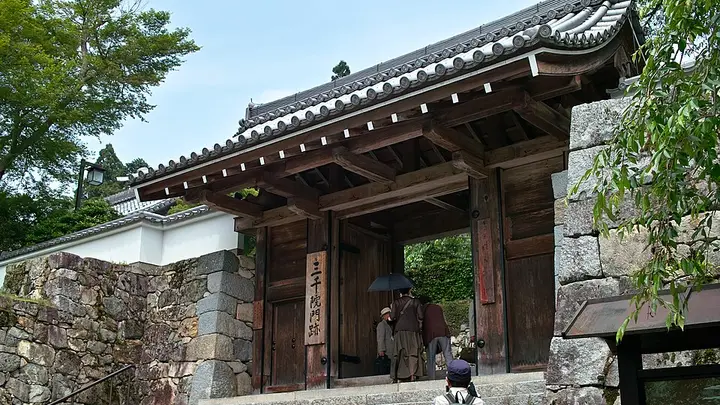 Plan C
classic Ohara – a night by Sanzen-in and a morning walk to Jakko-in
Good forFirst-time visitors to Ohara who want time in the temple gardens
Besides the innabout ¥4,300–5,300 + Kyoto Bus and subway fares
Kyoto Sta. → (Kyoto Bus 17) Ohara → Sanzen-in → Ohara (night) → Jakko-in → Ohara → (Kyoto Bus 19) Kokusaikaikan Sta.
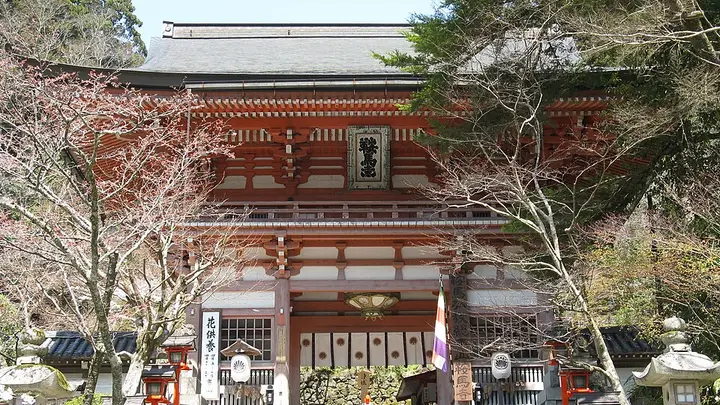 Plan D
Kibune, Kurama and Ohara – linking the shrine and temple on foot, then by bus to a night in Ohara
Good forAnyone who wants both Kibune–Kurama and Ohara in one overnight trip
Besides the innabout ¥4,400–5,400 + bus and train fares
Demachiyanagi Sta. → (Eizan Railway) Kibuneguchi Sta. → (bus) Kifune Shrine → Okuno-in Maoden → Kurama-dera Main Hall → Kurama → (Kyoto Bus) Kokusaikaikan Sta. → (Kyoto Bus 19) Ohara (night) → Sanzen-in → (Kyoto Bus 17) Kyoto Sta.
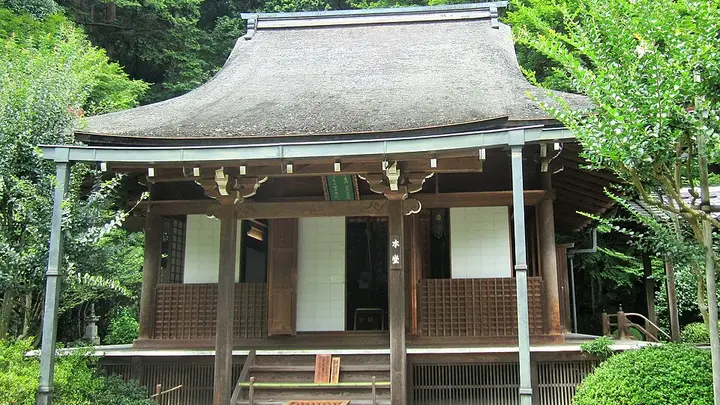 Plan E
winter – Jakko-in, then a night of miso hotpot and hot springs at an Ohara minshuku
Good forAnyone wanting short walks and a long evening at the inn, in winter or on a rainy day
Besides the innabout ¥4,300–5,300 + Kyoto Bus fares
Kyoto Sta. → (Kyoto Bus 17) Ohara → Jakko-in → Ohara (night, miso hotpot) → Sanzen-in → Ohara → (Kyoto Bus 17) Kyoto Sta.
Photos:inunami(CC BY 2.0) / 663highland(CC BY 2.5) / t-mizo(CC BY 2.0) / KENPEI(CC BY-SA 3.0) / Suikotei(CC BY-SA 4.0)・Wikimedia Commons
Getting there: For Kibune and Kurama, take the Eizan Railway from Demachiyanagi Station: about 30 minutes to Kurama. From Kibuneguchi Station, Kyoto Bus 33 runs to the Kibune stop, about 5 minutes’ walk from Kifune Shrine’s main sanctuary (walking from Kibuneguchi takes about 30 minutes, 2 km). Kurama is also about 25 minutes by Kyoto Bus from Kokusaikaikan Station. For Ohara, Kyoto Bus 17 takes about 70 minutes from Kyoto Station and about 30 minutes from Demachiyanagi; bus 19 takes about 20 minutes from Kokusaikaikan Station. By car, Kibune is about 40 minutes (18 km) north of Kyoto Station; the shrine’s car parks charge ¥1,000 for two hours and have few spaces.
The plans in detail
Plan Athe classic – Kifune Shrine’s three sanctuaries, a night in Kibune, and a morning hike over to Kurama-dera
Good for: First-time visitors who can manage about an hour on a mountain path
Day 1
- 111:00 Eizan Railway from Demachiyanagi to Kibuneguchi Station, then Kyoto Bus 33 to the Kibune stop and about 5 minutes on foot to the main sanctuary ↗
- 211:30 Visit the main sanctuary of Kifune Shrine: free, open every day, 6:00–20:00 from May to November. The amulet and goshuin office opens 9:00–17:00. Try the water fortune slip, whose text appears when floated on the spring. Lunch along the Kibune river ↗
↓ Getting there: upstream along the river via Yui-no-yashiro to the Okumiya, about 780 m in a straight line - 313:30 Stop at the Yui-no-yashiro, then walk on upstream to the Okumiya, a quiet sanctuary among the cedars ↗
↓ Getting there: to the inn (both about 410–840 m in a straight line from the Okumiya) - Inn15:00 Check in at your inn in Kibune and stroll the quiet river once the day-trippers have gone
Day 2
- Inn9:30 Check out, cross the Kibune river and enter the mountain path at Kurama-dera’s West Gate (¥500 mountain entry fee) ↗
↓ Getting there: Kurama-dera’s guide gives 20 minutes on foot from Kifune Shrine to the Okuno-in Maoden - 410:00 Climb the path where cedar roots spread across the ground to the Okuno-in Maoden ↗
↓ Getting there: 30 minutes on foot to the Main Hall - 511:00 Visit Kurama-dera’s Main Hall (open 9:00–16:15). Go down by the temple cable car (¥200 one way, last car down 16:25) or on foot along the winding Tsuzuraori path to the main gate ↗
↓ Getting there: Kurama Station is just below the gate - 612:30 Lunch by Kurama Station, then the Eizan Railway back to Demachiyanagi (about 30 minutes) ↗
Budget besides the inn (per adult): about ¥3,700–4,700 + Eizan Railway and bus fares
Kurama-dera entry ¥500 + cable car ¥200 + two lunches ¥3,000–4,000 (Kifune Shrine is free)
Tickets and transport: Kifune Shrine is free. Kurama-dera asks a ¥500 mountain entry fee, and its cable car costs ¥200 one way (¥100 for elementary age and under). Eizan Railway and Kyoto Bus 33 fares extra
Where to stay: two picks
Kibune Fujiya 90/100 in our scoring
About 60 m in a straight line from Kifune Shrine’s main sanctuary, with Kurama-dera’s West Gate, where day 2 starts, close by. A ryotei-style inn founded in the 1830s and said to be the originator of Kibune’s kawadoko. Pick-up from Kibuneguchi Station (a same-day phone call is enough). Last dinner start 18:00, curfew 23:00
Ryori Ryokan Hirobun 73/100 in our scoring
Right next to the Yui-no-yashiro, about 4 minutes on foot from the main sanctuary (about 370 m in a straight line) and 410 m from the Okumiya. A three-room old farmhouse inn where you eat irori hearth cooking in your room. Pick-up from Kibuneguchi Station (two or more guests, booking needed). Cards are not accepted on site
More places to stay for this plan
Plan Bsummer – over the mountain from Kurama down to Kibune and dinner on the kawadoko
Good for: Anyone who wants to dine on a platform over the river between May and September
Day 1
- 110:00 Eizan Railway from Demachiyanagi to Kurama Station (about 30 minutes) ↗
↓ Getting there: from the gate, about 25 minutes up the Tsuzuraori path, or about 14 minutes with the cable car and a short walk - 211:00 Visit Kurama-dera’s Main Hall (¥500 mountain entry fee, open 9:00–16:15) ↗
↓ Getting there: 30 minutes on foot to the Okuno-in Maoden - 312:00 Walk the root-laced path to the Okuno-in Maoden, then down to the West Gate ↗
↓ Getting there: 20 minutes on foot to Kifune Shrine - 413:00 Visit Kifune Shrine’s main sanctuary (free) and have a late lunch ↗
- Inn15:00 Check in, and have dinner on the kawadoko platform built over the Kibune river. On rainy days or when the river runs high, dinner moves indoors ↗
Day 2
- 58:00 Before breakfast, walk up the quiet river to the Okumiya ↗
- Inn10:00 Check out and go down to Kibuneguchi Station by the inn’s shuttle or Kyoto Bus 33, then the Eizan Railway to Demachiyanagi
- 610:30 Board the Eizan Railway at Kibuneguchi Station ↗
Budget besides the inn (per adult): about ¥3,700–4,700 + Eizan Railway and bus fares
Kurama-dera entry ¥500 + cable car ¥200 + two lunches ¥3,000–4,000 (kawadoko dinner included in the room rate)
Tickets and transport: Kurama-dera entry ¥500, cable car ¥200 one way. Kibune’s kawadoko season is usually 1 May–30 September (it varies by restaurant; Hirobun runs from May to mid-October). The kawadoko dinner at the inn is part of the room rate
Where to stay: two picks
Kibune Fujiya 90/100 in our scoring
About 60 m in a straight line from Kifune Shrine’s main sanctuary, where the hike ends. A ryotei inn said to have started the kawadoko tradition, serving river fish from its own tanks. Even in season, dinner moves indoors on rainy or high-water days. Curfew 23:00
Ryori Ryokan Hirobun 73/100 in our scoring
About 4 minutes on foot from the main sanctuary (about 370 m in a straight line) and 410 m from the Okumiya for the morning of day 2. Its kawadoko runs from May to mid-October, later than most. Three rooms, some facing the Kibune river. Shuttle for two or more guests, booking needed
More places to stay for this plan
Plan Cclassic Ohara – a night by Sanzen-in and a morning walk to Jakko-in
Good for: First-time visitors to Ohara who want time in the temple gardens
Day 1
- 111:00 Kyoto Bus 17 from Kyoto Station to Ohara (about 70 minutes). Lunch near the bus stop ↗
↓ Getting there: about 10 minutes on foot to Sanzen-in - 213:00 See the gardens and halls of Sanzen-in: 9:00–17:00 March–October, 8:45–16:45 in November, 9:00–16:30 December–February. ¥700 ↗
↓ Getting there: to the inn (Seryo about 130 m in a straight line; Ohara Sanso about 1.3 km, with pick-up from the Ohara bus stop after 15:00) - Inn16:00 Check in and soak in the hot spring
Day 2
- Inn9:30 Check out and walk the village lanes to Jakko-in
- 310:00 Visit Jakko-in: 9:00–17:00 from 1 March to 30 November, 9:00–16:30 in December and from 4 January to the end of February (10:00–16:00 on 1–3 January). ¥600 ↗
↓ Getting there: about 15 minutes on foot back to the Ohara bus stop - 412:00 Lunch in Ohara, then Kyoto Bus 19 to Kokusaikaikan Station (about 20 minutes between the two) and the subway back towards Kyoto Station ↗
Budget besides the inn (per adult): about ¥4,300–5,300 + Kyoto Bus and subway fares
Sanzen-in ¥700 + Jakko-in ¥600 + two lunches ¥3,000–4,000
Tickets and transport: Sanzen-in: ¥700, ¥400 for junior and senior high, ¥150 for elementary pupils, open every day. Jakko-in: ¥600, ¥350 for junior high, ¥100 for elementary pupils. Kyoto Bus fares extra
Where to stay: two picks
Oyado Seryo, Ohara Onsen 75/100 in our scoring
About 130 m in a straight line from Sanzen-in and 1.3 km from Jakko-in. A ryotei inn right by Sanzen-in with a natural hot-spring open-air bath. Check-in by 17:00, curfew 23:00, card payment only in advance
Ohara Sanso 75/100 in our scoring
About 110 m in a straight line from Jakko-in for day 2 and 1.3 km from Sanzen-in. About 15 minutes on foot from the Ohara bus stop, with pick-up after 15:00. Hot-spring open-air bath and family bath; some staff handle everyday English. Bicycles for rent
More places to stay for this plan
Plan DKibune, Kurama and Ohara – linking the shrine and temple on foot, then by bus to a night in Ohara
Good for: Anyone who wants both Kibune–Kurama and Ohara in one overnight trip
Day 1
- 19:00 Eizan Railway from Demachiyanagi to Kibuneguchi, then Kyoto Bus 33 to Kibune. If you want the Kyoto Rakuhoku Mori to Mizu Ticket (¥1,800), check the routes it covers on the official page first, then buy it at Demachiyanagi ↗
- 29:45 Visit Kifune Shrine’s main sanctuary (free; 6:00–20:00 from May to November) ↗
↓ Getting there: into the mountain path at Kurama-dera’s West Gate, 20 minutes on foot to the Okuno-in Maoden (¥500 entry) - 310:30 Pass the Okuno-in Maoden and continue up the path ↗
↓ Getting there: 30 minutes on foot to the Main Hall - 411:15 Visit Kurama-dera’s Main Hall (open 9:00–16:15), go down by the cable car (¥200) or the Tsuzuraori path to the gate, and have lunch ↗
↓ Getting there: Kyoto Bus from Kurama to Kokusaikaikan Station (about 25 minutes between the two), then bus 19 to Ohara (about 20 minutes) - Inn15:30 Check in at your inn in Ohara and ease your legs in the hot spring ↗
Day 2
- 59:00 Check out and reach Sanzen-in as it opens (9:00 from December to October, 8:45 in November). ¥700 ↗
- 611:00 Kyoto Bus 17 from the Ohara stop to Kyoto Station (about 70 minutes), after lunch in Ohara ↗
Budget besides the inn (per adult): about ¥4,400–5,400 + bus and train fares
Kurama-dera entry ¥500 + cable car ¥200 + Sanzen-in ¥700 + two lunches ¥3,000–4,000
Tickets and transport: On day 1 you can also use the Kyoto Rakuhoku Mori to Mizu Ticket (¥1,800 for adults, valid on the day of purchase, no child version). It covers the whole Eizan Railway and part of the Kyoto Bus network; check on the official page whether the Kyoto Bus routes in this plan are included. Kurama-dera entry ¥500, Sanzen-in ¥700
Where to stay: two picks
Oyado Seryo, Ohara Onsen 75/100 in our scoring
About 130 m in a straight line from Sanzen-in for the morning of day 2 and 400 m from the Ohara bus stop. A natural hot-spring open-air bath to rest your legs after the hike. 25 minutes by bus from Kokusaikaikan subway station. Check-in by 17:00
Ohara no Sato 62/100 in our scoring
12 minutes on foot from the Ohara bus stop (about 700 m in a straight line) and 1.2 km from Sanzen-in. A minshuku said to be the home of Ohara’s miso hotpot, made with a century-old miso. Natural hot-spring open-air bath and a goemon iron tub. You lay out your own futon
More places to stay for this plan
Plan Ewinter – Jakko-in, then a night of miso hotpot and hot springs at an Ohara minshuku
Good for: Anyone wanting short walks and a long evening at the inn, in winter or on a rainy day
Day 1
- 112:30 Kyoto Bus 17 from Kyoto Station to Ohara (about 70 minutes). Lunch near the stop ↗
↓ Getting there: about 15 minutes on foot to Jakko-in - 214:00 Visit Jakko-in: 9:00–16:30 in December and from 4 January to the end of February. ¥600 ↗
↓ Getting there: to the inn; both are about 110–200 m in a straight line from Jakko-in - Inn15:30 Check in, warm up in the hot spring, and have a hotpot made with Ohara miso for dinner
Day 2
- Inn9:30 Check out and walk to Sanzen-in (about 1.2–1.3 km in a straight line)
- 310:00 See the gardens and halls of Sanzen-in (9:00–16:30 from December to February, ¥700) ↗
↓ Getting there: about 10 minutes on foot to the Ohara bus stop - 412:00 Lunch in Ohara, then Kyoto Bus 17 back to Kyoto Station (about 70 minutes) ↗
Budget besides the inn (per adult): about ¥4,300–5,300 + Kyoto Bus fares
Jakko-in ¥600 + Sanzen-in ¥700 + two lunches ¥3,000–4,000
Tickets and transport: Jakko-in ¥600 (until 16:30 from December to February), Sanzen-in ¥700 (9:00–16:30 from December to February). Kyoto Bus fares extra
Where to stay: two picks
Ohara no Sato 62/100 in our scoring
About 200 m in a straight line from Jakko-in and 12 minutes on foot from the Ohara bus stop. A minshuku said to be the home of Ohara’s miso hotpot, made with a century-old miso, with a natural hot-spring open-air bath and a goemon iron tub. Luggage can be sent from crosta Kyoto at Kyoto Station (paid)
Ohara Sanso 75/100 in our scoring
About 110 m in a straight line from Jakko-in. About 15 minutes on foot from the Ohara bus stop, with pick-up after 15:00. Hot-spring open-air bath and family bath to warm up on a winter night. No fridge in the rooms
More places to stay for this plan
All our Kibune & Ohara fives
About this page
Travel times, prices and opening hours come from the official pages of each sight, the local tourist association and the transport operators (checked 2026-11-23). The inns are taken from our own scored fives (reviews, price and facilities across five criteria), two per plan, chosen because they sit on that plan’s route. Times and prices change, so check the official pages before you go.
Questions visitors ask
Can you do both Kibune and Ohara in two days?
Yes. In Plan D you hike from Kifune Shrine over to Kurama-dera on day 1, take the Kyoto Bus from Kurama to Kokusaikaikan Station and then bus 19 to Ohara (about 20 minutes). You sleep in Ohara and see Sanzen-in on the morning of day 2. If you plan to use the Kyoto Rakuhoku Mori to Mizu Ticket (¥1,800), check the routes it covers on the official page.
When is the Kibune kawadoko season?
Usually 1 May to 30 September, according to Kyoto City’s tourism information, though it varies by restaurant; Hirobun lists May to mid-October. On rainy or high-water days, meals are served indoors.
What should you know about Kibune, Kurama and Ohara in winter?
Sanzen-in and Jakko-in close at 16:30 from December to February. Kurama-dera’s cable car stops on some days for inspection, and its Reihoden museum is closed from 12 December to the end of February. On snowy days, skip the Kurama–Kibune trail and use the Eizan Railway between Kurama and Kibuneguchi instead.
Can you drive to Kibune?
It is about 40 minutes (18 km) north of Kyoto Station, but the shrine’s car parks hold only 8 cars at the main sanctuary and 10 at the Okumiya, at ¥1,000 for two hours, and the shrine itself recommends public transport. There are also temporary traffic restrictions in August. If you are staying overnight, check parking with the inn when you book.
Sources
- https://kifunejinja.jp/
- https://kifunejinja.jp/info/
- https://kifunejinja.jp/access/
- https://www.kuramadera.or.jp/
- https://kuramadera.or.jp/nyuzan.html
- https://kuramadera.or.jp/access.html
- https://www.sanzenin.or.jp/guide/info/
- https://www.sanzenin.or.jp/access/
- https://www.jakkoin.jp/haikan/
- https://www.jakkoin.jp/access/
- https://www.kyotobus.jp/route/fare/discount/pass/cat110/post-21.html
- https://eizandensha.co.jp/good-value/
- https://ja.kyoto.travel/event/single.php?event_id=4453
- https://hirobun.co.jp/