This page contains promotions (affiliate links) (Editorial & ad policy)
Urabandai and Inawashiro itinerary: 5 two-day plans with inns
Approximate, at the rate on 2026-10-02. You pay in yen.
Mt. Bandai splits this area in two: Urabandai with Goshikinuma and Lake Hibara to the north, Lake Inawashiro to the south. The sights sit on both sides of the mountain, and the scenic roads linking the lakes and plateau close in winter, so the season and whether you have a car change everything. You’ll want to walk among ponds of different colours and unwind at an inn by the water. So we put together five itineraries for different kinds of trip, each with two inns right on the route.
At a glance
- Five ways to spend two days in Urabandai and Inawashiro: A for a first visit (the Goshikinuma trail by bus, April–November), B by car (the Bandai-Azuma Skyline, Jododaira and Nakanosawa Onsen, spring to autumn), C with kids (Noguchi museum, Tenkyokaku, Kawasemi Aquarium), and for winter D (Inawashiro skiing and the Nagahama swans) or E (smelt fishing on Lake Hibara and snowy Goshikinuma)
- Ten different inns from our Urabandai and Inawashiro-Bandai fives: four around Goshikinuma, one on Lake Hibara, four on the Lake Inawashiro side and one at Nakanosawa Onsen, each near where day 1 ends or day 2 begins
- Inawashiro Station is about 1 hr 30 min from Tokyo to Koriyama by shinkansen, then about 35 min on the Ban’etsu West Line. The Aizu Bus from Inawashiro to Goshikinuma Iriguchi costs ¥920. The Bandai-Azuma Skyline closes for winter (from 13 November in 2026); the Lake Line is open only from mid-April to mid-November
Pick your two days: five different routes
Each comes with two inns right on the route
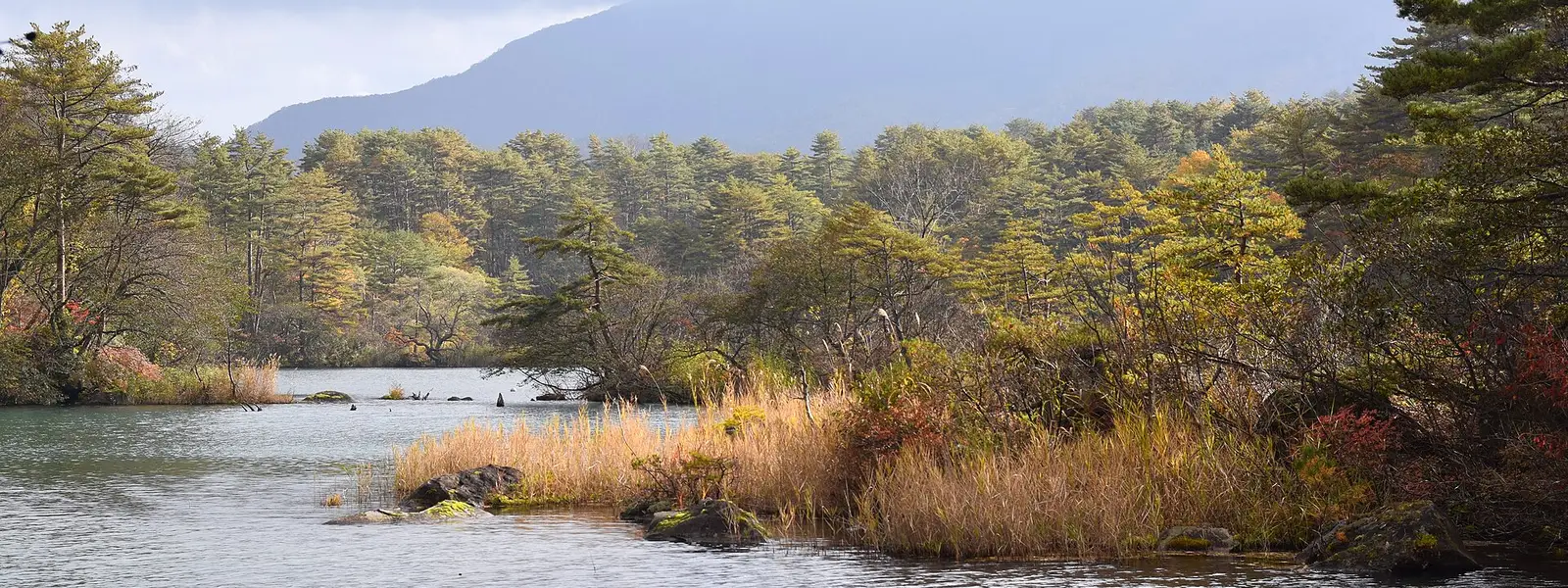
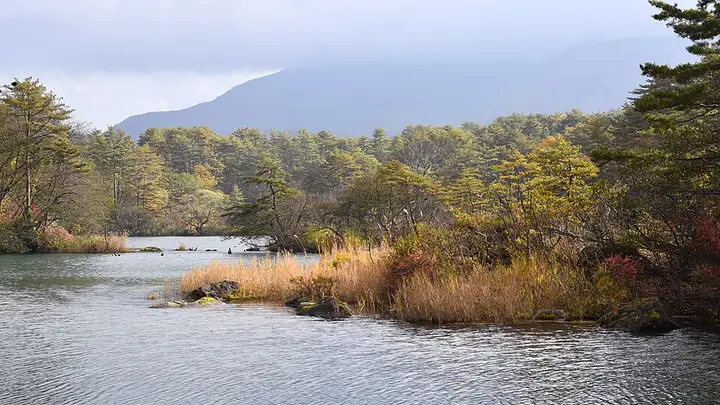 Plan A
the classic – by bus to Goshikinuma and the nature trail from Bishamon-numa to Urabandai Kogen-eki (April–November)
Good forFirst-time visitors who want to walk Goshikinuma without a car
Besides the innabout ¥4,520–5,520 + return bus and boat
Inawashiro Sta. → (Aizu Bus) Goshikinuma Iriguchi → Bishamon-numa → Goshikinuma nature trail (about 4 km) → Urabandai Kogen-eki (night) → Mt. Bandai Eruption Museum → Inawashiro Sta.
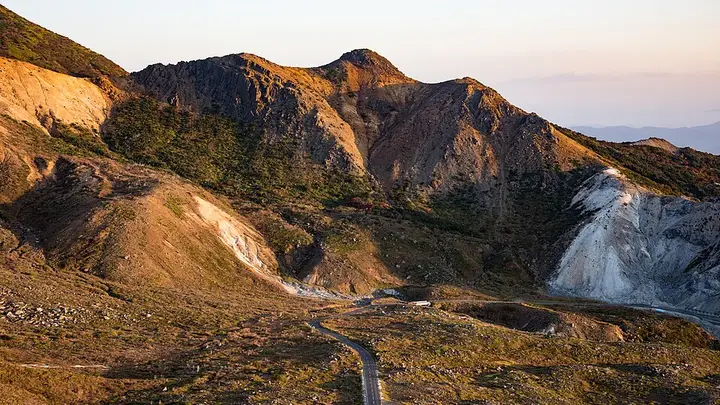 Plan B
by car – up the Bandai-Azuma Skyline to Jododaira, a night at Nakanosawa Onsen, then the Lake Line to Urabandai (spring to autumn)
Good forDrivers who want the mountain roads, especially in autumn colour
Besides the innabout ¥3,000–4,000 + tolls, fuel and Jododaira parking
Fukushima-nishi IC → Bandai-Azuma Skyline → Jododaira → Nakanosawa Onsen (night) → Bandai-Azuma Lake Line, Nakatsugawa Gorge → Michi-no-Eki Urabandai → Goshikinuma → Inawashiro Bandai-kogen IC
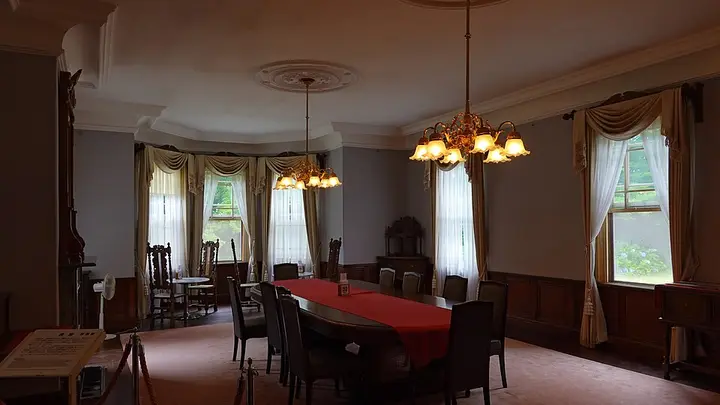 Plan C
Lake Inawashiro with kids – the Hideyo Noguchi museum, Tenkyokaku, then fishing at the Kawasemi aquarium
Good forFamilies and travellers without a car, any season
Besides the innabout ¥5,220–6,620 + taxi and bus fares
Inawashiro Sta. → (Aizu Bus) Hideyo Noguchi Memorial Museum → World Glassware Hall → Nagahama and Tenkyokaku → (night at Okinajima or Inawashiro) → Kawasemi Aquarium → Inawashiro Sta.
 Plan D
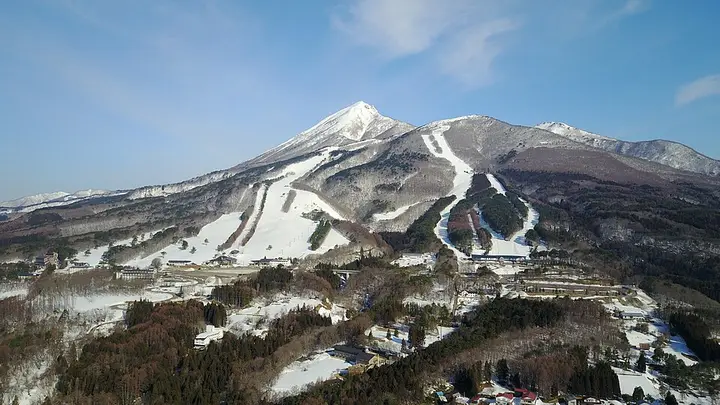
winter – skiing at Inawashiro, then the swans at Nagahama (mid-December to late March)
Good forSkiers, snowboarders and anyone who wants to see the lake in winter
Besides the innabout ¥10,510–11,510 + taxi and return bus
Inawashiro Sta. → (taxi) Inawashiro Ski Resort → (night) → Nagahama (swans) → Tenkyokaku → Inawashiro Sta.
 Plan E
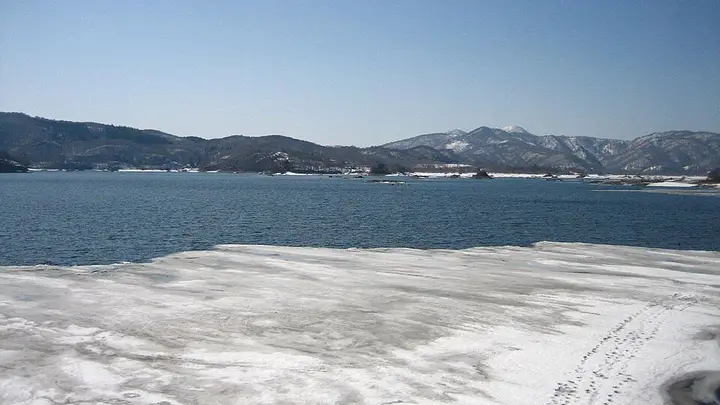
winter Urabandai – smelt fishing on Lake Hibara with tempura, then snowy Goshikinuma and the eruption museum
Good forAnyone after winter-only fun, including families with children of primary-school age and up
Besides the innabout ¥8,660–9,160 + guided tour and return bus
Inawashiro Sta. → (Aizu Bus) Urabandai Kogen-eki → Daiichi Gold House Meguro (smelt fishing) → (night) → Goshikinuma (snowshoes) → eruption museum → Inawashiro Sta.
Photos:Raita Futo(CC BY 2.0) / clef(CC BY 4.0) / 663highland(CC BY-SA 4.0) / Go.n2020(CC BY-SA 4.0) / Brian Adler(Public domain)・Wikimedia Commons
Getting there: From Tokyo, the Tohoku Shinkansen reaches Koriyama in about 1 hr 30 min, and the JR Ban’etsu West Line continues to Inawashiro in about 35 min. From Shinjuku, the Yume Kaido Aizu highway bus takes about 4 hr to Inawashiro Station. By car, about 2 hr 10 min from Urawa IC on the Tohoku Expressway, then about 20 min on the Ban’etsu Expressway from Koriyama JCT (Inawashiro Tourism Association). From Inawashiro Station, the Aizu Bus runs to Urabandai (¥920 to Goshikinuma Iriguchi, ¥1,060 to Urabandai Kogen-eki).
The plans in detail
Plan Athe classic – by bus to Goshikinuma and the nature trail from Bishamon-numa to Urabandai Kogen-eki (April–November)
Good for: First-time visitors who want to walk Goshikinuma without a car
Day 1
- 110:30 From Inawashiro Station take the Aizu Bus to Goshikinuma Iriguchi (¥920) ↗
↓ Getting there: check times on the Aizu Bus timetable - 211:30 Get off at Goshikinuma Iriguchi and walk to Bishamon-numa, the largest pond, where you can hire a rowing boat (closed in winter). Lunch nearby ↗
↓ Getting there: about 510 m in a straight line to Bishamon-numa - 313:00 Walk the Goshikinuma nature trail: about 4 km and 1 hr 10 min to 1 hr 30 min one way, mostly level, linking ponds formed by the 1888 eruption of Mt. Bandai, each a different colour from emerald green to cobalt blue ↗
↓ Getting there: walk through to the Urabandai Kogen-eki end - 414:45 Come out at Yanagi-numa by Urabandai Kogen-eki. Walk to Urabandai Kogen Hotel from here; for Pension Fraise, take the bus back towards Goshikinuma Iriguchi (+ fare) ↗
- Inn15:30 Check in and soak in the hot spring
Day 2
- Inn9:00 Check out and go to the Mt. Bandai Eruption Museum ↗
↓ Getting there: about 740 m in a straight line from Pension Fraise, 1.8 km from Urabandai Kogen Hotel (2–3 min on foot from the Bandaisan Funka Kinenkan-mae bus stop) - 59:30 At the Mt. Bandai Eruption Museum, learn about the 1888 steam explosion and how the plateau formed. ¥600, 8:00–17:00 from April to November. The 3D World next door (¥800) recreates the eruption on a screen 4.5 m high and 42 m long (closed December–March) ↗
↓ Getting there: Aizu Bus back to Inawashiro Station (+ fare) - 612:30 Back at Inawashiro, have soba for lunch: the town is Fukushima’s top producer of buckwheat for both quality and quantity ↗
Budget besides the inn (per adult): about ¥4,520–5,520 + return bus and boat
outbound bus ¥920 + eruption museum ¥600 + two lunches ¥3,000–4,000
Tickets and transport: Aizu Bus from Inawashiro Station: ¥920 to Goshikinuma Iriguchi, ¥1,060 to Urabandai Kogen-eki. The Goshikinuma trail is free; rowing boats on Bishamon-numa close in winter (check prices on the official site). Mt. Bandai Eruption Museum ¥600 (8:00–17:00 from April to November)
Where to stay: two picks
Urabandai Kogen Hotel 83/100 in our scoring
A lakeside hotel at 800 m altitude, about 420 m in a straight line from Yanagi-numa at the end of the trail, so you walk straight in. Hot-spring baths indoors and outdoors; reviews 4.94 (208), baths rated 4.97. Last check-in 18:00, check-out 11:00
Pension Fraise 80/100 in our scoring
About 420 m in a straight line from Goshikinuma Iriguchi and 740 m from the eruption museum, so day 2 is on foot. 5 min from the Goshikinuma bus stop. Water straight from the Goshikinuma Onsen spring, with open-air bath, family bath and jacuzzi. Last check-in with dinner 18:00; bring your own pyjamas
More places to stay for this plan
Plan Bby car – up the Bandai-Azuma Skyline to Jododaira, a night at Nakanosawa Onsen, then the Lake Line to Urabandai (spring to autumn)
Good for: Drivers who want the mountain roads, especially in autumn colour
Day 1
- 110:00 Leave the Tohoku Expressway at Fukushima-nishi IC and head for the Bandai-Azuma Skyline. Times depend on road conditions; check opening hours on the Fukushima prefecture page ↗
- 211:30 Park at Jododaira, about 1,600 m up, and look out over the raw volcanic slopes of Azuma-kofuji and Mt. Issaikyo (about an hour by car from central Fukushima). Jododaira Visitor Center 9:00–16:00 (closed in winter); paid parking ↗
↓ Getting there: drive on to the inn at Nakanosawa Onsen (check route and time on a map) - Inn15:00 Check in at Nakanosawa Onsen (about 12.7 km in a straight line from Jododaira). If staying by Lake Hibara, carry on along the Lake Line instead
Day 2
- Inn9:00 Check out and drive to the Bandai-Azuma Lake Line (night closure ends at 7:00) ↗
- 310:00 Park at the Nakatsugawa Gorge rest house and walk the trail, a well-known spot for autumn colour ↗
↓ Getting there: Goshikinuma Iriguchi and the gorge are about 15 min apart by car - 412:00 At HIBARATEI in Michi-no-Eki Urabandai, try ramen seasoned with Aizu yamashio, salt boiled down from the Oshio Urabandai Onsen spring (¥900). 10:00–16:00 daily from mid-April to mid-November ↗
- 513:30 Stop at Bishamon-numa in Goshikinuma and walk along the shore ↗
↓ Getting there: on to Inawashiro Bandai-kogen IC (+ tolls)
Budget besides the inn (per adult): about ¥3,000–4,000 + tolls, fuel and Jododaira parking
two lunches (one can be the ¥900 yamashio ramen) ¥3,000–4,000
Tickets and transport: The Bandai-Azuma Skyline closes for winter (from 17:00 on 13 November in 2026; check the official site for reopening). The Bandai-Azuma Lake Line is open only from mid-April to mid-November and closes at night (17:00–7:00) when ice is likely. Jododaira Visitor Center is open 9:00–16:00 and closed in winter; parking is paid (check the fee officially). Yamashio ramen at Michi-no-Eki Urabandai ¥900
Where to stay: two picks
Nakanosawa Onsen Ryokan Shirakiya 80/100 in our scoring
A ryokan at Nakanosawa Onsen, about 12.7 km in a straight line from Jododaira and 8.6 km from day 2’s Nakatsugawa Gorge. Family bath; bathing 5:30–23:00. From Inawashiro Station, the Aizu Bus to Nakanosawa takes 30 min (¥980). No cards, no pick-up
Lake side inn Beehive 78/100 in our scoring
For those who drive on along the Lake Line on day 1 and sleep by Lake Hibara: about 5.5 km in a straight line from Nakatsugawa Gorge and 1.8 km from Goshikinuma Iriguchi. All 8 rooms have a view bath, plus a private hot-spring bath. 20 min by car from Inawashiro Bandai-kogen IC. Non-smoking indoors
More places to stay for this plan
Plan CLake Inawashiro with kids – the Hideyo Noguchi museum, Tenkyokaku, then fishing at the Kawasemi aquarium
Good for: Families and travellers without a car, any season
Day 1
- 110:30 From Inawashiro Station take the Aizu Bus to Noguchi Hideyo Kinenkan-mae (about 10 min, ¥350) ↗
- 211:00 Hideyo Noguchi Memorial Museum, on the life of the bacteriologist born in lakeside Mitsuwa, with hands-on displays that make the world of bacteria a game. 9:00–16:30 from November to March, 9:00–17:30 from April to October ↗
↓ Getting there: about 230 m in a straight line to the World Glassware Hall next door - 12:30 Make an etched glass or a bracelet at the World Glassware Hall workshop (check prices officially), then lunch nearby ↗
↓ Getting there: Aizu Bus to Nagahama (+ fare) - 314:30 Take in Lake Inawashiro at Nagahama and walk to Tenkyokaku, a Western-style villa built in 1908: ¥370, 9:00–16:30 from November to April (last entry 16:00). From December to March, swans winter at Nagahama ↗
↓ Getting there: Tenkyokaku is about 300 m in a straight line from Nagahama; taxi to the inn (+ fare) - Inn16:00 Check in
Day 2
- Inn9:00 Check out. From Tamanoyu, walk 6 min to Okinajima Station and take the Ban’etsu West Line to Inawashiro (+ fare); Seifutei is about 2.4 km in a straight line from Inawashiro Station ↗
↓ Getting there: taxi from Inawashiro Station to the Kawasemi Aquarium (Midori-no-mura), about ¥1,800 one way - 10:00 At the Aquamarine Inawashiro Kawasemi Aquarium, see the local freshwater life and try the corner where children catch a fish and eat it. 9:30–16:00 in winter (1 November–28 February), 9:30–17:00 otherwise, open every day. Allow 40 min to an hour, or up to 1 hr 30 min with the activities ↗
↓ Getting there: taxi back to Inawashiro Station (+ fare) - 412:30 Soba lunch near Inawashiro Station, then head home ↗
Budget besides the inn (per adult): about ¥5,220–6,620 + taxi and bus fares
Noguchi museum ¥800–1,200 + Tenkyokaku ¥370 + aquarium ¥700 + first bus ¥350 + two lunches ¥3,000–4,000 (per adult)
Tickets and transport: Hideyo Noguchi Memorial Museum ¥1,200 adults, ¥550 schoolchildren (¥800 and ¥400 from 1 December to 15 March). Tenkyokaku ¥370, schoolchildren ¥100. Kawasemi Aquarium ¥700, schoolchildren ¥300, preschoolers free. Aizu Bus from Inawashiro Station: ¥350 to Noguchi Hideyo Kinenkan-mae, ¥540 to Nagahama. To the aquarium (Midori-no-mura), a taxi costs about ¥1,800 one way
Where to stay: two picks
Okinajima Onsen Tamanoyu Ryokan 79/100 in our scoring
A hot-spring ryokan about 6 min on foot (360 m in a straight line) from Okinajima Station, 3.6 km in a straight line from Tenkyokaku and 3.4 km from Nagahama. On day 2 take the Ban’etsu West Line from Okinajima to Inawashiro. Large bath 6:00–22:00. No lift; the ¥150 bathing tax is paid in cash
Seifutei 79/100 in our scoring
Every room has its own spring-fed open-air bath and both meals are served in the room. About 3.1 km in a straight line from the Noguchi museum and 2.4 km from Inawashiro Station, with a taxi pick-up from the station (contact them in advance). Wheelchair rooms. ¥150 bathing tax extra
More places to stay for this plan
Plan Dwinter – skiing at Inawashiro, then the swans at Nagahama (mid-December to late March)
Good for: Skiers, snowboarders and anyone who wants to see the lake in winter
Day 1
- 19:30 Taxi from Inawashiro Station to Inawashiro Ski Resort (about 5.1 km, about ¥2,300) ↗
- 210:00 Ski on slopes that look down on Lake Inawashiro: one-day pass ¥6,600, 2026–27 season scheduled from 18 December 2026 to 22 March 2027. Lunch on the mountain ↗
↓ Getting there: about 3.3 km in a straight line to White Pension, 4.3 km to SHUBOU - Inn16:30 Check in (last check-in 17:30 at White Pension, 17:00 at SHUBOU). On Saturday night-skiing days the snow fireworks go up ↗
Day 2
- Inn9:00 Check out and take the Aizu Bus from Inawashiro Station to Nagahama (¥540) ↗
↓ Getting there: to the station by the inn’s transfer (arrange with SHUBOU when booking) or taxi - 310:00 Watch the swans at Nagahama: about 3,000 winter on the lake each year, arriving around December and peaking in February ↗
↓ Getting there: about 300 m in a straight line to Tenkyokaku - 411:00 Visit Tenkyokaku (¥370, 9:00–16:30 from November to April); it may close temporarily after heavy snow ↗
↓ Getting there: Aizu Bus or taxi to Inawashiro Station (+ fare) - 513:00 Lunch near Inawashiro Station and head home ↗
Budget besides the inn (per adult): about ¥10,510–11,510 + taxi and return bus
lift pass ¥6,600 + Tenkyokaku ¥370 + bus to Nagahama ¥540 + two lunches ¥3,000–4,000 (rental extra)
Tickets and transport: Inawashiro Ski Resort’s 2026–27 season is scheduled from 18 December 2026 to 22 March 2027; a one-day lift pass is ¥6,600 for adults, ¥3,200 for primary-school children. On the 17 night-skiing days (Saturdays from 19 December to 13 March and a few more) the Inasuki snow fireworks go up. A taxi from Inawashiro Station to the slopes is about ¥2,300; the Aizu Bus to Nagahama is ¥540. Tenkyokaku ¥370
Where to stay: two picks
Healing Inn White Pension 90/100 in our scoring
About 3.3 km in a straight line from Inawashiro Ski Resort, 10 min by car from Inawashiro Station. Four baths can be reserved privately per room at check-in, so you can soak after skiing with just your group; one is a Dead Sea salt bath. Last check-in 17:30; no cards
Yuragi no Yado SHUBOU 85/100 in our scoring
An adults’ inn taking three parties a day, with a full view of Mt. Bandai, about 4.3 km in a straight line from Inawashiro Ski Resort. Transfers available (ask when booking and agree a time) and a ski drying room. Meals in a private room. Last check-in 17:00, curfew 23:00, no cards. Check-out 11:00
More places to stay for this plan
Plan Ewinter Urabandai – smelt fishing on Lake Hibara with tempura, then snowy Goshikinuma and the eruption museum
Good for: Anyone after winter-only fun, including families with children of primary-school age and up
Day 1
- 19:00 From Inawashiro Station take the Aizu Bus to Urabandai Kogen-eki (¥1,060) ↗
↓ Getting there: on to Daiichi Gold House Meguro on Lake Hibara - 210:00 Half-day smelt fishing at Daiichi Gold House Meguro (¥5,500 adults, ¥4,000 primary-school children, gear and licence included). They fry your catch as tempura ↗
↓ Getting there: to the inn (ask the inn about transfers) - Inn15:00 Check in and warm up in the hot spring
Day 2
- Inn9:00 Check out and head to Goshikinuma Iriguchi
↓ Getting there: about 770 m in a straight line from Hotelli Aalto to Goshikinuma Iriguchi - 39:30 Walk snowbound Goshikinuma on snowshoes, which you need in winter; a guided tour is recommended. Usually at its best from late January to early March ↗
↓ Getting there: about 1.2 km in a straight line to the eruption museum - 412:00 Mt. Bandai Eruption Museum (9:00–16:00 from December to March, last entry 15:30, ¥600); the 3D World next door is closed in winter. Lunch nearby ↗
↓ Getting there: Aizu Bus from Bandaisan Funka Kinenkan-mae to Inawashiro Station (+ fare) - 514:30 Head home from Inawashiro Station ↗
Budget besides the inn (per adult): about ¥8,660–9,160 + guided tour and return bus
outbound bus ¥1,060 + smelt fishing ¥5,500 + eruption museum ¥600 + lunch ¥1,500–2,000 (day 1 lunch is your own catch as tempura)
Tickets and transport: Urabandai’s smelt season runs from 1 November to late March: heated dome boats and covered boats until mid-January, huts on the ice from late January, and no ice fishing while the lake freezes in mid to late January. The beginners’ half-day at Daiichi Gold House Meguro costs ¥5,500 for adults and ¥4,000 for primary-school children, licence included (primary-school age and up). Snowy Goshikinuma (usually best late January to early March) needs snowshoes, and a guided tour is recommended (check prices officially). Eruption museum 9:00–16:00 from December to March, ¥600
Where to stay: two picks
Hotelli Aalto 75/100 in our scoring
About 770 m in a straight line from Goshikinuma Iriguchi and 790 m from Bishamon-numa, so snowy Goshikinuma is close on the morning of day 2. A Nordic-style resort on 22,314 m² with two ponds of its own, and natural hot-spring baths, indoors and out, including sulphur water. About 20 min by the inn’s car from Inawashiro Station. No children below primary-school age. 18 rooms, check-out 11:00
Pension Donguri 96/100 in our scoring
In Hibara, Kitashiobara, about 1.4 km in a straight line from Lake Hibara and 4.2 km in a straight line from Daiichi Gold House Meguro. It has its own observatory with a 26 cm reflecting telescope and an owner-built private hot-spring bath with an open-air section, good for winter night skies. Transfer bus available; from Inawashiro Station, the Urabandai Toto bus stops at Kyukamura Urabandai. 7 rooms, last check-in 19:00, no cards
More places to stay for this plan
All our Urabandai and Inawashiro fives
- Urabandai onsen hotels by Goshikinuma: 5 picked from 22
- Lake Inawashiro & Mt Bandai: 5 onsen inns picked from 67
About this page
Travel times, prices and opening hours come from the official pages of each sight, the local tourist association and the transport operators (checked 2026-11-23). The inns are taken from our own scored fives (reviews, price and facilities across five criteria), two per plan, chosen because they sit on that plan’s route. Times and prices change, so check the official pages before you go.
Questions visitors ask
How long does the Goshikinuma walk take?
The Goshikinuma nature trail is about 4 km, 1 hr 10 min to 1 hr 30 min one way, and mostly level. It has two trailheads, Goshikinuma Iriguchi and Urabandai Kogen-eki, both with Aizu Bus stops. Plan A starts at Goshikinuma Iriguchi and sleeps near the Urabandai Kogen-eki end.
Can you do it without a car?
Yes. From Inawashiro Station the Aizu Bus goes to Goshikinuma Iriguchi (¥920), Urabandai Kogen-eki (¥1,060), Noguchi Hideyo Kinenkan-mae (¥350), Nagahama (¥540) and Nakanosawa Onsen (¥980). Plans A, C, D and E use buses, inn transfers and taxis; only Plan B, on the Skyline and Lake Line, needs a car.
What about winter?
The Bandai-Azuma Skyline, the Bandai-Azuma Lake Line and the Bandaisan Gold Line all close in winter. Goshikinuma lies under snow and is walked on snowshoes with a guide (usually best late January to early March). In winter take Plan D (Inawashiro skiing and the Nagahama swans) or Plan E (smelt fishing on Lake Hibara and snowy Goshikinuma).
Where is easiest with children?
Plan C stays on the Lake Inawashiro side: the hands-on displays at the Noguchi museum (¥550 for schoolchildren, ¥400 in winter), glass crafts at the World Glassware Hall and the fishing pond at the Kawasemi Aquarium (¥300 for schoolchildren). Smelt fishing (Plan E) is for primary-school age and up, and Hotelli Aalto does not take children below primary-school age.
Sources
- https://www.bandaisan.or.jp/access/
- https://www.urabandai-inf.com/?page_id=249
- https://www.urabandai-inf.com/?page_id=141
- https://www.urabandai-inf.com/?page_id=24207
- https://www.urabandai-inf.com/?p=24916
- https://www.urabandai-inf.com/?page_id=25002
- https://www.urabandai-inf.com/?page_id=25021
- https://www.pref.fukushima.lg.jp/sec/41310a/bandaiazumaskyline.html
- https://www.env.go.jp/park/bandai/guide/joudodaira/
- https://www.noguchihideyo.or.jp/about/time.html
- https://www.bandaisan.or.jp/sight/glassmuseum/
- https://www.tif.ne.jp/tenkyokaku/
- https://www.bandaisan.or.jp/sight/swan_nagahama/
- https://www.aquamarine.or.jp/kawasemi/guide/info/
- https://www.inawashiro-ski.com/information/113/
- https://www.bandaisan.or.jp/sight/soba_flower/