This page contains promotions (affiliate links) (Editorial & ad policy)
Shirakawa-go & Okuhida itinerary: 5 two-day plans and where to stay
Approximate, at the rate on 2026-10-02. You pay in yen.
Shirakawa-go with its gassho farmhouses, and the Okuhida hot springs at the foot of the Northern Alps. Both are bus rides from Takayama, but in opposite directions: Shirakawa-go fills up with day-trippers at midday, while Okuhida is split into small spa villages – Hirayu, Fukuji, Shinhotaka. You probably want the gassho village at quiet times of day and an open-air bath looking up at the peaks. So we put together five itineraries for different kinds of trip, each with two places to stay right on the route.
At a glance
- Five ways to spend two days in Shirakawa-go and Okuhida: A to sleep in the gassho village, B to drive in via Hirase Onsen, C for the Shinhotaka Ropeway and Yarimi-no-yu, D for Hirayu Great Falls and a slow night in Fukuji, E for a solo bus trip to Hirayu
- Two inns per plan (ten in all) from our scored fives, each close to where day 1 ends or day 2 begins – in Ogimachi and Hirase in Shirakawa, and in Shinhotaka, Fukuji and Hirayu in Okuhida
- The Shirakawa-go light-up is by reservation only (in 2027 on 11, 17, 24 and 31 January). The Hakusan Shirakawa-go White Road is closed for winter from 11 November 2026 to early June 2027
Pick your two days: five different routes
Each comes with two inns right on the route
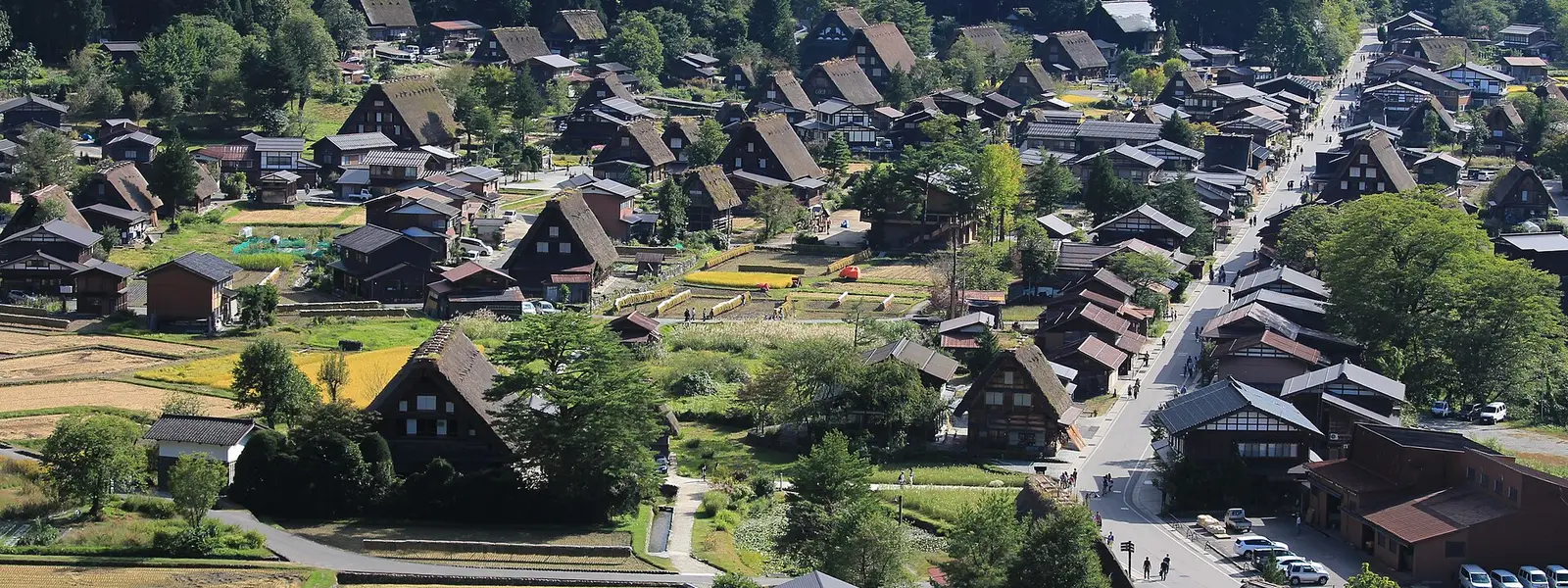
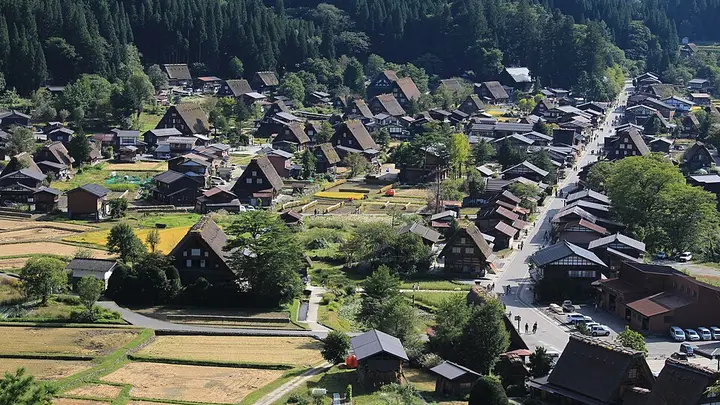 Plan A
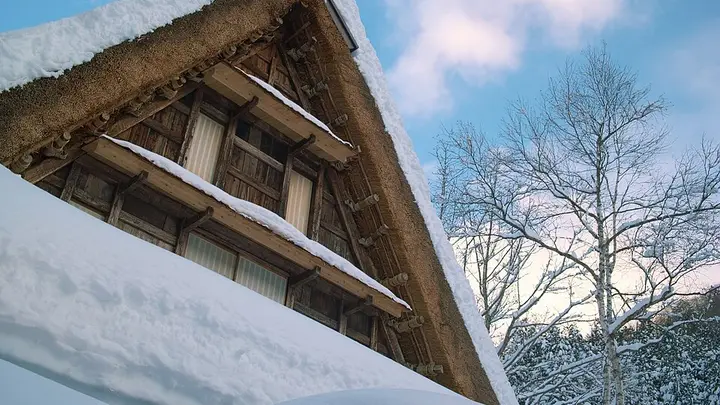
stay in Shirakawa-go’s gassho village and walk it in the quiet evening and morning
Good forFirst-timers in Shirakawa-go arriving by bus from Takayama or Kanazawa
Besides the innabout ¥5,100–6,100 + bus fares
Shirakawa-go bus terminal → Deai-bashi bridge → Kanda House and Nagase House → Myozenji Folk Museum → (overnight) → Shirakawa-go no Yu → bus terminal
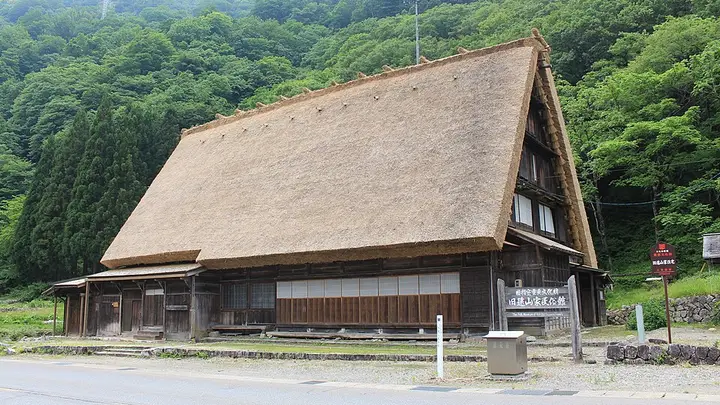 Plan B
by car from the south – the Former Toyama House, a night at Hirase Onsen, and Shirakawa-go in the morning
Good forDrivers coming from the Nagoya side who want a quiet onsen night
Besides the innabout ¥6,600–7,600 + fuel and tolls
Shokawa IC → (Route 156) Former Toyama House → Michi-no-eki Hida Hakusan (Shiramizu-no-yu) → Hirase Onsen or Miboro (overnight) → Shirakawa-go (Wada House) → Shirakawa-go IC
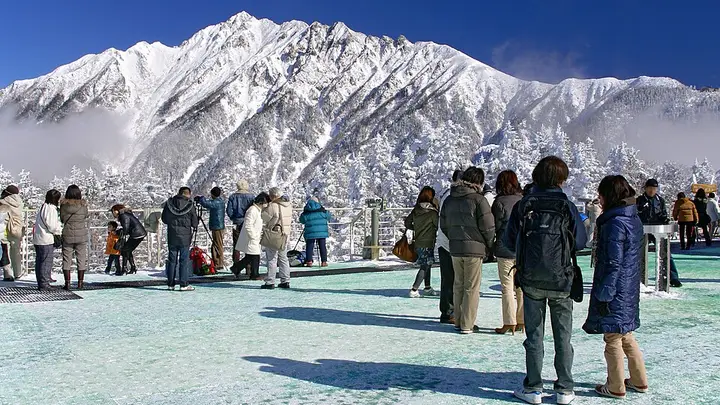 Plan C
the Northern Alps from the Shinhotaka Ropeway, then a night with an open-air bath facing Mount Yari
Good forMountain lovers travelling by bus from Takayama
Besides the innabout ¥9,000–10,000 + the bus back
Takayama Nohi Bus Center → (Nohi bus) Shinhotaka Ropeway → Nishihotaka-guchi station → (bus) Nakao-kogen-guchi → (overnight at Shinhotaka) → (bus) Takayama
 Plan D
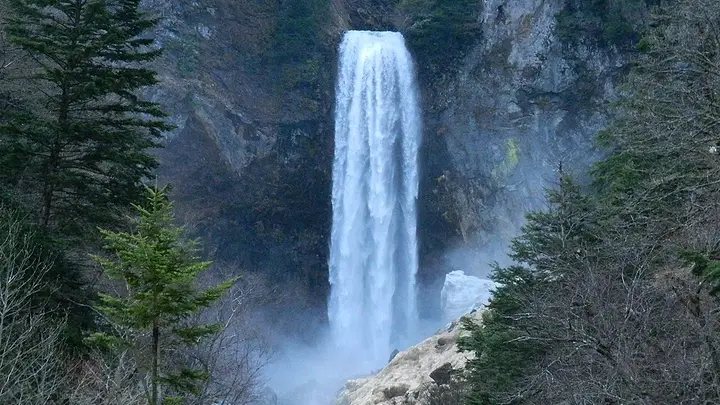
Hirayu Great Falls, then a slow night in Fukuji Onsen – rooms with open-air baths or an old farmhouse inn, for couples
Good forCouples and anyone wanting a long, quiet soak
Besides the innabout ¥4,980–5,980 + the bus back
Takayama Nohi Bus Center → (Nohi bus) Hirayu Onsen → Hirayu Great Falls → (bus) Fukuji Onsen (overnight) → Fukuji morning market → (bus) Takayama
 Plan E
a solo trip to Hirayu Onsen by bus only, staying next to the bus terminal
Good forSolo travellers without a car who want few changes
Besides the innabout ¥4,900–5,900 + the bus back
Takayama Nohi Bus Center → (Nohi bus) Hirayu bus terminal → Hirayu Folk Museum and Hirayu-no-yu → (overnight) → Hirayu terminal → (bus) Takayama
Photos:Alpsdake(CC BY-SA 4.0) / Alpsdake(CC BY-SA 4.0) / 663highland(CC BY 2.5) / lienyuan lee(CC BY 3.0) / ESU(CC BY 3.0)・Wikimedia Commons
Getting there: Shirakawa-go is about 50 minutes by express bus from Takayama, 1 h 20 from Kanazawa and about 2 h 30 from Nagoya (Meitetsu Bus Center); by car, about 5 minutes from Shirakawa-go IC on the Tokai-Hokuriku Expressway (Shirakawa-go tourist association). For Okuhida, the Nohi bus from the Takayama Nohi Bus Center reaches Hirayu Onsen in about an hour (¥1,600) and the Shinhotaka Ropeway in about 1 h 36 (¥2,200). Shirakawa-go and Okuhida both start from Takayama but lie in opposite directions.
The plans in detail
Plan Astay in Shirakawa-go’s gassho village and walk it in the quiet evening and morning
Good for: First-timers in Shirakawa-go arriving by bus from Takayama or Kanazawa
Day 1
- 112:00 Arrive at the Shirakawa-go bus terminal by express bus: about 50 minutes from Takayama, 1 h 20 from Kanazawa. Allow two to three hours to see the village ↗
- 212:30 After lunch, cross the Deai-bashi bridge over the Sho River into the gassho village ↗
- 313:30 Kanda House, a gassho farmhouse that took about ten years to build; you can see where saltpetre was made under the floor. Open 10:00–16:00, closed Wednesdays (open on holidays), ¥400. Next door, Nagase House rises five storeys and keeps a Buddhist altar said to be 500 years old. Open 9:00–16:00, ¥400 ↗
- 415:00 Myozenji Folk Museum, a temple whose main hall, living quarters and bell tower are all still gassho-style; the hearth is lit every day. ¥400; open 8:30–17:00 from April to November, 9:00–16:00 from December to March ↗
↓ Getting there: to the inn: Koshiyama is about 570 m in a straight line from the bus terminal; the Toyota Shirakawa-Go Eco-Institute runs a free shuttle from the Shirakawa-go stop (booking needed) - Inn16:00 Check in at the inn
Day 2
- 58:00 Before the day-trippers arrive, go to Shirakawa-go no Yu, the day spa inside the village. Open 7:00–21:00 (from 15:00 on Fridays; last entry 20:00), closed Thursdays and the second and fourth Wednesdays; ¥900. The open-air bath looks over the Sho River ↗
- Inn10:00 Check out and walk through the morning village to the bus terminal
- 611:30 Lunch, then the bus from the Shirakawa-go terminal to Takayama or Kanazawa ↗
Budget besides the inn (per adult): about ¥5,100–6,100 + bus fares
Kanda House ¥400 + Nagase House ¥400 + Myozenji ¥400 + Shirakawa-go no Yu ¥900 + two lunches ¥3,000–4,000
Tickets and transport: Kanda House, Nagase House and Myozenji Folk Museum are ¥400 each for adults. Shirakawa-go no Yu bath ¥900 (¥100 off for guests of the village’s gassho inns). Express bus fares extra
Where to stay: two picks
Minshuku Koshiyama 66/100 in our scoring
About 570 m in a straight line from the bus terminal and 780 m from Wada House (8 minutes on foot to the gassho village): walk the village in the evening after the day-trippers leave, and again in the morning. A four-room guesthouse in a renovated 60-year-old house. Bicycles to borrow. A late check-in fee applies after 18:00
Toyota Shirakawa-Go Eco-Institute 71/100 in our scoring
Free shuttle from the Shirakawa-go bus stop (booking needed); about 2.3 km in a straight line from the bus terminal. Large natural hot-spring bath and open-air bath. Dinner is French cooking with local produce, and meals must be booked in advance. Some staff handle everyday English. Nature programmes have limited places and need booking
More places to stay for this plan
Plan Bby car from the south – the Former Toyama House, a night at Hirase Onsen, and Shirakawa-go in the morning
Good for: Drivers coming from the Nagoya side who want a quiet onsen night
Day 1
- 12:00 From the Nagoya side, take the Tokai-Hokuriku Expressway to Shokawa IC (about 1 h 30 from Nagoya), then head north on Route 156 ↗
- 113:30 The Former Toyama House at Miboro, a gassho farmhouse from around 1827: the family lived on the ground floor and raised silkworms on the upper three levels, while saltpetre was made under the floor until 1887. ¥300; open 9:00–16:00 from April to November, 10:00–16:00 from December to March; closed Wednesdays (the day before when Wednesday is a holiday) ↗
↓ Getting there: about 2 km in a straight line to Michi-no-eki Hida Hakusan at Hirase - 214:30 Shiramizu-no-yu, the day spa at Michi-no-eki Hida Hakusan, with 100% natural spring water from the foot of Mount Haku, free-flowing. Open 11:00–20:00 (last entry 19:30); closed Wednesdays and the second and fourth Tuesdays (open on holidays, closed the next day); ¥900 ↗
↓ Getting there: to the inn: Yunosato is about 870 m in a straight line, Miboro about 3 km - Inn16:00 Check in at the inn
Day 2
- Inn8:30 Leave the inn for Shirakawa-go. Park at the village’s Seseragi Park car park (¥2,000, 8:00–17:00, last entry 16:30) and cross the Deai-bashi bridge into the village ↗
↓ Getting there: about 10.6 km in a straight line from Yunosato to Shirakawa-go - 39:30 Wada House, one of the largest gassho houses in the World Heritage village and the only one designated a national Important Cultural Property. The family still lives there; the ground and first floors are open. 9:00–17:00, irregular closing days, ¥400 ↗
↓ Getting there: walk the village and have lunch; Shirakawa-go IC is about 5 minutes away - 412:30 Cross Deai-bashi back to the car park and head home via Shirakawa-go IC ↗
Budget besides the inn (per adult): about ¥6,600–7,600 + fuel and tolls
Former Toyama House ¥300 + Shiramizu-no-yu ¥900 + parking ¥2,000 + Wada House ¥400 + two lunches ¥3,000–4,000
Tickets and transport: Former Toyama House ¥300, Shiramizu-no-yu bath ¥900, Wada House ¥400. The village car park at Seseragi Park in Shirakawa-go is ¥2,000 per car. Fuel and tolls extra
Where to stay: two picks
Shirakawa-go Hirase Onsen Oyado Yunosato 73/100 in our scoring
About 870 m in a straight line from Michi-no-eki Hida Hakusan (Shiramizu-no-yu), 1.3 km from the Former Toyama House and 10.6 km from the Shirakawa-go bus terminal – close to both of day 1’s stops. A Hirase Onsen inn that bills itself as the closest to Shirakawa-go with 100% free-flowing spring water. Pets allowed. Latest check-in 23:00. Cash only on site; no shuttle
Ryori Yado Miboro 95/100 in our scoring
About 870 m in a straight line from the Former Toyama House and 3 km from Shiramizu-no-yu. A four-room inn built around its cooking, with dinner and breakfast in a private room. You get the bath to yourself. Free coffee and bicycles. Transfer to the Shirakawa-go bus terminal (arrange in advance). Shared bath, toilets and washbasins; no lift. A heating charge is added in winter
More places to stay for this plan
Plan Cthe Northern Alps from the Shinhotaka Ropeway, then a night with an open-air bath facing Mount Yari
Good for: Mountain lovers travelling by bus from Takayama
Day 1
- 19:40 Board the Nohi bus for the Shinhotaka Ropeway at the Takayama Nohi Bus Center by Takayama Station (¥2,200). Buses leave Takayama about once an hour ↗
↓ Getting there: the 9:40 departure reaches the ropeway at 11:16 - 211:30 Ride the Shinhotaka Ropeway: the first section (departs on the hour and half-hour) to Nabedaira Kogen, then from Shirakabadaira the double-decker gondola of the second section (departs at :15 and :45) up to Nishihotaka-guchi at 2,156 m. Take in the Northern Alps from the observation deck. Lunch at the top ↗
↓ Getting there: back down, take the Nohi bus from the ropeway stop to Nakao-kogen-guchi - 315:30 Get off at Nakao-kogen-guchi and walk to the inn. Only rides from the stops between Shinhotaka Onsen and Nakao-Yakedake-tozanguchi towards the ropeway need booking by 18:00 the day before (not those towards Hirayu and Takayama) ↗
↓ Getting there: Yarimikan is about 320 m in a straight line; Nakaobira is 5 minutes on foot from the Nakao-Yakedake-tozanguchi stop - Inn16:00 Check in at the inn
Day 2
- Inn10:30 After a morning soak in the open-air bath, check out and take the Nohi bus from Nakao-kogen-guchi to Takayama ↗
- 412:30 Arrive at the Takayama Nohi Bus Center, have lunch and head home ↗
Budget besides the inn (per adult): about ¥9,000–10,000 + the bus back
Nohi bus ¥2,200 (Takayama → ropeway) + ropeway return ¥3,800 + two lunches ¥3,000–4,000
Tickets and transport: Nohi bus Takayama Nohi Bus Center → Shinhotaka Ropeway ¥2,200. The ropeway (first and second sections) costs ¥3,800 return for adults (¥1,900 children) and runs all year, except in bad weather or during inspections
Where to stay: two picks
Yarimikan 75/100 in our scoring
About 320 m in a straight line from the Nakao-kogen-guchi stop and 2.3 km from the ropeway’s Shinhotaka Onsen station. Seven open-air baths along the river, four of them private and free as often as you like. The Yarimi-no-yu, facing Mount Yari, is mixed (bathing wraps provided; women only 7:00–9:00). Some staff handle everyday English. Check in by 17:00; check-out 11:00
Yama no Ryosha Nakaobira 80/100 in our scoring
About 3 km in a straight line from the ropeway’s Shinhotaka Onsen station and 5 minutes on foot from the Nakao-Yakedake-tozanguchi stop (only some buses stop there). Six private baths for six rooms, so you rarely wait. Shuttle bus available. Meals in the dining room. Latest check-in 17:00; you must call if you will be later
More places to stay for this plan
Plan DHirayu Great Falls, then a slow night in Fukuji Onsen – rooms with open-air baths or an old farmhouse inn, for couples
Good for: Couples and anyone wanting a long, quiet soak
Day 1
- 110:40 Nohi bus from the Takayama Nohi Bus Center to Hirayu Onsen (¥1,600) ↗
↓ Getting there: the 10:40 departure reaches Hirayu Onsen at 11:38 - 211:40 Get off at the Hirayu bus terminal and have lunch ↗
↓ Getting there: Hirayu Great Falls is about 1.7 km away in a straight line - 313:00 Hirayu Great Falls, 64 m high and 6 m wide, one of the three great falls of Hida and on Japan’s list of 100 waterfalls. Free. In winter it is about a 30-minute walk from the Anki-ya restaurant, and every February the frozen falls are lit up ↗
↓ Getting there: back to the Hirayu terminal and the Nohi bus to Fukuji Onsen (¥380) - Inn15:00 Check in at the inn
- 20:00 After dinner, go to Yadoriyu in Fukuji, a rest house in a relocated Edo-period Hida farmhouse with an indoor footbath and a sunken hearth. Open 9:00–21:00, free for guests of Fukuji inns only ↗
Day 2
- Inn9:00 Leave the inn for the Fukuji Onsen morning market: 8:30–11:00 from 15 November to 14 April, 6:30–11:00 from 15 April to 14 November, open every day ↗
↓ Getting there: Nohi bus from the Fukuji Onsen stop to Takayama - 412:00 Arrive at the Takayama Nohi Bus Center, have lunch and head home ↗
Budget besides the inn (per adult): about ¥4,980–5,980 + the bus back
Nohi bus ¥1,600 (Takayama → Hirayu) + ¥380 (Hirayu → Fukuji) + two lunches ¥3,000–4,000 (the falls and Yadoriyu are free)
Tickets and transport: Nohi bus: Takayama → Hirayu Onsen ¥1,600, Hirayu Onsen → Fukuji Onsen ¥380. Hirayu Great Falls is free. The Yadoriyu footbath house in Fukuji is free, for guests of Fukuji inns only
Where to stay: two picks
Kakurean Hidaji 76/100 in our scoring
Two minutes on foot from the Fukuji Onsen bus stop, about 4 km in a straight line from the Hirayu terminal. All 12 rooms have their own open-air hot-spring bath and a cypress indoor tub, with two more open-air baths by the river. As a Fukuji inn, it gives access to Yadoriyu. No children of elementary age or younger. Check-in 14:00–17:00, check-out 11:00
Yamazato no Iori Soen 71/100 in our scoring
In Fukuji Onsen, about 4.3 km in a straight line from the Hirayu terminal. An inn in a late-Edo Hida farmhouse moved here and restored; rice cooked over firewood is eaten round the hearth. Three private open-air baths with indoor tubs, free to use whenever you like. Call if you will arrive after 17:00. Check-out 11:00
More places to stay for this plan
Plan Ea solo trip to Hirayu Onsen by bus only, staying next to the bus terminal
Good for: Solo travellers without a car who want few changes
Day 1
- 112:40 Nohi bus from the Takayama Nohi Bus Center to Hirayu Onsen (¥1,600, about an hour) ↗
↓ Getting there: the 12:40 departure reaches Hirayu Onsen at 13:38 - 213:45 Get off at the Hirayu bus terminal, leave your bags at the inn and stroll the spa village ↗
- 314:00 The Hirayu Folk Museum, old gassho houses free to visit, with a fire burning in the hearth. Open 9:00–17:00, irregular closing days. The Hirayu-no-yu bath on the same site has brownish water and asks a small donation (around ¥300); open 6:00–21:00 (8:00–21:00 in winter) ↗
↓ Getting there: to the inn: Hirata-kan is about 170 m in a straight line from the museum, Eitaro about 260 m - Inn15:30 Check in at the inn
Day 2
- Inn10:00 After a morning bath, check out and walk to the Hirayu bus terminal
↓ Getting there: both inns are within 200 m of the terminal in a straight line - 410:40 Nohi bus from the Hirayu terminal to Takayama; lunch there and head home ↗
- 512:00 Arrive at the Takayama Nohi Bus Center ↗
Budget besides the inn (per adult): about ¥4,900–5,900 + the bus back
Nohi bus ¥1,600 (Takayama → Hirayu) + Hirayu-no-yu about ¥300 + two lunches ¥3,000–4,000 (folk museum free)
Tickets and transport: Nohi bus Takayama → Hirayu Onsen ¥1,600. The Hirayu Folk Museum is free; the Hirayu-no-yu bath next door asks a small donation (around ¥300)
Where to stay: two picks
Hirayu Onsen Hirata-kan 63/100 in our scoring
About 180 m in a straight line from the Hirayu bus terminal (1 minute on foot) and 170 m from the folk museum: off the bus from Takayama and straight into the inn. A large all-cypress bath with plenty of water, plus an open-air bath. Non-smoking throughout. Call if you will arrive after 17:00
Oyado Eitaro 89/100 in our scoring
About 150 m in a straight line from the Hirayu terminal and 260 m from the folk museum. Two private baths, each with indoor and open-air tubs, free of charge. The water is used as it flows from the source – no added water, heating, recirculation or chlorine – and a father-and-child team of certified Gifu cuisine instructors does the cooking. English pages on its website. Check single-guest plans when booking. Check-out 10:00
More places to stay for this plan
All our Shirakawa-go & Okuhida fives
- Shirakawa-go inns and Hirase Onsen: 5 picked from 20
- Okuhida open-air baths: 5 inns in the Japanese Alps
- Okuhida Onsen solo trip: 5 ryokan that take one guest with dinner
About this page
Travel times, prices and opening hours come from the official pages of each sight, the local tourist association and the transport operators (checked 2026-11-22). The inns are taken from our own scored fives (reviews, price and facilities across five criteria), two per plan, chosen because they sit on that plan’s route. Times and prices change, so check the official pages before you go.
Questions visitors ask
Can you do both Shirakawa-go and Okuhida in two days?
Yes. Both start from Takayama: Shirakawa-go is about 50 minutes away by express bus and Hirayu Onsen about an hour by Nohi bus. See Shirakawa-go on the morning of day 1, return to Takayama and take an afternoon bus to Hirayu or Fukuji to stay at a Plan D or E inn. Allow two to three hours for the village.
If you stay in Shirakawa-go, can you see the light-up?
The light-up is strictly by advance reservation; there is no same-day entry. In 2027 it is held on 11, 17, 24 and 31 January. You can attend if you stay at an inn in the village (allocated by the Shirakawa-go tourist association’s lottery; extra places first come, first served from 13:00 on 26 November 2026), book a designated car park, or join a bus or travel-agency tour. On those days daytime visits are restricted too, and car parks stop admitting cars at 15:00.
Does it work in winter (December to March)?
Yes. Shirakawa-go gets heavy snow – more than 170 cm on the ground in February at times. The Hakusan Shirakawa-go White Road is closed from 11 November 2026 to early June 2027, so there is no through route from Ishikawa. The Shinhotaka Ropeway runs all year but stops in bad weather. If you drive in Okuhida, be ready with tyre chains from mid-November to mid-April. Plans A, C, D and E by bus avoid driving on snow.
Can you get around without a car?
Plans A, C, D and E work by bus. Express buses run to Shirakawa-go from Takayama, Kanazawa, Nagoya and Toyama, and Nohi buses from Takayama to Okuhida about once an hour. Plan B assumes a car, as Yunosato in Hirase offers no shuttle (Miboro does transfer to the Shirakawa-go bus terminal if arranged in advance).
Sources
- https://shirakawa-go.gr.jp/access/
- https://shirakawa-go.gr.jp/events/460/
- https://shirakawa-go.gr.jp/events/461/
- https://shirakawa-go.gr.jp/events/456/
- https://shirakawa-go.gr.jp/active/4/
- https://shirakawa-go.gr.jp/active/5/
- https://shirakawa-go.gr.jp/active/12/
- https://shirakawa-go.gr.jp/active/3/
- https://shirakawa-go.gr.jp/active/6/
- https://shirakawa-go.gr.jp/active/8/
- https://shirakawa-go.gr.jp/active/13/
- https://www.nouhibus.co.jp/route_bus/shinhotaka-line/
- https://shinhotaka-ropeway.jp/price/
- https://okuhida.or.jp/p/sightseeing/%e5%b9%b3%e6%b9%af%e5%a4%a7%e6%bb%9d/
- https://okuhida.or.jp/p/sightseeing/%e5%b9%b3%e6%b9%af%e6%b0%91%e4%bf%97%e9%a4%a8/
- https://okuhida.or.jp/p/sightseeing/%e7%a6%8f%e5%9c%b0%e6%b8%a9%e6%b3%89%e6%9c%9d%e5%b8%82/
- https://okuhida.or.jp/p/sightseeing/%e8%88%8e%e6%b9%af/