This page contains promotions (affiliate links) (Editorial & ad policy)
Myoko itinerary: 5 two-day plans in Myoko Kogen and Joetsu
Approximate, at the rate on 2026-10-02. You pay in yen.
On the slopes of Mount Myoko lie hot-spring villages with very different characters – Akakura, Ikenotaira, Seki, Tsubame – and whether you come for snow or for green hills, you want a long soak in a mountain bath. The catch: in winter deep snow closes the paths to the waterfalls and open-air baths, each village sits on its own bus line, and the shinkansen station is down on the Joetsu side. The season and the village you sleep in change everything. So we put together five itineraries for different kinds of trip, each with two inns right on the route.
At a glance
- Five ways to spend two days in Myoko: A to ski in winter, B for Naena Falls and Imori-ike by car, C for Tsubame Onsen’s free Ogon-no-yu without a car, D for Joetsu’s aquarium and Takada Castle before heading up to Myoko, E to enjoy the winter snow without skiing
- Two inns per plan from our scored five, each near where day 1 ends or day 2 begins. The two at Akakura are about 0.5–1.1 km in a straight line from the ski areas, the two at Seki Onsen about 500 m from the centre, and Kawaratei about 10 min by car from Joetsumyoko Station (with only five inns, each is used for two plans)
- Tokyo to Joetsumyoko is as little as 1 hr 50 min on the Hokuriku Shinkansen; Myoko-Kogen Station to Akakura Onsen is about 20 min by bus. The ski areas usually open mid-December to late March, while the Naena Falls path and Tsubame’s Ogon-no-yu are closed by snow in winter
Pick your two days: five different routes
Each comes with two inns right on the route
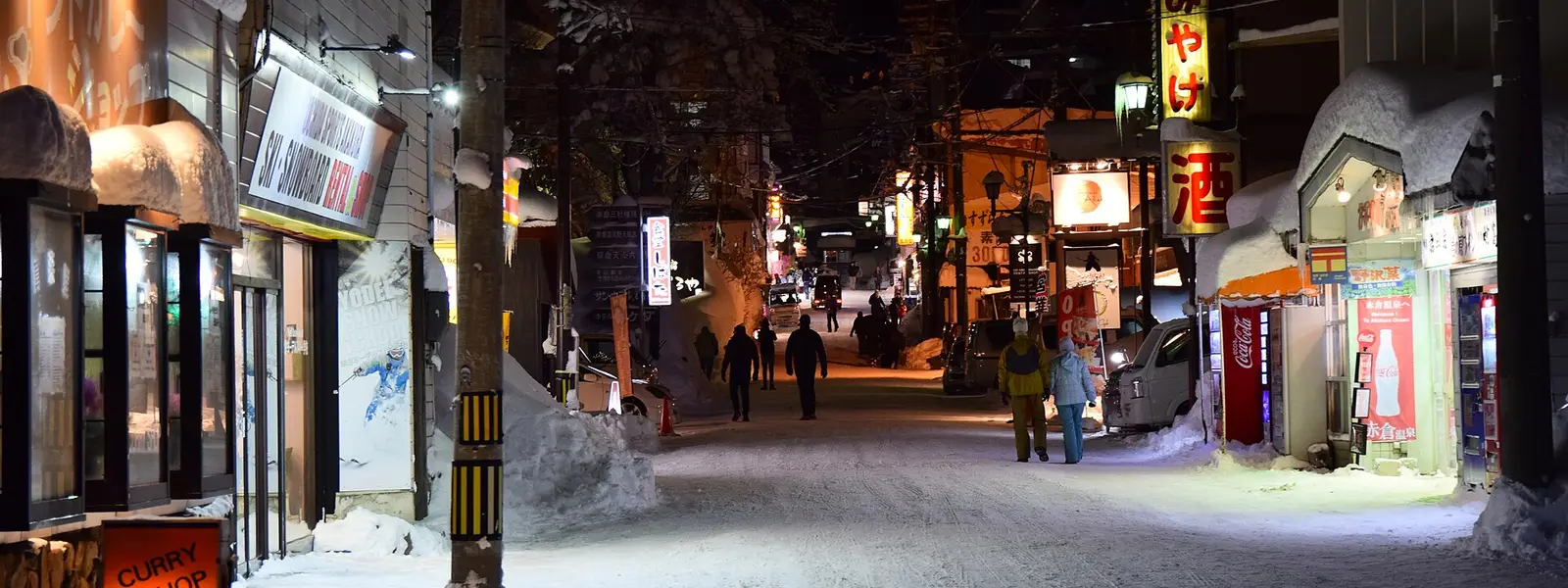
 Plan A
two days of skiing from Akakura Onsen (usually mid-December–late March)
Good forSkiers and snowboarders
Besides the innabout ¥3,000–4,000 + lift tickets, rental and bus fares + travel there and back
Joetsumyoko Sta. → Myoko-Kogen Sta. → Akakura Onsen ski area → (night) → Akakura Kanko Resort ski area or a snowshoe tour → Myoko-Kogen Sta.
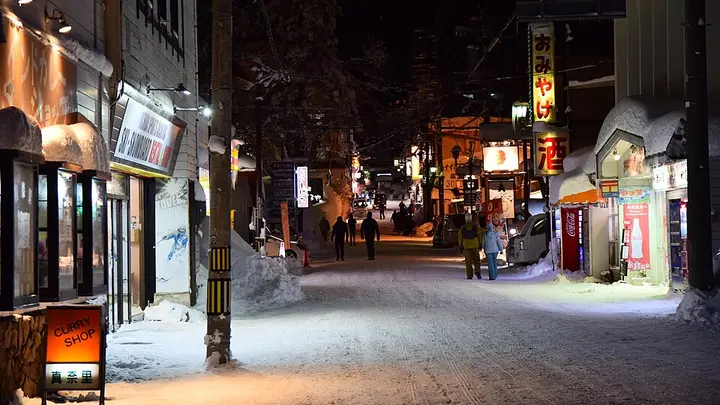
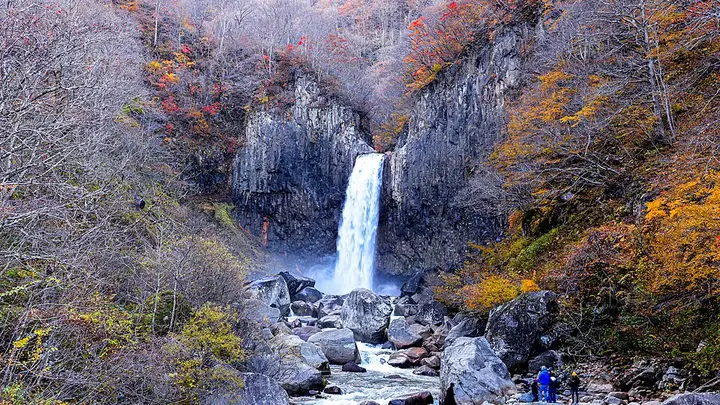 Plan B
by car to Naena Falls, Imori-ike pond and the Sky Cable, with a night at Seki Onsen (spring to autumn)
Good forTravellers with a car, in the green or autumn-leaf season
Besides the innabout ¥5,500–6,500 + fuel
Myoko-Kogen IC → Naena Falls → Imori-ike and Visitor Center → Seki Onsen (night) → Myoko Kogen Sky Cable → Akakura Onsen footbath park → Myoko-Kogen IC
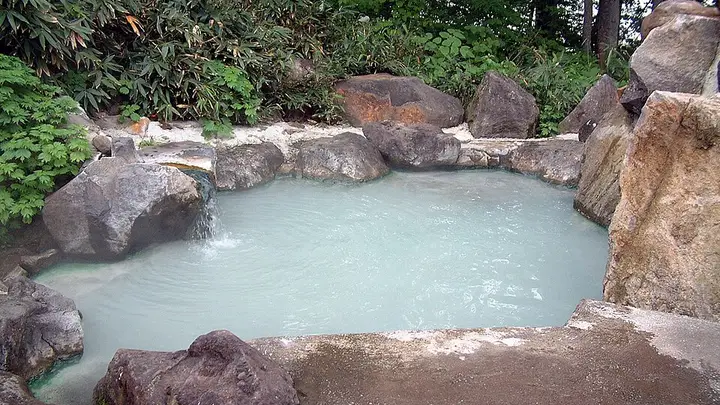 Plan C
by bus from Sekiyama Station to Tsubame Onsen’s free Ogon-no-yu, with a night at Seki Onsen (spring to autumn)
Good forTravellers without a car looking for a remote mountain bath, solo travellers
Besides the innabout ¥4,000–5,000 + Echigo Tokimeki Railway fares + travel there and back
Joetsumyoko Sta. → Sekiyama Sta. → (bus) Tsubame Onsen, Ogon-no-yu → Seki Onsen (night) → Fudo Falls → (bus) Sekiyama Shrine → Sekiyama Sta.
 Plan D
Joetsu’s Umigatari aquarium and Takada Castle, then Imori-ike in Myoko Kogen on day 2 (families, spring to autumn)
Good forFamilies with children, rainy days, travellers without a car
Besides the innabout ¥5,310–6,310 + train and bus fares + travel there and back
Joetsumyoko Sta. → Naoetsu Sta. → Umigatari → Takada Sta. → Takada Castle Park and turret → (night) → Myoko-Kogen Sta. → Imori-ike and Visitor Center → Myoko-Kogen Sta.
 Plan E
snowshoeing at Akakura Onsen in winter, then Takada’s castle town in Joetsu on day 2 (December–March)
Good forThose who don’t ski but want to enjoy the winter snow
Besides the innabout ¥12,310–13,310 + train and bus fares + travel there and back
Joetsumyoko Sta. → Myoko-Kogen Sta. → Akakura Onsen → Myoko Kogen Visitor Center (snowshoe tour) → (night) → Takada Sta. → Takada Castle Park and turret → Joetsumyoko Sta.
Photos:Raita Futo(CC BY 2.0) / Koichi Hayakawa(CC BY-SA 2.0) / Siriusplot(CC BY-SA 3.0) / TANAKA Juuyoh(CC BY 2.0) / Raita Futo(CC BY 2.0)・Wikimedia Commons
Getting there: From Tokyo the Hokuriku Shinkansen reaches Joetsumyoko Station in as little as 1 hr 50 min; from Kanazawa about 1 hour (from Osaka, take the Thunderbird to Tsuruga and change to the shinkansen). From Joetsumyoko, the Echigo Tokimeki Railway’s Myoko Haneuma Line runs to Myoko-Kogen Station; from Tokyo you can also change at Nagano to the Shinano Railway for Myoko-Kogen. By car, use Myoko-Kogen IC, Nakago IC or Arai Smart IC on the Joshinetsu Expressway (Myoko Tourism).
The plans in detail
Plan Atwo days of skiing from Akakura Onsen (usually mid-December–late March)
Good for: Skiers and snowboarders
Day 1
- 110:00 Arrive at Joetsumyoko Station on the Hokuriku Shinkansen and take the Echigo Tokimeki Railway’s Myoko Haneuma Line to Myoko-Kogen Station (from Tokyo you can also change at Nagano to the Shinano Railway for Myoko-Kogen) ↗
↓ Getting there: Echigo Tokimeki Railway to Myoko-Kogen - 211:30 From Myoko-Kogen Station, take the Akakura Line bus or your inn’s pick-up to Akakura Onsen (about 20 min by bus). Leave your bags at the inn and have lunch ↗
- 313:00 Ski at Akakura Onsen ski area beside the hot-spring town (about 1.1 km in a straight line from the inns). Check 2026–27 lift prices and where to buy them on the official site due in early December ↗
- Inn16:30 Check in, leave your gear in the drying room and warm up in the hot spring
Day 2
- Inn8:30 Check out, leave your bags and head for the slopes
- 49:00 On day 2, ski the neighbouring Akakura Kanko Resort, or – if you are not skiing – join a snowshoe tour meeting at Myoko Kogen Visitor Center (10:00 or 13:00, short course from ¥9,000, booking required) ↗
- 514:30 Have lunch, collect your bags and return to Myoko-Kogen Station by bus or the inn’s car ↗
Budget besides the inn (per adult): about ¥3,000–4,000 + lift tickets, rental and bus fares + travel there and back
Two lunches ¥3,000–4,000 (check 2026–27 lift prices on the official site due in early December; a snowshoe tour instead costs from ¥9,000 for the short course)
Tickets and transport: Akakura Onsen ski area usually opens from mid-December to late March, and Akakura Kanko Resort until early May. Check 2026–27 lift prices on Akakura Onsen’s new website (due in early December). For a day off the slopes, a guided snowshoe tour starts at ¥9,000 (short course, about 3 hours, minimum two people, pick-up from lodgings in the Myoko Kogen area). Myoko-Kogen Station to Akakura Onsen is about 20 min by bus
Where to stay: two picks
Akakura Onsen Hotel Taiko 81/100 in our scoring
About 1.1 km in a straight line from Akakura Onsen ski area and 1.7 km from Akakura Kanko Resort. Free pick-up from Myoko-Kogen Station (book by the day before, 9:00–18:00). Ski, ski-wear and snowboard rental and a drying room. In winter the first car park is on a steep slope: 4WD, studless tyres and chains needed. Last check-in 18:00
Akakura Kanko Hotel 79/100 in our scoring
About 520 m in a straight line from Akakura Kanko Resort and 1.1 km from Akakura Onsen ski area. Free shuttle bus from Myoko-Kogen Station (by reservation). Large bath, open-air and family baths, sauna and a spa. In winter only 4WD cars can climb the road to the hotel; others park at the ski area’s guest car park and are driven up. Check-out 11:00
More places to stay for this plan
Plan Bby car to Naena Falls, Imori-ike pond and the Sky Cable, with a night at Seki Onsen (spring to autumn)
Good for: Travellers with a car, in the green or autumn-leaf season
Day 1
- 111:00 Drive from Myoko-Kogen IC on the Joshinetsu Expressway to Naena Falls at Suginosawa. From the car park it is 15 min on foot each way: cross a suspension bridge over the Seki River into Nagano Prefecture and walk close to the 55 m falls, one of Japan’s top 100 waterfalls ↗
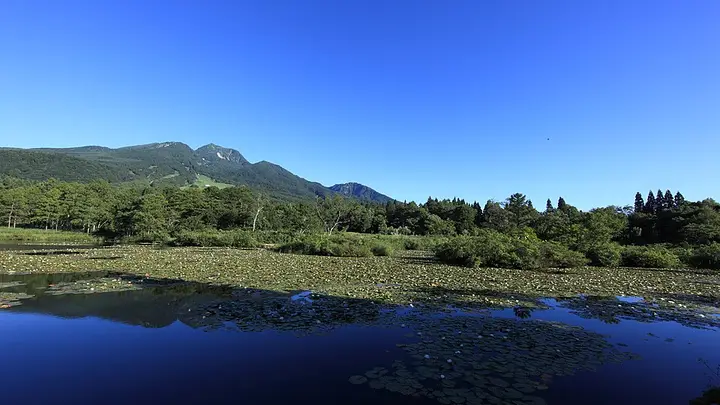
↓ Getting there: to Imori-ike, about 5 km in a straight line - 213:00 After lunch, walk around Imori-ike at Ikenotaira Onsen (about 500 m around, a barrier-free path of some 15 min). On clear days 2,454 m Mount Myoko is mirrored in the water, and skunk cabbage blooms from late April to early May. The Myoko Kogen Visitor Center by the pond explains the national park ↗
↓ Getting there: to Seki Onsen, about 4.5 km in a straight line - Inn15:30 Check in at Seki Onsen (Asahiya Ryokan’s open-air bath is open from mid-May to mid-November)
Day 2
- Inn9:30 Check out and drive to the Myoko Kogen Sky Cable
- 310:00 Ride the six-seat gondolas of the Myoko Kogen Sky Cable 11 minutes up to 1,300 m, with views from the Shiga and Nozawa mountains to Mount Madarao and Lake Nojiri; from the top station a trail leads through virgin beech forest (¥2,500 return in fiscal 2025) ↗
↓ Getting there: to the Akakura Onsen town - 12:00 Lunch at Akakura Onsen and a rest at the covered footbath park (free, late April to late November, 9:00–16:00), then on to Myoko-Kogen IC ↗
Budget besides the inn (per adult): about ¥5,500–6,500 + fuel
Sky Cable return ¥2,500 (fiscal 2025 price) + two lunches ¥3,000–4,000 (Naena Falls, Imori-ike and the footbath park free)
Tickets and transport: Naena Falls and Imori-ike are free (the falls path is closed by snow in winter). The Myoko Kogen Sky Cable cost ¥2,500 return for adults and ¥1,500 for elementary pupils in fiscal 2025; check operating days officially. Akakura Onsen’s footbath park is free (late April to late November, 9:00–16:00)
Where to stay: two picks
Asahiya Ryokan, Seki Onsen 90/100 in our scoring
A 10-room inn at Seki Onsen, about 4.5 km in a straight line from Imori-ike and 2 km from day 2’s Sky Cable. Its spring, said to be a secret bath of the warlord Uesugi Kenshin, flows straight from the source. The open-air bath is open only mid-May to mid-November. Three parking spaces (plus Seki Onsen’s shared car park); curfew 22:00
Uguisu no Hatsune 70/100 in our scoring
A four-party-a-night inn at Seki Onsen, about 4.5 km in a straight line from Imori-ike and 2 km from the Sky Cable. Rooms with semi-open-air baths, two private baths and private dining rooms. Closed Tuesdays and Wednesdays (except Golden Week, Obon and New Year), no consecutive nights, last check-in 17:00, curfew 21:00
More places to stay for this plan
Plan Cby bus from Sekiyama Station to Tsubame Onsen’s free Ogon-no-yu, with a night at Seki Onsen (spring to autumn)
Good for: Travellers without a car looking for a remote mountain bath, solo travellers
Day 1
- 111:00 From Joetsumyoko Station take the Echigo Tokimeki Railway to Sekiyama Station, then the municipal Seki–Tsubame Onsen bus to Tsubame Onsen (check times on Myoko city’s timetable). You can buy the 2-day bus pass (¥1,000) on board ↗
↓ Getting there: Seki–Tsubame Onsen bus to Tsubame Onsen - 212:30 Arrive at Tsubame Onsen, a remote spa of milky-white water, and have lunch. Walk 10 min from the Tsubame Onsen car park to the open-air bath Ogon-no-yu (free, sunrise to sunset, cleaning on Monday and Friday mornings, closed in winter); bring boots while snow lingers. Tsubame’s other outdoor bath, Kawara-no-yu, was open until November 8 in 2026 before its bridge was removed for winter ↗
↓ Getting there: to Seki Onsen, about 1.4 km in a straight line (also by bus) - Inn15:30 Check in at your inn in Seki Onsen
Day 2
- Inn9:30 Check out
- 39:45 See Fudo Falls in the gorge beneath Fudo Bridge, near Seki Onsen (best in fresh green or autumn colours), then take the Seki–Tsubame Onsen bus down the mountain ↗
↓ Getting there: Seki–Tsubame Onsen bus to the Sekiyama Jinja-mae stop - 411:00 Visit Sekiyama Shrine, the village shrine of Mount Myoko, said to have been founded in 708. Its main hall is a registered tangible cultural property, and the grounds include the nationally designated garden of the former Sekiyama Hozoin. A fire festival in the mountain-ascetic tradition is held every July. Open at any time; the shrine office is unstaffed ↗
↓ Getting there: to Sekiyama Station - 512:30 Take the Echigo Tokimeki Railway from Sekiyama back to Joetsumyoko, have lunch and head home ↗
Budget besides the inn (per adult): about ¥4,000–5,000 + Echigo Tokimeki Railway fares + travel there and back
2-day bus pass ¥1,000 + two lunches ¥3,000–4,000 (Ogon-no-yu and the shrine free)
Tickets and transport: The bus is the municipal Seki–Tsubame Onsen Line (a handful of runs a day on the April 1, 2026–March 31, 2027 timetable). The 2-day sightseeing bus pass (¥1,000 for adults, sold at the Myoko Kogen tourist office or on board) covers the Akakura, Suginosawa, Seki–Tsubame Onsen and Myoko Sanroku lines for two days. Ogon-no-yu is free, open sunrise to sunset, closed Monday and Friday mornings for cleaning, and shut by snow in winter
Where to stay: two picks
Uguisu no Hatsune 70/100 in our scoring
A four-party-a-night inn at Seki Onsen, about 530 m in a straight line from the hot-spring centre with its bus stop and 1.6 km from Ogon-no-yu; take the municipal bus from Sekiyama Station to Seki Onsen. Rooms with semi-open-air baths and two private baths – quiet even on your own. Closed Tuesdays and Wednesdays (except Golden Week, Obon and New Year), last check-in 17:00, curfew 21:00
Asahiya Ryokan, Seki Onsen 90/100 in our scoring
A 10-room inn at Seki Onsen, about 500 m in a straight line from the centre and 1.6 km from Ogon-no-yu. Its spring, said to be Uesugi Kenshin’s secret bath, flows straight from the source; open-air bath from mid-May to mid-November. Check-in and check-out outside the usual hours are possible. Curfew 22:00
More places to stay for this plan
Plan DJoetsu’s Umigatari aquarium and Takada Castle, then Imori-ike in Myoko Kogen on day 2 (families, spring to autumn)
Good for: Families with children, rainy days, travellers without a car
Day 1
- 110:30 Arrive at Joetsumyoko Station on the Hokuriku Shinkansen and take the Echigo Tokimeki Railway to Naoetsu; the aquarium is about 15 min on foot from the station ↗
↓ Getting there: about 15 min on foot from Naoetsu Station - 211:15 Visit Umigatari, the Joetsu city aquarium: about 120 Magellanic penguins (Japan’s largest group), bottlenose dolphins kept all year with performances, a great tank that lines up with the Sea of Japan horizon and an all-glass underwater tunnel. Lunch inside or nearby ↗
↓ Getting there: Echigo Tokimeki Railway from Naoetsu to Takada, then about 15 min on foot - 314:30 Walk Takada Castle Park and climb the three-storey turret (¥310, April–November 9:00–17:00, tickets until 30 min before closing). Some 4,000 cherry trees fill the park and its surroundings, lit up at night during the cherry festival usually held from late March to early April; from mid-July to late August lotus covers the moat ↗
↓ Getting there: to your inn (Kawaratei is about 10 min by car from Joetsumyoko Station; Akakura Kanko Hotel runs a shuttle from Myoko-Kogen Station) - Inn17:00 Check in at your inn
Day 2
- Inn9:00 Check out (from Kawaratei, go to Joetsumyoko Station and take the Echigo Tokimeki Railway to Myoko-Kogen)
- 410:30 From Myoko-Kogen Station take the Suginosawa Line bus to Imori-ike Iriguchi. Walk around Imori-ike (about 500 m, a barrier-free path of some 15 min) and, on a clear day, see Mount Myoko reflected in it. At the Myoko Kogen Visitor Center by the pond, exhibits explain the national park ↗
↓ Getting there: Suginosawa Line bus back to Myoko-Kogen Station - 513:00 Lunch near Myoko-Kogen Station, then the Echigo Tokimeki Railway to Joetsumyoko and home ↗
Budget besides the inn (per adult): about ¥5,310–6,310 + train and bus fares + travel there and back
Umigatari ¥2,000 + Takada Castle turret ¥310 + two lunches ¥3,000–4,000 (Imori-ike and the Visitor Center free; pupils pay ¥1,000 at Umigatari)
Tickets and transport: Umigatari ¥2,000 for adults, ¥1,200 for high-school students, ¥1,000 for younger pupils (hours vary by season; check the opening calendar). Takada Castle turret ¥310, ¥160 for high-school students (April–November 9:00–17:00, closed Mondays and the day after holidays). Imori-ike and the Visitor Center are free. Train and bus fares extra
Where to stay: two picks
Kaminomiya Onsen Kawaratei 82/100 in our scoring
About 10 min by car (3.2 km in a straight line) from Joetsumyoko Station and 6.4 km from Takada Castle’s turret – close to day 1 in Joetsu. 60 free parking spaces. Natural hot spring with large bath, open-air bath and sauna; meals can be adapted for allergies. Wheelchairs to borrow and an accessible toilet. Bathing tax ¥150 extra
Akakura Kanko Hotel 79/100 in our scoring
About 2.4 km in a straight line from Imori-ike and right by the Sky Cable (about 180 m), close to day 2. Free shuttle bus from Myoko-Kogen Station (by reservation). Family bath, baby cots and a free self-service laundry. Check-out 11:00
More places to stay for this plan
Plan Esnowshoeing at Akakura Onsen in winter, then Takada’s castle town in Joetsu on day 2 (December–March)
Good for: Those who don’t ski but want to enjoy the winter snow
Day 1
- 110:00 Arrive at Joetsumyoko Station on the Hokuriku Shinkansen and take the Echigo Tokimeki Railway’s Myoko Haneuma Line to Myoko-Kogen Station (from Tokyo you can also change at Nagano to the Shinano Railway for Myoko-Kogen) ↗
↓ Getting there: Echigo Tokimeki Railway to Myoko-Kogen - 211:30 From Myoko-Kogen Station take the Akakura Line bus or your inn’s pick-up to Akakura Onsen (about 20 min by bus). Leave your bags and have lunch ↗
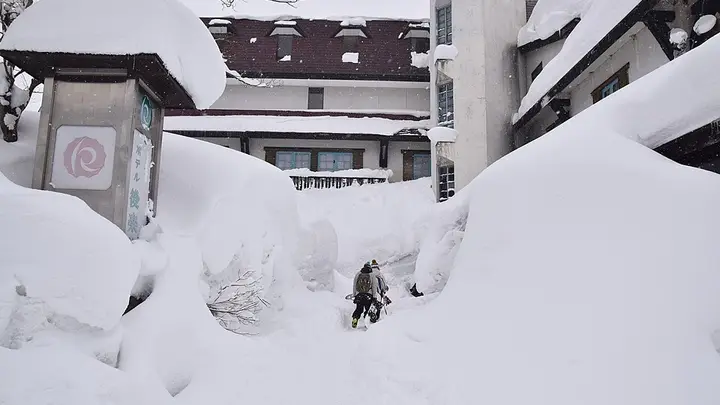
- 313:00 Meet at Myoko Kogen Visitor Center and walk the snowy forest on snowshoes with a local nature guide (short course meets at 13:00 and ends around 15:30; booking required). Pick-up is available from lodgings in the Myoko Kogen area ↗
↓ Getting there: tour transfer to your inn (for Kawaratei, take the Echigo Tokimeki Railway from Myoko-Kogen to Joetsumyoko) - Inn16:30 Check in and warm up in a hot spring with a view of the snow
Day 2
- Inn9:30 Check out and take the Echigo Tokimeki Railway to Takada (from Akakura, first go to Myoko-Kogen Station by bus or the inn’s car)
- 411:30 Walk about 15 min from Takada Station to Takada Castle Park. Stroll the snowy park and climb the turret (¥310; 10:00–16:00 from December to March; closed Monday to Thursday in January and February) ↗
↓ Getting there: back to Takada Station and the Echigo Tokimeki Railway to Joetsumyoko - 513:30 Lunch near Joetsumyoko Station and head home ↗
Budget besides the inn (per adult): about ¥12,310–13,310 + train and bus fares + travel there and back
Snowshoe tour from ¥9,000 + Takada Castle turret ¥310 + two lunches ¥3,000–4,000
Tickets and transport: Snowshoe tour from ¥9,000 for the short course (December–March, snow permitting; minimum two people; guide, insurance and snowshoe and pole rental included; transfers within the Myoko Kogen area). Takada Castle turret ¥310, open 10:00–16:00 from December to March; in January and February it is closed Monday to Thursday (open on holidays)
Where to stay: two picks
Akakura Onsen Hotel Taiko 81/100 in our scoring
On the heights of Akakura Onsen, about 3.2 km in a straight line from Myoko Kogen Visitor Center and within the area where the snowshoe tour picks up. Free pick-up from Myoko-Kogen Station (book by the day before, 9:00–18:00). Natural hot spring with large bath, open-air bath and sauna; tea is served in the after-bath lounge. Last check-in 18:00
Kaminomiya Onsen Kawaratei 82/100 in our scoring
About 10 min by car (3.2 km in a straight line) from Joetsumyoko Station and 6.8 km from Takada Station, close to day 2 in Takada – the inn to come down to after snowshoeing. Natural hot spring with large bath, open-air bath and sauna; 60 free parking spaces. Bathing tax ¥150 extra
More places to stay for this plan
All our Myoko fives
About this page
Travel times, prices and opening hours come from the official pages of each sight, the local tourist association and the transport operators (checked 2026-11-23). The inns are taken from our own scored fives (reviews, price and facilities across five criteria), two per plan, chosen because they sit on that plan’s route. Times and prices change, so check the official pages before you go.
Questions visitors ask
Can you see Myoko in two days?
Yes. The villages are scattered over the mountainside, so pick one to stay in and explore around it. From spring to autumn, Plan B by car (Naena Falls, Imori-ike, the Sky Cable) or Plan C without a car (Tsubame’s Ogon-no-yu and Seki Onsen); in winter, Plan A (skiing) or E (snowshoeing).
What is there to do in Myoko in winter besides skiing?
Guided snowshoe tours from Myoko Kogen Visitor Center (December–March, short course from ¥9,000, about 3 hours) take you into the snowy forest. As in Plan E, you can come down to Takada Castle Park in Joetsu on day 2 to see the turret (10:00–16:00 December to March; closed Monday to Thursday in January and February). The Naena Falls path and Tsubame’s Ogon-no-yu are closed by snow in winter.
Can you get around without a car?
Yes. From Joetsumyoko take the Echigo Tokimeki Railway to Myoko-Kogen or Sekiyama, then the municipal buses (Akakura, Suginosawa, Seki–Tsubame Onsen and Myoko Sanroku lines) to the villages. The 2-day sightseeing bus pass for those four lines costs ¥1,000. Plans A, C, D and E are built without a car.
Which plan suits a trip with children?
Plan D: Umigatari in Joetsu has about 120 Magellanic penguins and dolphin performances all year (¥1,000 for pupils), and day 2’s Imori-ike has a barrier-free path of about 15 min. Akakura Kanko Hotel has a family bath and baby cots.
Sources
- https://myokotourism.jp/access/
- https://myokotourism.jp/ski-resorts/
- https://www.akakura-ski.com/
- https://myokotourism.jp/taiken/%E5%A6%99%E9%AB%98%E6%88%B8%E9%9A%A0%E9%80%A3%E5%B1%B1%E3%80%80%E7%99%92%E3%81%97%E3%81%AE%E6%A3%AE%E3%82%B9%E3%83%8E%E3%83%BC%E3%82%B7%E3%83%A5%E3%83%BC%E3%83%84%E3%82%A2%E3%83%BC/
- https://myokotourism.jp/tourist-spots/%E3%81%84%E3%82%82%E3%82%8A%E6%B1%A0/
- https://myokotourism.jp/tourist-spots/%E5%A6%99%E9%AB%98%E9%AB%98%E5%8E%9F%E3%83%93%E3%82%B8%E3%82%BF%E3%83%BC%E3%82%BB%E3%83%B3%E3%82%BF%E3%83%BC/
- https://myokotourism.jp/tourist-spots/%E8%8B%97%E5%90%8D%E6%BB%9D-%EF%BC%88%E6%97%A5%E6%9C%AC%E3%81%AE%E6%BB%9D%E7%99%BE%E9%81%B8%EF%BC%89/
- https://myokotourism.jp/tourist-spots/%E8%B5%A4%E5%80%89%E6%B8%A9%E6%B3%89-%E8%B6%B3%E6%B9%AF%E5%85%AC%E5%9C%92/
- https://myokotourism.jp/tourist-spots/%E5%A6%99%E9%AB%98%E9%AB%98%E5%8E%9F%E3%82%B9%E3%82%AB%E3%82%A4%E3%82%B1%E3%83%BC%E3%83%96%E3%83%AB/
- https://myokotourism.jp/tourist-spots/%E9%BB%84%E9%87%91%E3%81%AE%E6%B9%AF/
- https://myokotourism.jp/news/%E7%87%95%E6%B8%A9%E6%B3%89%E3%80%8C%E6%B2%B3%E5%8E%9F%E3%81%AE%E6%B9%AF%E3%80%8D%E7%B5%82%E4%BA%86/
- https://myokotourism.jp/tourist-spots/%E4%B8%8D%E5%8B%95%E6%BB%9D/
- https://myokotourism.jp/tourist-spots/%E9%96%A2%E5%B1%B1%E7%A5%9E%E7%A4%BE/
- https://myokotourism.jp/wp-content/uploads/2026/04/R8_sekitsubame.pdf
- https://www.city.joetsu.niigata.jp/soshiki/kyouikusoumu/sinnsui-aramasi.html
- https://joetsukankonavi.jp/spot/detail.php?id=20
- https://www.city.joetsu.niigata.jp/site/museum/takada-castle.html