This page contains promotions (affiliate links) (Editorial & ad policy)
Kawaguchiko itinerary: 5 two-day plans and where to stay
Approximate, at the rate on 2026-10-02. You pay in yen.
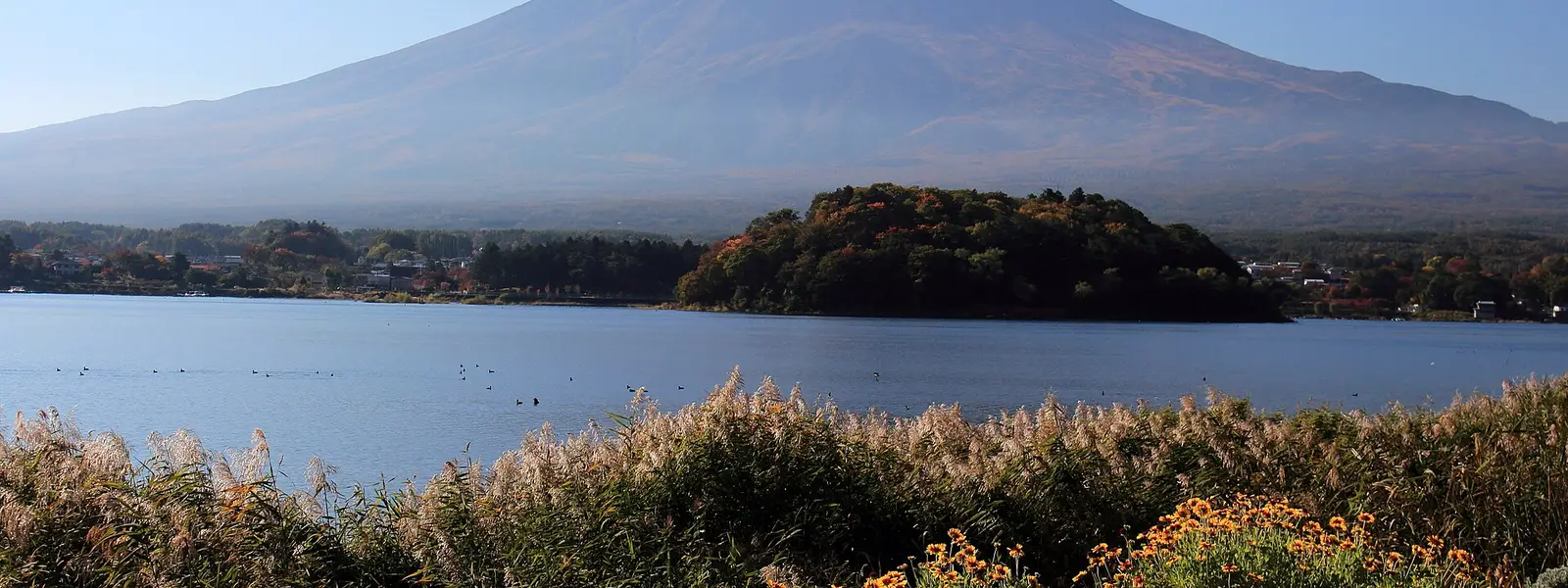
Lake Kawaguchiko is where you see Mount Fuji rising beyond the water, and you’ll want to be on the shore or up a viewpoint while the sky is clear. The trouble is that the sights ring the whole lake and spill over into neighbouring Fujiyoshida, and whether you take the ropeway, a boat, the loop buses or the Fujikyu train – and what you do when the mountain hides in cloud – changes the whole day. So we built five itineraries for different kinds of trip, each with two places to stay right on the route.
At a glance
- Five ways to spend two days at Kawaguchiko: A for a first visit (ropeway, boat, Oishi Park), B with kids (Fuji-Q Highland), C for museums or rain, D for Chureito Pagoda and the Fujiyoshida shrine, E by car (lava caves and Lake Saiko)
- Two places to stay per plan (ten in all) from our scored fives, each close to where day 1 ends or day 2 begins (in plans A to C, about 90–870 m in a straight line)
- Plans A to C work without a car on the Kawaguchiko loop buses (2-day pass 2,000 yen for adults). For plan A, the Kawaguchiko Sightseeing Pass (3,300 yen) covers ropeway, boat and buses
Pick your two days: five different routes
Each comes with two inns right on the route
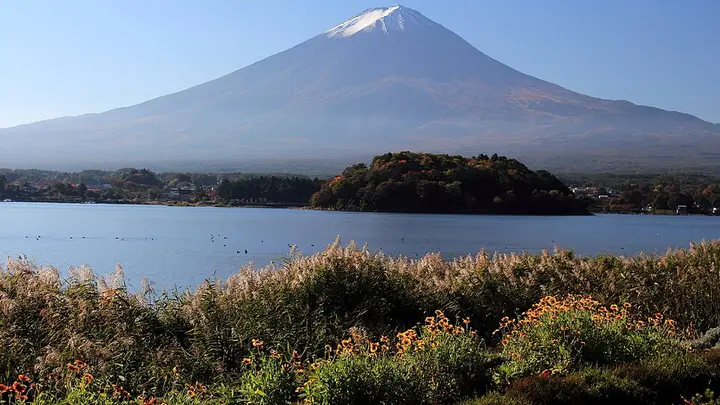 Plan A
the classic – up by ropeway, across the lake by boat to Oishi Park
Good forFirst-time visitors travelling by train and bus
Besides the innabout ¥7,800–8,800
Kawaguchiko Sta. → Mt. Fuji Panoramic Ropeway → (boat) Oishi Park → (loop bus) north shore (night) → Itchiku Kubota Art Museum → (loop bus) Kawaguchiko Sta.
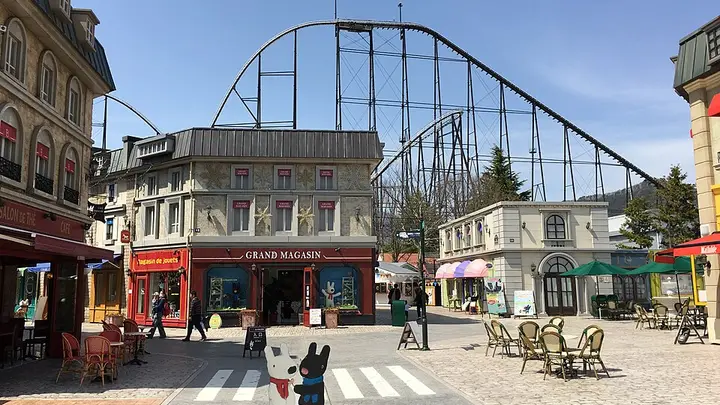 Plan B
with kids – a day at Fuji-Q Highland, then a boat on the lake next morning
Good forFamilies with children who want a day of rides
Besides the innabout ¥10,400–13,300
Kawaguchiko Sta. → (one train stop) Fuji-Q Highland (night) → (train) Kawaguchiko Sta. → Appare sightseeing boat → Kawaguchiko Sta.
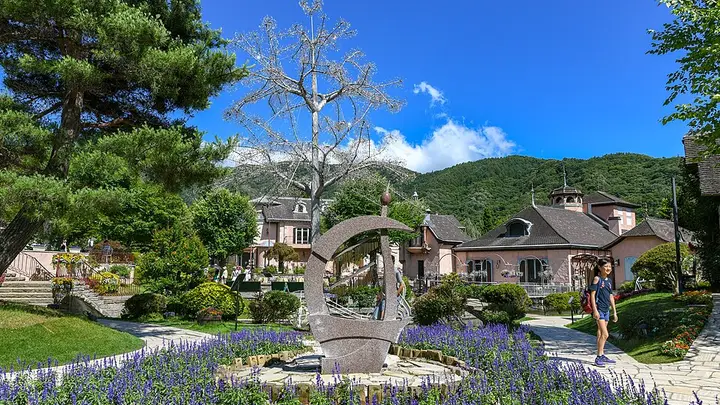 Plan C
the Music Forest Museum and Kawaguchiko Museum of Art – a route that works in the rain
Good forRainy or cloudy days, museum lovers, couples
Besides the innabout ¥7,600–8,900
Kawaguchiko Sta. → (loop bus) Music Forest Museum → Kawaguchiko Museum of Art → Asakawa (night) → (loop bus) Kawaguchiko Herb Hall → Kawaguchiko Sta.
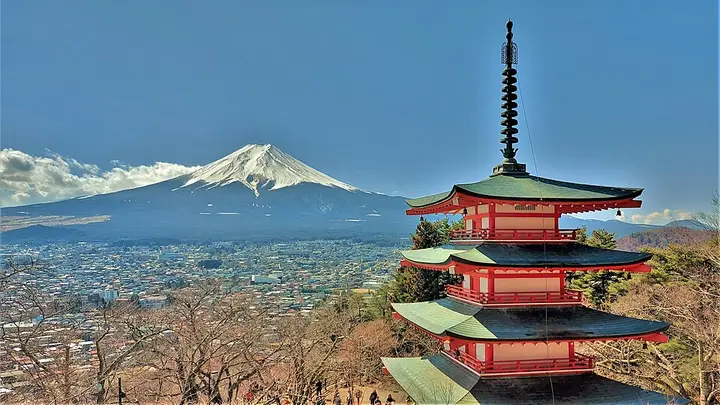 Plan D
Fujiyoshida on foot – Chureito Pagoda and Kitaguchi Hongu Fuji Sengen Shrine
Good forAnyone after Mt. Fuji photos, shrine and town walkers, travellers on the Fuji Excursion train
Besides the innabout ¥3,900–4,900 + local buses
Shimoyoshida Sta. → Arakurayama Sengen Park → Fujimichi (Honcho-dori) → (train) Mt. Fuji Sta. → Kitaguchi Hongu Fuji Sengen Shrine → Fujiyoshida (night) → Mt. Fuji Radar Dome Museum → Mt. Fuji Sta.
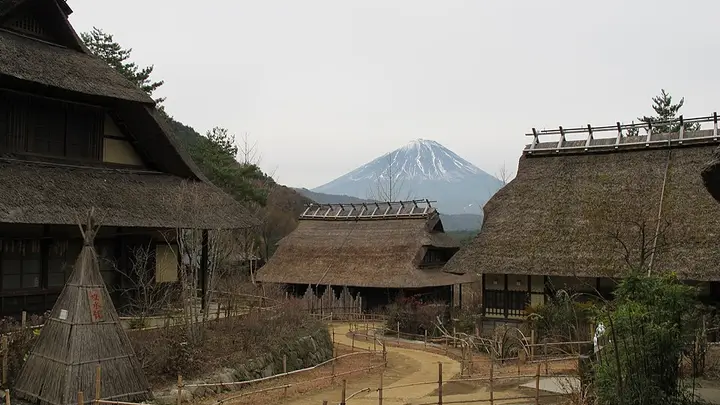 Plan E
by car to the west – Narusawa Ice Cave, Fugaku Wind Cave and Saiko Iyashi no Sato Nenba
Good forTravellers with a car, hot or rainy days, anyone keen on thatched villages
Besides the innabout ¥4,200–5,200 + fuel and tolls
Kawaguchiko IC → Narusawa Ice Cave → Fugaku Wind Cave → Saiko Iyashi no Sato Nenba → Saiko / north shore (night) → Kawaguchi Asama Shrine → Kawaguchiko IC
Photos:Alpsdake(CC BY-SA 4.0) / Olivier Bruchez(CC BY-SA 2.0) / xiquinhosilva(CC BY 2.0) / Stjepko Krehula(CC BY 4.0) / Masanori88(CC BY-SA 3.0)・Wikimedia Commons
Getting there: From Shinjuku Station, highway buses reach Kawaguchiko Station in about 100 minutes from 2,200 yen (Fujikyu Bus). By train, the Fuji Excursion limited express runs from Shinjuku to Kawaguchiko without changes in 1 hour 53 minutes at fastest, 4,200 yen including the express fee (Fujikyu Railway). From Kawaguchiko Station to the lakeside ropeway it’s about 15 minutes on foot or by loop bus (Mt. Fuji Panoramic Ropeway).
The plans in detail
Plan Athe classic – up by ropeway, across the lake by boat to Oishi Park
Good for: First-time visitors travelling by train and bus
Day 1
- 110:00 Walk from Kawaguchiko Station to the Mt. Fuji Panoramic Ropeway on the lakeshore ↗
↓ Getting there: about 15 min on foot or by loop bus - 210:20 Ride the ropeway up Mt. Tenjo: about 3 minutes to the 1,075 m observation deck above Mt. Fuji and the lake. 1,200 yen return for adults, 600 yen for children. Cars run every 5–10 minutes; the last one up leaves at 17:00 (16:20 in December–February). It can stop in strong wind or thunder, and closes for an inspection period in winter (7–18 December in 2026) ↗
↓ Getting there: from the lakeside station, cross the road to Funatsu pier - 11:45 From Funatsu pier, cross the lake to Oishi pier on the Oishi Park Line Ensoleille: about 15 minutes one way, 1,000 yen for adults, 500 yen for elementary pupils. In winter (November–March) six boats leave Funatsu between 9:45 and 15:15. In fiscal 2026 it is closed every Tuesday in December and on 19 and 26 January ↗
↓ Getting there: from Oishi pier, follow the path to Oishi Park - 312:15 Oishi Park, a lakeside park facing Mt. Fuji across the water, free and always open. Its flower road runs about 350 m, with lavender in early summer and red kochia in autumn. Have a light lunch at the café of the Kawaguchiko Natural Living Center next door (free entry, 9:00–17:15 from October to March) ↗
↓ Getting there: loop bus (Red Line) three stops from Kawaguchiko Shizen Seikatsukan to Kubota Itchiku Bijutsukan - Inn15:00 Check in on the north shore
Day 2
- Inn10:00 Check out and walk to the Itchiku Kubota Art Museum (about 90 m from Fufu, 300 m from Kogetsu in a straight line)
- 410:15 Itchiku Kubota Art Museum, devoted to his tsujigahana-dyed kimono: 1,500 yen for adults, 400 yen for school pupils. Open 10:00–17:00 from April to November and 10:00–16:30 from December to March; from 11 December to 13 March it opens only on Saturdays, Sundays, Mondays and holidays ↗
↓ Getting there: loop bus (Red Line) from Kubota Itchiku Bijutsukan to Kawaguchiko Station, about 25 min - 512:30 Arrive back at Kawaguchiko Station
Budget besides the inn (per adult): about ¥7,800–8,800
Kawaguchiko Sightseeing Pass ¥3,300 + Itchiku Kubota Art Museum ¥1,500 + two lunches ¥3,000–4,000
Tickets and transport: The Kawaguchiko Sightseeing Pass (3,300 yen for adults, 2 days) bundles the ropeway round trip, one boat (Appare or the Oishi Park Line Ensoleille) and 2 days of unlimited loop buses. Separately, the ropeway is 1,200 yen return and the boat 1,000 yen one way. The only entry fee is the Itchiku Kubota Art Museum at 1,500 yen; Oishi Park is free
Where to stay: two picks
Fufu Kawaguchiko 80/100 in our scoring
About 90 m in a straight line from the Itchiku Kubota Art Museum on day 2, and about 1.3 km from Oishi Park where day 1 ends. Every room is a suite facing Mt. Fuji with its own open-air bath. No shuttle from Kawaguchiko Station; a taxi takes about 15 minutes. Check-out 11:00
Shuhokaku Kogetsu 84/100 in our scoring
About 300 m in a straight line from the Itchiku Kubota Art Museum on day 2, and about 1.4 km from Oishi Park. It sits on the north shore looking straight across the lake at Mt. Fuji, visible from all 43 rooms. Pick-up from Kawaguchiko Station (14:30–18:30, call on arrival)
More places to stay for this plan
Plan Bwith kids – a day at Fuji-Q Highland, then a boat on the lake next morning
Good for: Families with children who want a day of rides
Day 1
- 110:00 From Kawaguchiko Station, take the Fujikyu line one stop to Fujikyu Highland Station: 180 yen for adults ↗
↓ Getting there: one stop by train - 210:15 Spend the day at Fuji-Q Highland. Entry is free, and Thomas Land has 12 rides of its own. Opening hours change by day, so check the official calendar ↗
↓ Getting there: to the inn: Mystays is about 520 m from Fuji-Q in a straight line; for Fuji Lake Hotel, take the train back to Kawaguchiko and the free shuttle - Inn16:30 Check in
Day 2
- Inn10:00 Check out and head from Kawaguchiko Station to the Funatsu shore; the boat pier faces the ropeway station ↗
↓ Getting there: about 10 min on foot from Kawaguchiko Station - 310:30 Circle the lake on the Appare sightseeing boat (about 20 minutes): 1,000 yen for adults, 500 yen for elementary pupils, free for preschoolers. In winter (November–March) it leaves every 30 minutes from 9:30 to 15:30. In fiscal 2026 it is closed every Tuesday in December and on 19 and 26 January ↗
↓ Getting there: about 10 min on foot to Kawaguchiko Station - 411:30 Arrive back at Kawaguchiko Station
Budget besides the inn (per adult): about ¥10,400–13,300
Train ¥360 return + One-Day Pass ¥6,000–7,900 + Appare boat ¥1,000 + two lunches ¥3,000–4,000 (per adult)
Tickets and transport: Entry to Fuji-Q Highland is free; rides need a ticket. The One-Day Pass costs 6,000–7,900 yen for adults, 4,400–5,100 yen for elementary pupils and 2,100–2,600 yen for infants from age 1, depending on the day. For Thomas Land’s 12 rides only, the Thomas Land Pass is 2,500–2,800 yen for pupils and 2,000–2,300 yen for infants. The train from Kawaguchiko to Fuji-Q Highland is 180 yen one way; the Appare boat is 1,000 yen for adults, 500 yen for pupils and free for preschoolers
Where to stay: two picks
Hotel MyStays Fuji Onsen Resort 75/100 in our scoring
About 520 m in a straight line from Fuji-Q Highland, 5 minutes on foot from Fujikyu Highland Station. The front desk is open 24 hours, so you can stay in the park until closing. Large bath and open-air bath. Check-out 11:00
Fuji Lake Hotel 70/100 in our scoring
About 660 m in a straight line from the day-2 boat pier opposite the ropeway, with its own loop-bus stop (Fuji Lake Hotel / Fuji Museum). Free shuttle from Kawaguchiko Station, one train stop from Fuji-Q. Outdoor pool in summer, a family bath, and buffet breakfast and dinner
More places to stay for this plan
Plan Cthe Music Forest Museum and Kawaguchiko Museum of Art – a route that works in the rain
Good for: Rainy or cloudy days, museum lovers, couples
Day 1
- 110:30 At Kawaguchiko Station, board the loop bus (Red Line) and get off at the Kawaguchiko Music Forest Museum stop ↗
↓ Getting there: about 26 min by bus - 211:00 Kawaguchiko Music Forest Museum, with automatic instruments and music boxes from the 19th and early 20th centuries played live inside. In November–December 2026 the garden fountain show runs on the hour from 11:00 to 17:00. Open 10:00–17:30 (last entry 17:00). Have lunch at its Forest Restaurant ↗
↓ Getting there: one loop-bus stop to Kawaguchiko Bijutsukan - 314:00 Kawaguchiko Museum of Art, the town museum collecting paintings, prints and photographs of Mt. Fuji, with a lounge overlooking the lake. Open 9:30–17:00 (last entry 16:30), closed Tuesdays and between exhibitions ↗
↓ Getting there: to the inn: Kukuna is about 660 m in a straight line (loop-bus stop Kaze no Terrace KUKUNA-mae), Asafuji about 870 m - Inn15:30 Check in at Asakawa
Day 2
- Inn10:30 Check out and take the loop bus (Red Line) to the Kawaguchiko Herb Hall stop ↗
- 411:00 Kawaguchiko Herb Hall, a shop of mostly lavender herbal goods, with lavender soft-serve. Open 9:00–17:45 (varies by season), every day ↗
↓ Getting there: loop bus to Kawaguchiko Station - 512:00 Arrive back at Kawaguchiko Station
Budget besides the inn (per adult): about ¥7,600–8,900
2-day loop-bus pass ¥2,000 + Music Forest Museum ¥1,800–2,100 + Museum of Art ¥800 + two lunches ¥3,000–4,000
Tickets and transport: Entry is 1,800 yen on weekdays and 2,100 yen at weekends and holidays at the Music Forest Museum (2,300 yen on set peak days), and 800 yen at the Kawaguchiko Museum of Art for special exhibitions (500 yen for the collection). The 2-day loop-bus pass (2,000 yen) covers the buses. The Music Forest Museum is generally closed on Tuesdays and Wednesdays and the Museum of Art on Tuesdays, so avoid those days
Where to stay: two picks
THE KUKUNA 79/100 in our scoring
About 660 m in a straight line from the Kawaguchiko Museum of Art, with its own loop-bus stop (Kaze no Terrace KUKUNA-mae) for day 2. Pick-up from Kawaguchiko Station (call on arrival). The open-air part of the view bath looks out on Mt. Fuji and the lake. Check-out 11:00
Asafuji 83/100 in our scoring
About 870 m in a straight line from the Kawaguchiko Museum of Art. All 13 rooms face Mt. Fuji and the lake, as does the top-floor bath, so you can check the mountain from your room once the rain stops. Free pick-up from Kawaguchiko Station (14:45–19:00, call on arrival); with dinner, reach the station by 18:00
More places to stay for this plan
Plan DFujiyoshida on foot – Chureito Pagoda and Kitaguchi Hongu Fuji Sengen Shrine
Good for: Anyone after Mt. Fuji photos, shrine and town walkers, travellers on the Fuji Excursion train
Day 1
- 110:15 Arrive at Shimoyoshida Station. The Fuji Excursion leaving Shinjuku at 8:30 reaches Shimoyoshida at 10:13 (weekdays and weekends, timetable from 14 March 2026) ↗
↓ Getting there: about 25 min on foot to the pagoda - 210:45 Arakurayama Sengen Park: climb 398 steps to the observation deck for Mt. Fuji and the five-storey Chureito Pagoda above the rooftops of Fujiyoshida. Free, open 24 hours. Autumn colour usually late October to mid-November ↗
↓ Getting there: walk back towards Shimoyoshida Station and on to Honcho-dori - 312:00 Fujimichi (Honcho-dori), a Showa-era shopping street where Mt. Fuji towers beyond the shop signs and power lines. Don’t step into the road to take photos. The Nishiura quarter on its west side has about 100 places to eat: have lunch there ↗
↓ Getting there: Fujikyu line from Shimoyoshida to Mt. Fuji Station, 230 yen - 414:00 From Mt. Fuji Station to Kitaguchi Hongu Fuji Sengen Shrine: about 1.5 km in a straight line, on foot or by local bus to Sengen-jinja-mae, then about 1 minute’s walk ↗
- 514:30 Kitaguchi Hongu Fuji Sengen Shrine, part of the Mt. Fuji World Heritage site. A cedar-lined approach leads to the Fujisan Otorii, one of the largest wooden torii gates; eleven buildings, including the worship hall, are Important Cultural Properties. Open 8:30–17:00 ↗
↓ Getting there: to the inn: Kaneyamaen is about 1.9 km from the shrine (free pick-up at Mt. Fuji Station, 13:00–18:00); Tatsugaoka about 880 m from Mt. Fuji Station - Inn16:00 Check in at Fujiyoshida
Day 2
- Inn10:00 Check out and take a local bus from Mt. Fuji Station to Fujisan Museum Park-mae (about 15 minutes, then about 5 minutes on foot) ↗
- 610:30 Mt. Fuji Radar Dome Museum, displaying the actual radar dome that observed the weather from the summit from 1964 to 1999, with a wind-and-video experience of the summit cold. 630 yen for adults, 420 yen for school pupils; 9:00–17:00 (last entry 16:30), closed Tuesdays except holidays (open daily in August) ↗
↓ Getting there: about 15 min by local bus back to Mt. Fuji Station - 712:30 Leave from Mt. Fuji Station
Budget besides the inn (per adult): about ¥3,900–4,900 + local buses
Train (Shimoyoshida–Mt. Fuji Sta.) ¥230 + Radar Dome Museum ¥630 + two lunches ¥3,000–4,000 (train from Shinjuku extra)
Tickets and transport: Arakurayama Sengen Park is free around the clock, and no entry fee is listed for Kitaguchi Hongu Fuji Sengen Shrine. The only paid sight is the Mt. Fuji Radar Dome Museum (630 yen for adults, 420 yen for school pupils). The train from Shimoyoshida to Mt. Fuji Station is 230 yen. From Shinjuku to Shimoyoshida, the Fuji Excursion costs 4,010 yen including the express fee
Where to stay: two picks
Hotel Kaneyamaen 79/100 in our scoring
About 1.9 km in a straight line from Kitaguchi Hongu Fuji Sengen Shrine (day 1) and 1.3 km from the Radar Dome Museum (day 2). Free pick-up at Mt. Fuji Station (13:00–18:00, call on arrival). The rooftop open-air bath on the 10th floor of the Sairyutei wing faces Mt. Fuji. Some rooms have no Fuji view, so book one marked as such
Hotel Fuji Tatsugaoka 80/100 in our scoring
About 880 m in a straight line from Mt. Fuji Station, where day 1 ends and the day-2 bus leaves; 10 minutes on foot from Fujikyu Highland Station. A small hotel of 26 rooms with a natural hot-spring bath and open-air bath. Let them know if you’ll arrive after 21:00
More places to stay for this plan
Plan Eby car to the west – Narusawa Ice Cave, Fugaku Wind Cave and Saiko Iyashi no Sato Nenba
Good for: Travellers with a car, hot or rainy days, anyone keen on thatched villages
Day 1
- 110:00 Leave the Chuo Expressway at Kawaguchiko IC and drive to Narusawa Ice Cave ↗
↓ Getting there: about 20 min by car - 210:30 Narusawa Ice Cave, formed by a lava flow in the eruption of 864 and a national natural monument. It is about 0–4 °C inside, with about 100 steps and a ceiling as low as 91 cm. Babies carried on the back or in arms are not allowed (children should be about 3, at least 100 cm tall and able to walk alone). Hours run from 9:00 to between 16:00 and 17:30 depending on the season ↗
↓ Getting there: about 2 min by car to Fugaku Wind Cave (about 15 min on foot along the road) - 311:30 Fugaku Wind Cave, a horizontal tunnel 201 m long and 8.7 m high, averaging 3 °C. The route takes about 15 minutes, past ice pillars that last through summer and ropy lava. No eating inside and no pets. Both caves close for maintenance in winter (in 2026: ice cave 1–9 December, wind cave 10–17 December) ↗
↓ Getting there: drive to Saiko Iyashi no Sato Nenba - 412:30 Saiko Iyashi no Sato Nenba, where the thatched farmhouses of Nenba village, lost to a typhoon in 1966, have been rebuilt; on a clear day Mt. Fuji rises beyond the roofs. Have lunch at a restaurant inside. Open 9:00–17:00 from March to November and 9:30–16:30 from December to February, every day (occasional closures) ↗
↓ Getting there: to the inn: Nagahama Ryokan is about 4.9 km in a straight line; Country Cottage Ban, on the north shore of Kawaguchiko, about 9.9 km - Inn15:30 Check in
Day 2
- Inn10:00 Check out and head to Kawaguchi Asama Shrine above the north shore
- 510:30 Kawaguchi Asama Shrine, said to have been founded after the Jogan eruption of 864. Its seven cedars, about 1,200 years old, are a prefectural natural monument. Open 9:00–16:00 every day, parking for 60 cars. The “Torii in the Sky” on the hill above is not run by the shrine ↗
↓ Getting there: about 10 min by car to Kawaguchiko IC - 611:30 Leave via Kawaguchiko IC
Budget besides the inn (per adult): about ¥4,200–5,200 + fuel and tolls
Narusawa Ice Cave ¥350 + Fugaku Wind Cave ¥350 + Iyashi no Sato Nenba ¥500 + two lunches ¥3,000–4,000
Tickets and transport: Entry is 350 yen each for adults at Narusawa Ice Cave and Fugaku Wind Cave (200 yen for children up to elementary age), and 500 yen at Saiko Iyashi no Sato Nenba (250 yen for school pupils). No fee is listed for Kawaguchi Asama Shrine. Without a car, the Green Line loop bus runs from Kawaguchiko Station to Narusawa Ice Cave for 740 yen one way and to Iyashi no Sato Nenba for 810 yen
Where to stay: two picks
Kappo Nagahama Ryokan 81/100 in our scoring
About 4.9 km in a straight line from Iyashi no Sato Nenba, where day 1 ends, on the western part of the north shore – an easy drive back from Lake Saiko. An 8-room ryokan known for its cooking, with 10 free parking spaces (no booking needed). It lends toys, picture books and bouncers, and both baths can be used privately. Arrive by 18:00 or dinner may not be served
Kawaguchiko Country Cottage Ban & Glamping Resort 65/100 in our scoring
About 890 m in a straight line from Kawaguchi Asama Shrine on day 2. Whole-cottage rentals with a playground and barbecue equipment on site, and 60 free parking spaces (no booking needed). The open-air and view baths open only on Saturday night and Sunday morning (except long weekends)
More places to stay for this plan
All our Lake Kawaguchiko fives
- Ryokan with a Mt Fuji view: 5 that actually deliver one
- Kawaguchiko family hotels: 5 kid-friendly stays near Mt Fuji
- Hotels near Kawaguchiko Station: 5 on foot or a 5-min pick-up
About this page
Travel times, prices and opening hours come from the official pages of each sight, the local tourist association and the transport operators (checked 2026-11-20). The inns are taken from our own scored fives (reviews, price and facilities across five criteria), two per plan, chosen because they sit on that plan’s route. Times and prices change, so check the official pages before you go.
Questions visitors ask
Can you see Kawaguchiko in 2 days and 1 night?
Yes. Plan A covers the lakeside classics in two days: the ropeway up Mt. Tenjo (about 3 minutes), the boat across to Oishi Park (about 15 minutes), the loop bus to the Itchiku Kubota Art Museum and back to Kawaguchiko Station (about 25 minutes). For Chureito Pagoda, take the Fujikyu line to Shimoyoshida and walk about 25 minutes (Plan D).
Can you get around without a car?
Yes. From Kawaguchiko Station, the Red Line (Kawaguchiko), Green Line (Saiko) and Blue Line (Narusawa, Shojiko, Motosuko) loop buses cover the area; a 1-day pass is 1,500 yen for adults and 750 yen for children, a 2-day pass 2,000 and 1,000 yen (Fujikyu Bus). The Kawaguchiko Sightseeing Pass, with the ropeway round trip, a boat and 2 days of loop buses, is 3,300 yen. For Fujiyoshida, the Fujikyu line from Kawaguchiko to Shimoyoshida is 310 yen.
Does it work the same way in winter (December–March)?
Yes, but hours and closing days change. The ropeway’s last car up is at 16:20 in December–February, and it closes for inspection from 7 to 18 December in 2026. The boats run roughly 9:30–16:00 in winter and are closed every Tuesday in December and on 19 and 26 January in fiscal 2026. The Itchiku Kubota Art Museum opens only on Saturdays, Sundays, Mondays and holidays from 11 December to 13 March. On the plus side, the ropeway notes that winter brings less rain and a better chance of seeing Mt. Fuji.
Which plan suits families with children?
Plan B. Fuji-Q Highland is free to enter, Thomas Land has 12 rides of its own, and the Thomas Land Pass is 2,000–2,300 yen for infants from age 1. The Appare boat next morning is free for preschoolers. In Plan E, Narusawa Ice Cave doesn’t allow babies carried on the back or in arms; children should be about 3, at least 100 cm tall and able to walk alone.
What if it rains or Mt. Fuji is hidden?
Switch to Plan C, mostly indoors (the Music Forest Museum and the Kawaguchiko Museum of Art). The lava caves in Plan E are walked underground and hardly depend on the weather, and the Radar Dome Museum in Plan D is indoors too. The ropeway can stop in strong wind or thunder, so on a bad day drop it from Plan A and save it for a clear one.
Sources
- https://www.mtfujiropeway.jp/guide/
- https://www.mtfujiropeway.jp/faq/
- https://www.mtfujiropeway.jp/access/
- https://www.mtfujiropeway.jp/
- https://www.fujigokokisen.jp/
- https://www.fujigokokisen.jp/contents/ensoleille/price.php
- https://www.fujigokokisen.jp/contents/ensoleille/access.php
- https://www.fujigokokisen.jp/contents/appare/price.php
- https://bus.fujikyu.co.jp/fujitour/kawaguchiko/
- https://bus.fujikyu.co.jp/pdf/omni_map_202610.pdf
- https://bus.fujikyu.co.jp/highway/
- https://www.fujikyu-railway.jp/fare/
- https://www.fujikyu-railway.jp/fujikaiyuu/
- https://fujisan.ne.jp/sightseeing/1652/
- https://fujisan.ne.jp/sightseeing/3845/
- https://fujisan.ne.jp/sightseeing/1938/
- https://fujisan.ne.jp/sightseeing/2014/
- https://fujisan.ne.jp/sightseeing/2209/
- https://fujisan.ne.jp/sightseeing/1480/
- https://fujisan.ne.jp/sightseeing/2164/
- https://www.itchiku-museum.com/
- https://www.itchiku-museum.com/museum/access.html
- https://kawaguchikomusicforest.jp/price/
- https://kawaguchikomusicforest.jp/info/
- https://www.fkchannel.jp/facility-01
- https://www.fujiq.jp/ticket/index.html
- https://www.fujiq.jp/access/index.html
- https://fujiyoshida.net/spot/index.php?p=12
- https://www.yamanashi-kankou.jp/kankou/spot/p1_4919.html
- https://fujiyoshida.net/spot/index.php?p=410
- https://fujiyoshida.net/spot/23
- https://fujiyoshida.net/spot/13
- https://www.mtfuji-cave.com/
- https://www.mtfuji-cave.com/contents/ice_cave/
- https://www.mtfuji-cave.com/contents/wind_cave/
- https://www.mtfuji-cave.com/contents/blog/info.php?no=341
- https://www.mtfuji-cave.com/contents/blog/info.php?no=407
- https://saikoiyashinosatonenba.jp/price/
- https://kawaguchikomusicforest.jp/
- https://www.mtfuji-cave.com/contents/access/