This page contains promotions (affiliate links) (Editorial & ad policy)
Kawagoe itinerary: 5 two-day plans with an overnight stay
Approximate, at the rate on 2026-10-02. You pay in yen.
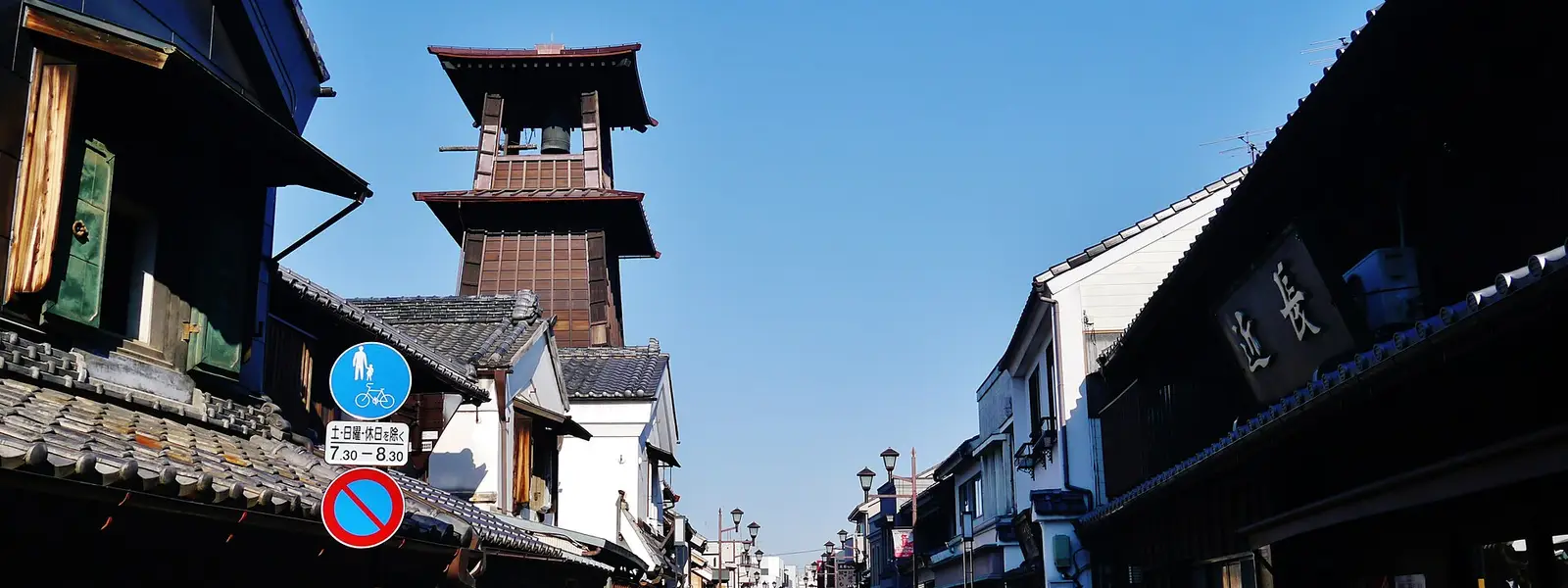
Kawagoe, the “Little Edo” of storehouse streets and an old bell tower, is close enough to Tokyo that most people come for the day – and by midday Ichibangai is so packed that it’s hard to take in the old buildings at all. Stay the night, though, and you can hear the bell on an empty morning street, visit a shrine at dawn, and walk the storehouses in the evening once the crowds have gone. So we put together five itineraries that make the most of an overnight stay, each with two places to stay right on the route.
At a glance
- Five ways to spend two days in Kawagoe: A for a first visit (storehouse streets and the 6 a.m. bell), B for couples (Kawagoe Hikawa Shrine at dawn), C with kids or in the rain, D for a food walk, E for temples and shrines
- Places to stay come from our scored fives. Kawagoe’s five has five properties, so each is used in up to two plans: ones near the old town (about 470–540 m from the bell tower in a straight line) and ones by Kawagoe or Hon-Kawagoe stations, matched to each plan
- The Toki no Kane bell rings four times a day (6:00, 12:00, 15:00, 18:00). Kawagoe is 26 minutes at the fastest from Ikebukuro by Kawagoe Limited Express, or 44 minutes from Seibu-Shinjuku on the Koedo
Pick your two days: five different routes
Each comes with two inns right on the route
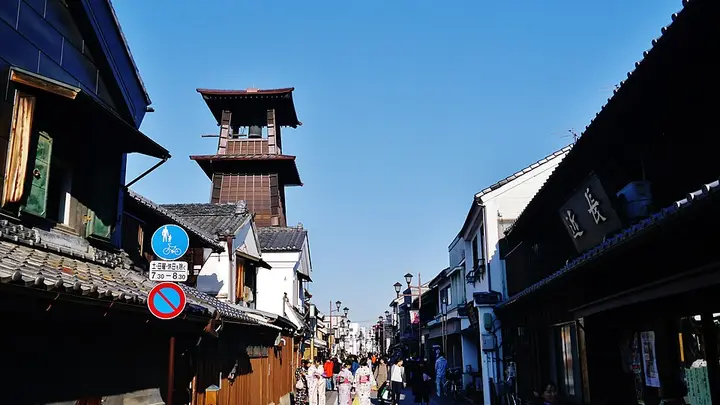 Plan A
the classic – the storehouse streets and Kashiya Yokocho, then the 6 a.m. bell on an empty street
Good forFirst-time visitors coming by train from Tokyo (all year)
Besides the innabout ¥3,400–4,400 + travel there and back
Kawagoe Sta. → Ichibangai (storehouse street) → Toki no Kane → Kashiya Yokocho → (night) → Toki no Kane (6 a.m.) → Kita-in → Koedo Kurari → Kawagoe Sta.
 Plan B
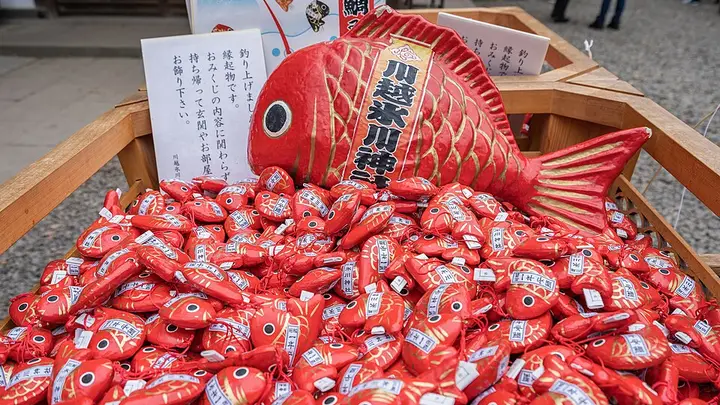
for couples – the 6 p.m. bell and the old town at dusk, then Kawagoe Hikawa Shrine early for an en-musubi charm
Good forCouples and anyone visiting for a matchmaking blessing (all year)
Besides the innabout ¥3,100–4,100 + travel there and back
Hon-Kawagoe Sta. → Kumano Shrine → Ichibangai → (night, with the 6 p.m. bell) → Kawagoe Hikawa Shrine (early) → Honmaru Goten → Hon-Kawagoe Sta.
 Plan C
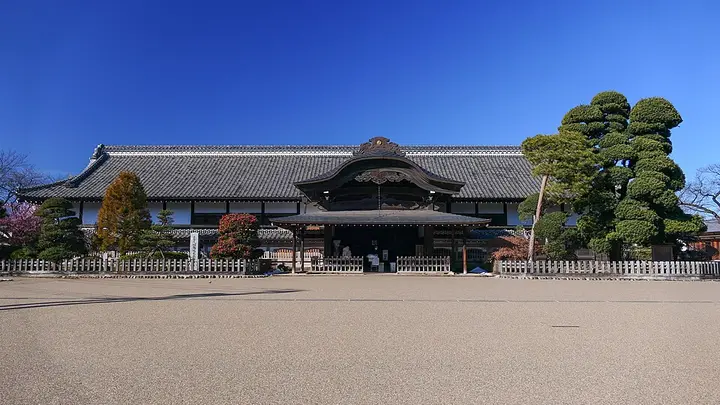
with kids or in the rain – festival floats at the Kawagoe Festival Museum and Kashiya Yokocho, then Honmaru Goten and the City Museum
Good forFamilies with children and rainy days (Honmaru Goten and the museum close Mondays; the festival museum the 2nd and 4th Wednesdays)
Besides the innabout ¥3,600–4,600 + travel there and back and buses
Kawagoe Sta. → Kawagoe Festival Museum → Kashiya Yokocho → Toki no Kane → (night) → Honmaru Goten → Kawagoe City Museum → Kawagoe Hikawa Shrine → Kawagoe Sta.
 Plan D
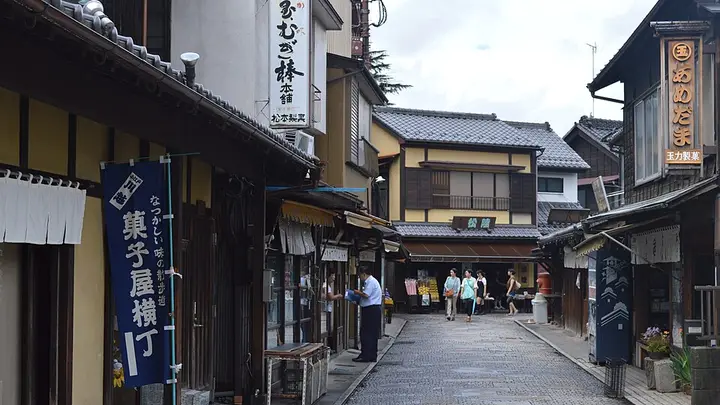
a food walk – eel for lunch, Kashiya Yokocho, sweet potato and Kawagoe matcha, then local sake at Koedo Kurari
Good forFood lovers, friends travelling together and solo travellers (all year)
Besides the innabout ¥3,000–4,000 + travel there and back and snacks
Kawagoe Sta. → Ichibangai (eel lunch) → Kashiya Yokocho → Toki no Kane → Koedo Kurari → (night) → Renkei-ji → Kawagoe Sta.
 Plan E
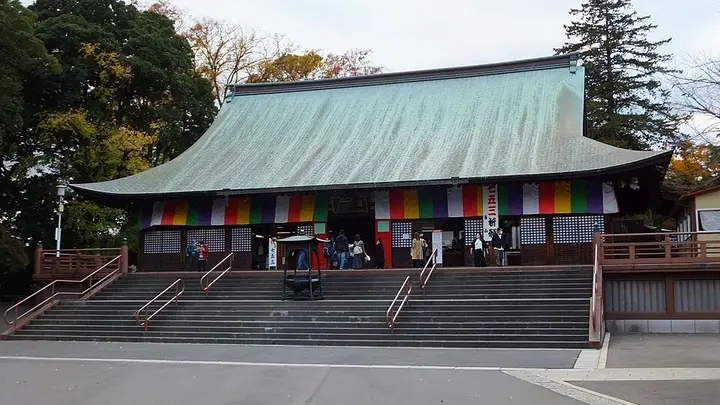
temples and shrines – Kita-in’s 538 arhats, Senba Toshogu and Naka-in, then Kumano Shrine, Renkei-ji and Kawagoe Hachimangu next morning
Good forAnyone who wants an unhurried round of temples and shrines, including drivers (all year; Kita-in is closed to visitors 25 December – 8 January)
Besides the innabout ¥3,400–4,400 + travel there and back
Kawagoe Sta. → Kita-in → Senba Toshogu → Naka-in → (night) → Kumano Shrine → Renkei-ji → Kawagoe Hachimangu → Kawagoe Sta.
Photos:Zairon(CC BY-SA 4.0) / wongwt(CC BY-SA 2.0) / MaedaAkihiko(CC0) / At by At(CC BY-SA 3.0) / tak1701d(CC BY-SA 3.0)・Wikimedia Commons
Getting there: From Ikebukuro, the Tobu Tojo Line’s Kawagoe Limited Express takes 26 minutes at the fastest (Kawagoe Station); from Shinjuku, the JR Saikyo Line rapid about 50 minutes (Kawagoe Station); from Seibu-Shinjuku, the Seibu Shinjuku Line’s Koedo limited express 44 minutes at the fastest (Hon-Kawagoe Station); from Omiya, the JR Kawagoe Line about 20 minutes. By car, the Kan-etsu Expressway’s Kawagoe IC. The storehouse streets are about 1.7 km in a straight line from Kawagoe Station and 1 km from Hon-Kawagoe, and the Koedo loop bus and Koedo sightseeing bus run there too.
The plans in detail
Plan Athe classic – the storehouse streets and Kashiya Yokocho, then the 6 a.m. bell on an empty street
Good for: First-time visitors coming by train from Tokyo (all year)
Day 1
- 111:00 Arrive at Kawagoe Station: 26 minutes at the fastest from Ikebukuro on the Tobu Tojo Line’s Kawagoe Limited Express ↗
↓ Getting there: to Ichibangai, about 1.7 km in a straight line - 212:00 Walk the storehouse-style buildings of Ichibangai. When the great fire of 1893 burned a third of the town, only the kura (fireproof storehouse) buildings survived, so the merchants rebuilt in the same style; the district was designated a national preservation area for historic buildings in 1999 ↗
↓ Getting there: lunch, then on to the bell tower - 315:00 Hear the bell ring at 15:00. The tower has told the town the time since the early Edo period; the present one is the fourth, and its sound is listed among Japan’s 100 soundscapes ↗
↓ Getting there: to Kashiya Yokocho, about 290 m in a straight line - 415:30 Kashiya Yokocho, the sweet-shop alley: said to have had over 70 shops in the early Showa era, it still has candy makers, and its scent of cinnamon and mint put it on Japan’s list of 100 fragrant landscapes ↗
↓ Getting there: to the inn, both about 700–800 m in a straight line - Inn16:30 Check in; go back to the old streets for dinner
Day 2
- 55:50 Hear the 6:00 bell on a near-empty Ichibangai – the quiet storehouse street day-trippers never see ↗
- Inn8:30 Check out
- 69:00 Kita-in at its 9:00 opening: in the guest hall moved from Edo Castle, see the room where shogun Tokugawa Iemitsu was born and Lady Kasuga’s dressing room, then the 538 stone arhats of the Gohyaku Rakan ↗
↓ Getting there: to Koedo Kurari, about 500 m in a straight line - 711:00 Koedo Kurari for Kawagoe souvenirs, with tastings of Saitama sake; then lunch and on to Kawagoe Station ↗
↓ Getting there: to Kawagoe Station, about 900 m in a straight line - 813:00 Head home from Kawagoe Station ↗
Budget besides the inn (per adult): about ¥3,400–4,400 + travel there and back
Kita-in ¥400 + two lunches ¥3,000–4,000
Tickets and transport: The Toki no Kane bell rings four times a day: 6:00, 12:00, 15:00 and 18:00. Kita-in costs ¥400 for adults and ¥200 for school-age children; from 1 March to 23 November it opens 9:00–16:30 on weekdays and 9:00–16:50 on Sundays and holidays, from 24 November to the end of February 9:00–16:00 (16:20 on Sundays and holidays), with last entry 30 minutes before. No visits from 25 December to 8 January
Where to stay: two picks
Hatago COEDOYA 72/100 in our scoring
About 470 m in a straight line from Toki no Kane, 480 m from Ichibangai and 520 m from Kita-in – walkable for both the 6:00 bell and day 2’s temple. Single and twin rooms plus rooms for 6, 8 or 10. Shared toilets and showers. Yukata and samue provided; no smoking
Daily Hotel Kawagoe 65/100 in our scoring
About 480 m in a straight line from Kita-in, 540 m from Toki no Kane and 530 m from Hon-Kawagoe Station, close to both of day 2’s morning stops. Free on-site parking for 15 cars, first come first served, but cars cannot go in or out 13:00–18:00 on weekends and holidays. Hot coffee 24 hours
More places to stay for this plan
Plan Bfor couples – the 6 p.m. bell and the old town at dusk, then Kawagoe Hikawa Shrine early for an en-musubi charm
Good for: Couples and anyone visiting for a matchmaking blessing (all year)
Day 1
- 114:00 Arrive at Hon-Kawagoe Station: 44 minutes at the fastest from Seibu-Shinjuku on the Koedo limited express ↗
↓ Getting there: to Kumano Shrine, about 560 m in a straight line - 214:30 Pray for good luck at Kumano Shrine, known for its special Yatagarasu (three-legged crow) goshuin stamp ↗
↓ Getting there: to Ichibangai, about 500 m in a straight line - 315:00 Walk the storehouse-style buildings of Ichibangai. When the great fire of 1893 burned a third of the town, only the kura (fireproof storehouse) buildings survived, so the merchants rebuilt in the same style; the district was designated a national preservation area for historic buildings in 1999 ↗
- Inn16:30 Check in
- 418:00 At 18:00, hear the day’s last bell and have dinner in the old town once the daytime crowds have gone ↗
Day 2
- Inn7:00 Check out
- 57:30 Kawagoe Hikawa Shrine early in the morning. Legend says taking home a pebble from the grounds brings a good match, so shrine maidens gather pebbles, wrap them in hemp net and a priest purifies them each morning; only 20 of these en-musubi stones are given out early in the day. There is also a sea-bream fortune and a tunnel of ema prayer boards; in summer (around July–September) wind chimes hang here ↗
↓ Getting there: to Honmaru Goten, about 380 m in a straight line - 69:00 Honmaru Goten at its 9:00 opening: the palace where the lord of Kawagoe Castle lived and governed; the building dates from 1848 and you can go inside ↗
↓ Getting there: about 1.4 km in a straight line back to Hon-Kawagoe Station, through Ichibangai - 711:30 Lunch, then head home from Hon-Kawagoe Station ↗
Budget besides the inn (per adult): about ¥3,100–4,100 + travel there and back
Honmaru Goten ¥100 + two lunches ¥3,000–4,000 (charms such as the en-musubi stone extra)
Tickets and transport: Kawagoe Hikawa Shrine’s en-musubi stones, purified each morning, are given out early in the day, only 20 at a time. Honmaru Goten costs ¥100, 9:00–17:00 (last entry 16:30), closed Mondays (or the next day after a holiday)
Where to stay: two picks
Hatago COEDOYA 72/100 in our scoring
About 480 m in a straight line from Ichibangai, 470 m from Toki no Kane and 1 km from Kawagoe Hikawa Shrine – an easy walk back after the 6 p.m. bell and to the shrine in the early morning. Yukata and samue provided; no smoking. Shared toilets and showers
Super Hotel Saitama Kawagoe, Akagi-no-yu Natural Hot Spring 65/100 in our scoring
About 220 m in a straight line from Hon-Kawagoe Station, where you arrive on day 1 and leave on day 2. Separate men’s and women’s natural hot-spring baths, Akagi-no-yu, to warm up after the evening walk. Breakfast has fresh-baked bread and local dishes. Last check-in midnight
More places to stay for this plan
Plan Cwith kids or in the rain – festival floats at the Kawagoe Festival Museum and Kashiya Yokocho, then Honmaru Goten and the City Museum
Good for: Families with children and rainy days (Honmaru Goten and the museum close Mondays; the festival museum the 2nd and 4th Wednesdays)
Day 1
- 111:00 Arrive at Kawagoe Station: 26 minutes at the fastest from Ikebukuro on the Kawagoe Limited Express ↗
↓ Getting there: about 1.8 km in a straight line to the Festival Museum; the Koedo loop bus and other buses help (bus fare extra) - 211:30 See real festival floats and the festival music on show at the Kawagoe Festival Museum. The Kawagoe festival’s float procession is a national Important Intangible Folk Cultural Property and on UNESCO’s Intangible Cultural Heritage list ↗
↓ Getting there: to Kashiya Yokocho, about 170 m in a straight line - 313:00 After lunch, pick sweets and candy in Kashiya Yokocho, where traditional candy is still made ↗
↓ Getting there: to Toki no Kane, about 290 m in a straight line - 414:50 Wait under the tower for the bell to ring at 15:00 ↗
↓ Getting there: back toward Kawagoe Station by bus (fare extra) - Inn16:00 Check in
Day 2
- Inn8:15 Check out
- 59:00 From stop 7 at Kawagoe Station, take a Tobu bus, get off at “Kawagoe Hikawa Jinja” and be at Honmaru Goten when it opens at 9:00; you can walk through the 1848 palace ↗
↓ Getting there: to the City Museum, about 150 m in a straight line - 610:00 The Kawagoe City Museum’s permanent galleries on local history and culture ↗
↓ Getting there: to Kawagoe Hikawa Shrine, about 290 m in a straight line - 711:00 Draw a sea-bream fortune at Kawagoe Hikawa Shrine, and walk through the tunnel of ema boards ↗
↓ Getting there: Tobu bus from the Kawagoe Hikawa Jinja stop back to Kawagoe Station (fare extra) - 812:30 Lunch near Kawagoe Station and head home ↗
Budget besides the inn (per adult): about ¥3,600–4,600 + travel there and back and buses
Festival Museum ¥300 + Honmaru Goten ¥100 + City Museum ¥200 + two lunches ¥3,000–4,000
Tickets and transport: The Kawagoe Festival Museum is ¥300 for adults and ¥100 for school-age children, open 9:30–17:30 from October to March (last entry 17:00) and until 18:30 from April to September. Honmaru Goten is ¥100 and the Kawagoe City Museum ¥200, both 9:00–17:00 (last entry 16:30)
Where to stay: two picks
Kawagoe Tobu Hotel 64/100 in our scoring
Linked to Kawagoe Station’s west exit by a pedestrian deck, 2 minutes on foot (about 330 m in a straight line), so the bus stops for day 2 are close. All rooms non-smoking, with accessible rooms. Breakfast is a Japanese-Western buffet of Saitama produce on the 2nd floor of U_PLACE. Check-out 11:00
UTILITY HOTEL coojuu 79/100 in our scoring
3 minutes on foot from Kawagoe Station’s east exit (about 90 m in a straight line), right where the bus drops you on day 1. The bath is separate from the washbasin and toilet, which makes taking turns with children easier. Convenience store downstairs; front desk staffed 24 hours. The desk is on the 2nd floor and reached by stairs only
More places to stay for this plan
Plan Da food walk – eel for lunch, Kashiya Yokocho, sweet potato and Kawagoe matcha, then local sake at Koedo Kurari
Good for: Food lovers, friends travelling together and solo travellers (all year)
Day 1
- 111:00 Arrive at Kawagoe Station: 26 minutes at the fastest from Ikebukuro on the Kawagoe Limited Express ↗
↓ Getting there: to Ichibangai, about 1.7 km in a straight line - 212:00 Eel for lunch around Ichibangai – Kawagoe has many long-established eel restaurants that locals have used for generations ↗
↓ Getting there: to Kashiya Yokocho, about 300 m in a straight line - 313:30 Kashiya Yokocho: traditional candy makers and old-style sweet shops in an alley smelling of cinnamon, mint and dango ↗
↓ Getting there: to Toki no Kane, about 290 m in a straight line - 415:00 Hear the 15:00 bell, then graze on sweet-potato and Kawagoe matcha sweets along the bell street and Ichibangai ↗
↓ Getting there: to Koedo Kurari, about 800 m in a straight line - 516:30 At Koedo Kurari, taste Saitama sake and pick Kawagoe souvenirs ↗
- Inn17:30 Check in
Day 2
- Inn8:00 Breakfast at the hotel, then check out
- 69:30 Visit Renkei-ji, known for its “Donryu-sama” guardian of child-rearing; on holidays there are sometimes events in the grounds ↗
↓ Getting there: lunch, then about 1.3 km in a straight line to Kawagoe Station - 712:00 Head home from Kawagoe Station ↗
Budget besides the inn (per adult): about ¥3,000–4,000 + travel there and back and snacks
two lunches ¥3,000–4,000 (no admission fees; eel, sake tasting and snacks extra)
Tickets and transport: No admission fees on this route; the cost is what you eat. Kawagoe is ringed by rivers and has many long-established eel restaurants that locals use. Sweet potato is the town’s old speciality, and Kawagoe matcha sweets turn up all over town
Where to stay: two picks
Super Hotel Saitama Kawagoe, Akagi-no-yu Natural Hot Spring 65/100 in our scoring
About 520 m in a straight line from Koedo Kurari where day 1 ends, 220 m from Hon-Kawagoe Station and 520 m from Kawagoe Station. Separate men’s and women’s natural hot-spring baths, Akagi-no-yu, after a day of grazing. Breakfast has fresh-baked bread and local dishes. All rooms non-smoking
Kawagoe Tobu Hotel 64/100 in our scoring
2 minutes on foot from Kawagoe Station’s west exit by pedestrian deck (about 330 m in a straight line), right by the station you leave from on day 2. Breakfast is a Japanese-Western buffet of Saitama produce on the 2nd floor of U_PLACE. All rooms non-smoking. Check-out 11:00
More places to stay for this plan
Plan Etemples and shrines – Kita-in’s 538 arhats, Senba Toshogu and Naka-in, then Kumano Shrine, Renkei-ji and Kawagoe Hachimangu next morning
Good for: Anyone who wants an unhurried round of temples and shrines, including drivers (all year; Kita-in is closed to visitors 25 December – 8 January)
Day 1
- 113:00 Arrive at Kawagoe Station and walk to Kita-in (about 20 minutes) ↗
- 213:30 At Kita-in, see the guest hall moved from Edo Castle’s Momijiyama with the room where Iemitsu was born, Lady Kasuga’s dressing room in the study, and the Momijiyama garden in the Enshu style, then walk among the 538 arhats, counted among Japan’s three great arhat groups ↗
↓ Getting there: to Senba Toshogu, about 160 m in a straight line - 315:00 Senba Toshogu, counted among Japan’s three great Toshogu shrines; its hall and gate were once National Treasures and are now Important Cultural Properties ↗
↓ Getting there: to Naka-in, about 220 m in a straight line - 415:30 Naka-in, a temple linked to the writer Shimazaki Toson, with the Fusentei tea house and a weeping cherry in the grounds ↗
- Inn16:30 Check in
Day 2
- Inn8:00 Check out
- 58:30 Pray for good luck at Kumano Shrine in the morning; it offers a special Yatagarasu goshuin stamp ↗
↓ Getting there: to Renkei-ji, about 100 m in a straight line - 69:00 Visit Renkei-ji, known for “Donryu-sama”, guardian of child-rearing ↗
↓ Getting there: to Kawagoe Hachimangu, about 940 m in a straight line - 710:30 Kawagoe Hachimangu, a shrine founded a thousand years ago and the only one in the city to carry the name “Kawagoe” ↗
↓ Getting there: to Kawagoe Station, about 370 m in a straight line - 811:30 Lunch, then head home from Kawagoe Station ↗
Budget besides the inn (per adult): about ¥3,400–4,400 + travel there and back
Kita-in ¥400 + two lunches ¥3,000–4,000 (goshuin stamps extra)
Tickets and transport: Kita-in (guest hall, study and the 538 arhats) is ¥400 for adults and ¥200 for school-age children. From 1 March to 23 November it closes at 16:30 on weekdays and 16:50 on Sundays and holidays; from 24 November to the end of February at 16:00 and 16:20 (last entry 30 minutes before). Also closed to visitors on the afternoon of 2 February, on 3 February and 2–4 April
Where to stay: two picks
Daily Hotel Kawagoe 65/100 in our scoring
About 480 m in a straight line from Kita-in and 600 m from Senba Toshogu on day 1, and only 70 m from Kumano Shrine and 160 m from Renkei-ji, so day 2 starts at the door. Free parking for 15 cars, first come first served, for drivers – but no entry or exit 13:00–18:00 on weekends and holidays
UTILITY HOTEL coojuu 79/100 in our scoring
About 890 m in a straight line from Naka-in, where day 1 ends, 280 m from Kawagoe Hachimangu on day 2, and 3 minutes on foot from Kawagoe Station’s east exit. The bath is separate from the washbasin and toilet; convenience store downstairs, front desk staffed 24 hours. The desk is on the 2nd floor, stairs only
More places to stay for this plan
All our Kawagoe fives
About this page
Travel times, prices and opening hours come from the official pages of each sight, the local tourist association and the transport operators (checked 2026-11-22). The inns are taken from our own scored fives (reviews, price and facilities across five criteria), two per plan, chosen because they sit on that plan’s route. Times and prices change, so check the official pages before you go.
Questions visitors ask
Is a day trip to Kawagoe enough, or is it worth staying the night?
You can see the main sights in a day, but staying gives you the morning and evening. The bell first rings at 6:00, and you can hear it on a near-empty Ichibangai (Plan A). Kawagoe Hikawa Shrine gives out only 20 en-musubi stones early in the day (Plan B), and Kita-in opens at 9:00. In the evening, after the 18:00 bell, you can have dinner in the old town once the crowds have gone.
How do you get to Kawagoe from Tokyo?
From Ikebukuro, the Kawagoe Limited Express takes 26 minutes at the fastest to Kawagoe Station; from Seibu-Shinjuku, the Koedo limited express 44 minutes at the fastest to Hon-Kawagoe; from Shinjuku, the JR Saikyo Line rapid about 50 minutes. Hon-Kawagoe is closer to the storehouse streets, about 1 km in a straight line.
Which plan suits families or rainy days?
Plan C: real festival floats at the Kawagoe Festival Museum (¥300, school-age children ¥100), then Honmaru Goten (¥100) and the Kawagoe City Museum (¥200) on day 2. Honmaru Goten and the museum close on Mondays, the festival museum on the 2nd and 4th Wednesdays.
Can you go by car?
Yes, via the Kawagoe IC on the Kan-etsu Expressway. The tourist association posts congestion information and recommends park-and-ride. Daily Hotel Kawagoe, used in Plans A and E, has free parking for 15 cars, first come first served, but no entry or exit 13:00–18:00 on weekends and holidays.
Sources
- https://koedo.or.jp/access/
- https://koedo.or.jp/kawagoe/
- https://koedo.or.jp/route/%e5%b0%8f%e6%b1%9f%e6%88%b8%e5%b7%9d%e8%b6%8a%e3%82%92%e4%b8%80%e6%b3%8a%e3%81%a7%e6%a5%bd%e3%81%97%e3%82%80%e6%97%85/
- https://koedo.or.jp/route/%e5%ae%9a%e7%95%aa%e5%b0%8f%e6%b1%9f%e6%88%b8%e5%b7%9d%e8%b6%8a-%e3%81%8a%e3%81%95%e3%82%93%e3%81%bd%e3%82%b3%e3%83%bc%e3%82%b9/
- https://www.city.kawagoe.saitama.jp/_res/projects/default_project/page/001/004/079/panph-tokinokanenew.pdf
- https://kitain.net/information/visit/
- https://www.kawagoehikawa.jp/gosanpai/
- https://www.kawagoehikawa.jp/access/
- https://www.city.kawagoe.saitama.jp/_res/projects/default_project/page/001/013/698/hakubutsukanoyobihonmarugotenweb.pdf
- https://kawagoematsuri.jp/matsurimuseum/index.html