This page contains promotions (affiliate links) (Editorial & ad policy)
Hagi & Yamaguchi itinerary: 5 two-day plans and where to stay
Approximate, at the rate on 2026-10-02. You pay in yen.
Hagi with its castle town, Nagato on the Sea of Japan, and Yuda Onsen in Yamaguchi city: the prefecture’s sights are split between the coast and the interior. Hagi is a bus ride from the bullet-train station, Motonosumi Shrine and Tsunoshima Bridge are hard to reach without a car, and Akiyoshido lies off in yet another direction. Yet you probably want the World Heritage town, the red gates running to the sea and a hot spring all in one trip. So we put together five itineraries for different kinds of trip, each with two places to stay right on the route.
At a glance
- Five ways to spend two days around Hagi, Nagato and Yuda Onsen: A for Hagi’s castle town and Shokasonjuku, B for Motonosumi Shrine and Tsunoshima Bridge by car, C for Akiyoshido and Akiyoshidai by car, D for the Rurikoji pagoda and Akiyoshido without a car, E for a slow stay in Yuda Onsen
- Two inns per plan (ten in all) from our scored fives, each close to where day 1 ends or day 2 begins – in Hagi, Nagato-Yumoto, on Yuya Bay and in Yuda Onsen
- The torii at Motonosumi Shrine are under repair and cannot be walked through (until spring 2027 or later); in 2026 the shrine was closed on weekends and holidays from March to November. The Rurikoji pagoda’s restoration ended in December 2025
Pick your two days: five different routes
Each comes with two inns right on the route
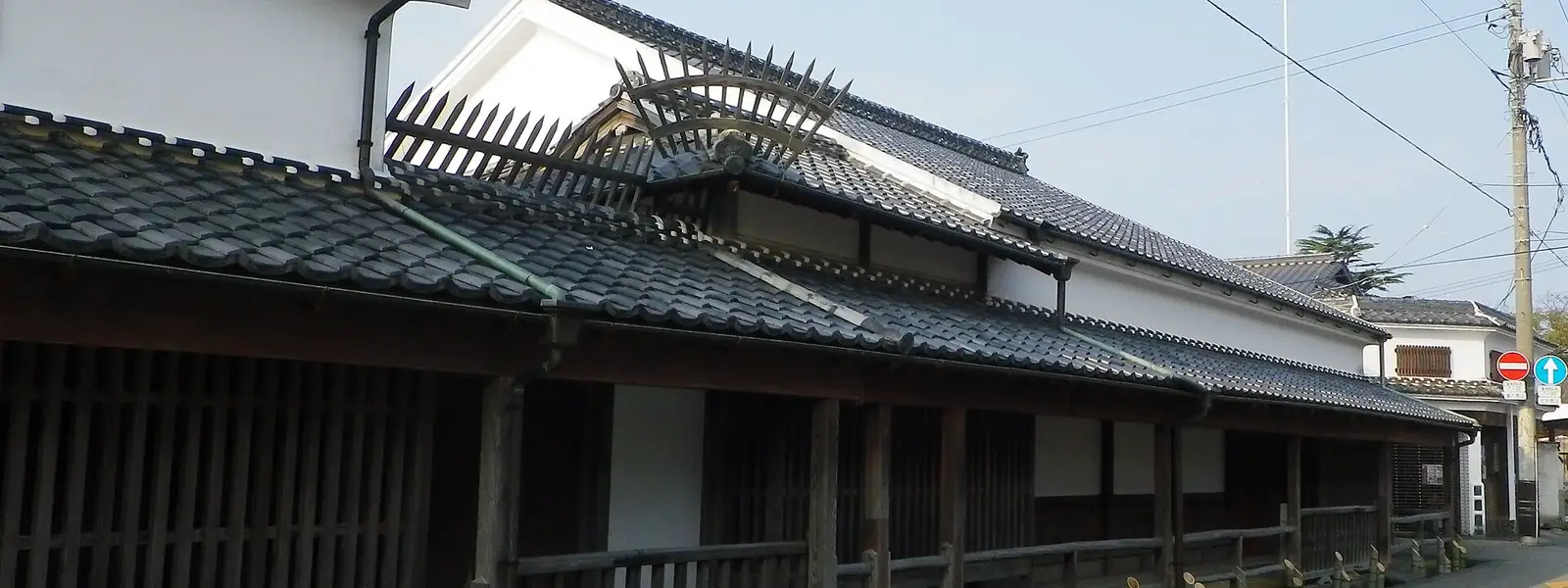
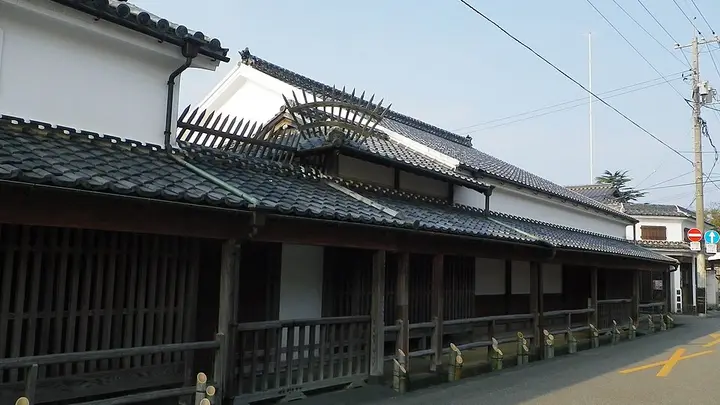 Plan A
the classic – Hagi’s castle town and Shokasonjuku on foot
Good forFirst-timers in Hagi getting around by bus and on foot
Besides the innabout ¥3,870–4,870 + bus fares
Shin-Yamaguchi Sta. → (bus) Hagi Meirin Center → Kikuya House → Hagi Castle ruins → (overnight) → Shoin Shrine and Shokasonjuku → Higashi-Hagi Sta. → (bus) Shin-Yamaguchi
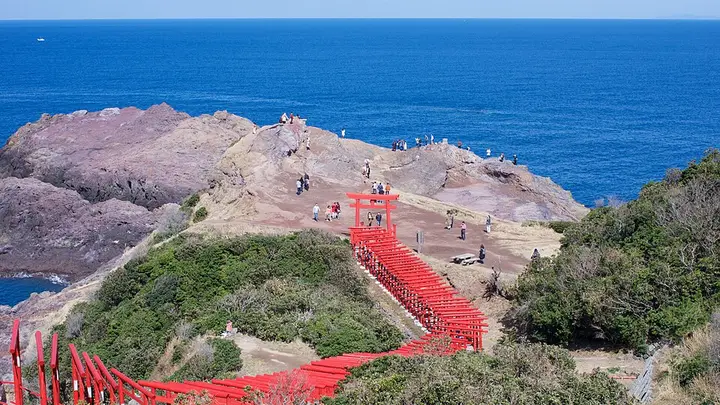 Plan B
Motonosumi Shrine and Tsunoshima Bridge – the Sea of Japan coast by car
Good forDrivers in a rental car, ideally on a weekday
Besides the innabout ¥4,290–5,290 + car rental and fuel
Shin-Yamaguchi Sta. (rental car) → Tsunoshima Bridge → Motonosumi Shrine → (overnight at Yuya Bay or Nagato-Yumoto) → Onto bathhouse in Nagato-Yumoto → Shin-Yamaguchi
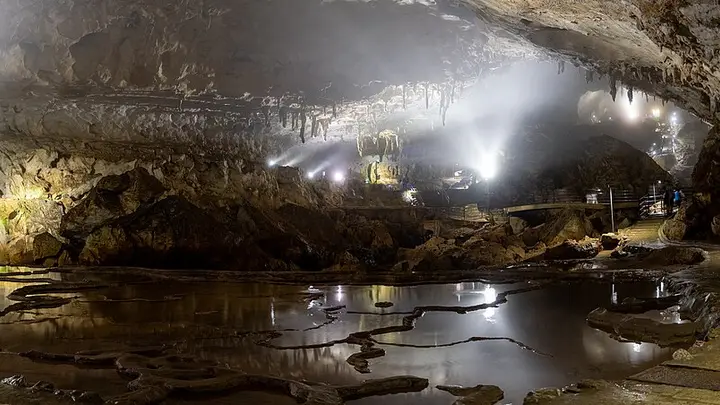 Plan C
Akiyoshido Cave and the Akiyoshidai karst plateau by car
Good forDrivers, families with children, and rainy days
Besides the innabout ¥4,600–5,600 + car rental and fuel
Shin-Yamaguchi Sta. (rental car) → Akiyoshidai karst lookout → Akiyoshido Cave → (overnight at Nagato-Yumoto or Yuda Onsen) → Beppu Benten Pond → Shin-Yamaguchi
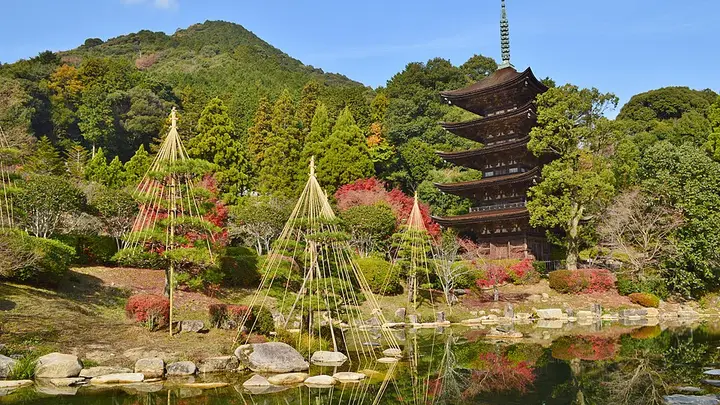 Plan D
Rurikoji pagoda and Akiyoshido Cave without a car, staying in Yuda Onsen
Good forTravellers by train and bus, first time in Yamaguchi
Besides the innabout ¥6,230–7,230 + buses (Kencho-mae → Yuda Onsen, Akiyoshido → Shin-Yamaguchi)
Shin-Yamaguchi Sta. → (JR) Yuda-Onsen Sta. → (bus) Kencho-mae → Rurikoji pagoda → (bus) Yuda Onsen footbaths → (overnight) → (bus) Akiyoshido Cave → (bus) Shin-Yamaguchi
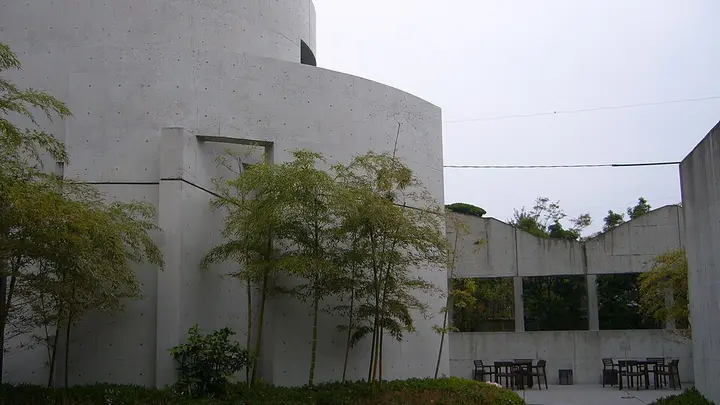 Plan E
a slow stay in Yuda Onsen for couples – footbaths, a private open-air bath and a garden inn
Good forCouples, and anyone who wants plenty of time at the inn
Besides the innabout ¥3,770–4,770 + the JR fare home
Shin-Yamaguchi Sta. → (JR) Yuda-Onsen Sta. → Kitsune no Ashiato → Inoue Park footbath → (overnight) → Nakahara Chuya Memorial Museum → Yuda-Onsen Sta.
Photos:As6022014(CC BY-SA 3.0) / yuki5287(CC BY 2.0) / Photos of Japan(CC0) / Saigen Jiro(CC0) / Oilstreet(CC BY 2.5)・Wikimedia Commons
Getting there: Hagi is about 60 minutes from Shin-Yamaguchi Station by the Super Hagi express bus (stops at Hagi Meirin Center, Hagi Bus Center and Higashi-Hagi Station). Yuda Onsen is about 20 minutes from Shin-Yamaguchi on the JR Yamaguchi Line (¥240). From Yuda Onsen, buses run to Hagi Meirin Center (about 1 h 30, ¥1,870) and Akiyoshido (about 40 minutes, ¥1,170). Tsunoshima Bridge is about 70 minutes by car from Shimonoseki IC. Trains on the JR Mine Line have not run since the July 2023 floods; replacement buses operate (Hagi and Yamaguchi city tourism sites, Yamaguchi prefecture tourism site).
The plans in detail
Plan Athe classic – Hagi’s castle town and Shokasonjuku on foot
Good for: First-timers in Hagi getting around by bus and on foot
Day 1
- 110:00 Take the Super Hagi express bus from Shin-Yamaguchi Station. It stops at Hagi Meirin Center, Hagi Bus Center and Higashi-Hagi Station ↗
↓ Getting there: about 60 minutes by bus - 211:00 Get off at Hagi Meirin Center and walk into the castle town. Lunch there ↗
↓ Getting there: walk to Kikuya House in Gofukumachi - 12:30 Visit Kikuya House, the residence of a merchant family that supplied the Hagi domain. Open 8:30–17:30 (last entry 17:15); adults ¥650, junior and senior high ¥350, elementary ¥250. Then stroll the white-walled lanes around it ↗
↓ Getting there: walk to the castle ruins, or take the westbound Maaru bus to “Hagi-jo-ato Shizuki-koen-iriguchi” (¥100, then about 5 minutes on foot) - 314:00 Hagi Castle ruins in Shizuki Park. Mori Terumoto built the castle at the foot of Mount Shizuki in 1604; the ruins and the castle town are part of a World Heritage listing. Adults ¥220; open 8:30–16:30 (Nov–Feb), 8:00–18:30 (Apr–Oct), 8:30–18:00 (Mar) ↗
↓ Getting there: to the inn: Hagi Ichirin is about 550 m in a straight line from the ruins; for Hagi Honjin take the eastbound Maaru bus - Inn15:30 Check in at the inn
Day 2
- 410:00 Leave the inn for Shoin Shrine. In its grounds stands Shokasonjuku, the private school of Yoshida Shoin, listed in 2015 as part of the World Heritage “Sites of Japan’s Meiji Industrial Revolution”. Free to view from outside (closed up at night) ↗
↓ Getting there: about 800 m in a straight line to Higashi-Hagi Station - 511:30 Lunch near Higashi-Hagi Station, then the Super Hagi bus back to Shin-Yamaguchi ↗
↓ Getting there: about 60 minutes by bus
Budget besides the inn (per adult): about ¥3,870–4,870 + bus fares
Kikuya House ¥650 + castle ruins ¥220 + two lunches ¥3,000–4,000 (Super Hagi bus fares and the ¥100 Maaru bus rides extra)
Tickets and transport: Kikuya House ¥650, Hagi Castle ruins (Shizuki Park) ¥220; Shokasonjuku can be viewed from outside for free. In town, the Maaru loop bus costs ¥100 a ride, any distance. The Super Hagi bus fare from Shin-Yamaguchi is extra
Where to stay: two picks
Hagi Ichirin 69/100 in our scoring
About 550 m in a straight line from the castle ruins, right on Kikugahama beach – walk straight in after the ruins on day 1. Two private open-air baths are free and need no booking; use them when they are free. Meals in a private room. About 10 minutes by Maaru bus from Higashi-Hagi Station. Check-out 11:00
Hagi Honjin 83/100 in our scoring
About 350 m in a straight line from Shoin Shrine and 820 m from Higashi-Hagi Station: walk to Shokasonjuku on the morning of day 2 and carry on to the station. Fourteen different baths to try. Free shuttle bus. Bathing tax (¥150 from junior high age) extra
More places to stay for this plan
Plan BMotonosumi Shrine and Tsunoshima Bridge – the Sea of Japan coast by car
Good for: Drivers in a rental car, ideally on a weekday
Day 1
- 19:00 Pick up a rental car at Shin-Yamaguchi Station ↗
↓ Getting there: take the Chugoku Expressway to Tsunoshima Bridge: about 70 minutes from Shimonoseki IC, 60 from Mine IC - 211:30 Cross Tsunoshima Bridge, 1,780 m long and toll-free, linking the mainland to Tsunoshima island. Amagase Park on the mainland side (46 free spaces) gives the view of the bridge. It can close in strong wind. Lunch on the island ↗
↓ Getting there: drive on to Motonosumi Shrine - 314:00 Motonosumi Shrine, where 123 red torii gates run down towards the Sea of Japan. Open for worship 9:30–16:30; no entry or photography at night. The gates are under repair and cannot be walked through, probably until spring 2027 or later. In 2026 worship was suspended on weekends and holidays from March to November, so go on a weekday or check the open days before you go ↗
↓ Getting there: to the inn: Hotel Yokikan is about 6.3 km in a straight line, Gyokusenkaku about 14 km - Inn15:30 Check in at the inn
Day 2
- 410:00 Onto, the public bathhouse of Nagato-Yumoto Onsen, said to date back some 600 years. It stands right over the spring, so you can see the water rising from the bedrock. Open 10:00–22:00, irregular closing days; adults ¥990, children 4–12 ¥500 ↗
↓ Getting there: drive back to Shin-Yamaguchi Station - 513:30 Lunch on the way, return the car at Shin-Yamaguchi Station and head home
Budget besides the inn (per adult): about ¥4,290–5,290 + car rental and fuel
Onto ¥990 + Motonosumi parking ¥300 (first hour) + two lunches ¥3,000–4,000 (the bridge and Amagase Park parking are free)
Tickets and transport: Tsunoshima Bridge is toll-free, as is parking at Amagase Park on the mainland side. Motonosumi Shrine is free; parking ¥300 for the first hour, then ¥100 per hour, ¥500 max. Onto bathhouse ¥990. Rental car and fuel extra
Where to stay: two picks
Hotel Yokikan 69/100 in our scoring
About 6.3 km in a straight line from Motonosumi Shrine and 12.6 km from Tsunoshima Bridge, so you sleep right by day 1’s sights. Alkaline spring water at pH 9.6. Meals in a private room (or a sea-view hall when those are full). Pick-up from JR Igami Station on request. Check-out 12:00
Gyokusenkaku 76/100 in our scoring
About 250 m in a straight line from Onto and 580 m from JR Nagato-Yumoto Station: walk to Onto on the morning of day 2. Five minutes on foot to the lit-up hot-spring street; a private riverside deck from March to November. Front desk closes at 23:00. Bathing tax (¥300 per adult) extra
More places to stay for this plan
Plan CAkiyoshido Cave and the Akiyoshidai karst plateau by car
Good for: Drivers, families with children, and rainy days
Day 1
- 110:00 Pick up a rental car at Shin-Yamaguchi Station ↗
↓ Getting there: about 30 minutes by car to Akiyoshidai - 210:45 The karst lookout on Akiyoshidai, one of Japan’s largest karst plateaus and a Special Natural Monument. All of Mine City, Akiyoshidai included, became a UNESCO Global Geopark in 2026 ↗
↓ Getting there: down to the cave entrance; lunch nearby - 313:00 Enter Akiyoshido, a limestone cave about 100 m beneath the plateau. The visitor route is about 1 km and the cave stays at 17°C all year. Entry 9:00–16:30 (until 17:30 from July to September). Allow about 40 minutes one way, 70 there and back ↗
↓ Getting there: to the inn: Otani Sanso (Nagato-Yumoto) is about 16 km in a straight line, KKR Yamaguchi Asakura (Yuda Onsen) about 15 km - Inn16:00 Check in at the inn
Day 2
- 410:00 Leave the inn for Beppu Benten Pond in the grounds of Beppu Itsukushima Shrine. Its spring water stays at about 14°C all year and is on the Environment Ministry’s list of 100 best waters. At the fishing pond next door you can catch rainbow trout raised in the spring water ↗
↓ Getting there: drive back to Shin-Yamaguchi Station - 512:30 Lunch on the way, return the car at Shin-Yamaguchi Station and head home
Budget besides the inn (per adult): about ¥4,600–5,600 + car rental and fuel
Akiyoshido ¥1,600 (¥1,350 Dec–Feb) + two lunches ¥3,000–4,000 (lookout and Beppu Benten Pond free)
Tickets and transport: Akiyoshido Cave: adults (high school and up) ¥1,600 (¥1,350 from December to the end of February, ¥1,900 in Golden Week and July–August), junior high ¥1,300, elementary ¥850. The Akiyoshidai lookout and Beppu Benten Pond are free. Car rental extra
Where to stay: two picks
Otani Sanso 78/100 in our scoring
About 16 km in a straight line from Akiyoshido and 10 km from day 2’s Beppu Benten Pond. Onto is about 370 m away, so you can walk to the public bath at night or in the morning. A Nagato-Yumoto ryokan founded in 1881, with a large bath, open-air bath and sauna. Free 5-minute shuttle from JR Nagato-Yumoto Station. Bathing tax (¥300 per adult) extra. Check-out 11:00
KKR Yamaguchi Asakura 84/100 in our scoring
About 15 km in a straight line from Akiyoshido and 420 m from Yuda Onsen Konkon Park. A quiet spot a little away from the hot-spring streets, with silky water from its own source. Dinner in your room or the dining room. Pick-up from Yuda-Onsen Station (14:00–17:00; call on arrival). Let them know if you arrive after 18:00; no dinner after 20:00
More places to stay for this plan
Plan DRurikoji pagoda and Akiyoshido Cave without a car, staying in Yuda Onsen
Good for: Travellers by train and bus, first time in Yamaguchi
Day 1
- 110:30 JR Yamaguchi Line from Shin-Yamaguchi to Yuda-Onsen Station (about 20 minutes, ¥240) ↗
↓ Getting there: about 10 minutes on foot to the centre of the spa town; from the Yuda Onsen bus stop, a bus to Kencho-mae takes 7–10 minutes (¥220, every 20 minutes on weekdays, 30 at weekends) - 211:30 Get off at Kencho-mae and walk to the pagoda of Rurikoji, a National Treasure. Its “Reiwa great restoration”, begun in 2023, was completed in December 2025. Free to visit; lit up from sunset to 22:00. Lunch nearby ↗
↓ Getting there: bus back to Yuda Onsen - 315:00 The footbaths of the spa town: the one in Inoue Park is free, 10:00–22:00 ↗
↓ Getting there: to the inn: Matsudaya Hotel is about 200 m in a straight line from Inoue Park, Umenoya about 260 m - Inn15:30 Check in at the inn
Day 2
- Inn9:00 Leave the inn and take the bus for Akiyoshi from Yuda Onsen stop 6. Buses run every one to two hours, so check the times first ↗
↓ Getting there: about 40 minutes by bus to Akiyoshido, ¥1,170 - 410:00 Enter Akiyoshido, a limestone cave about 100 m underground. The visitor route is about 1 km and it stays at 17°C all year. Entry 9:00–16:30 ↗
↓ Getting there: after lunch, the bus from the Akiyoshido stop to Shin-Yamaguchi takes about 40 minutes - 513:30 Head home from Shin-Yamaguchi Station ↗
Budget besides the inn (per adult): about ¥6,230–7,230 + buses (Kencho-mae → Yuda Onsen, Akiyoshido → Shin-Yamaguchi)
JR ¥240 + bus ¥220 (Yuda Onsen → Kencho-mae) + bus ¥1,170 (Yuda Onsen → Akiyoshido) + Akiyoshido ¥1,600 + two lunches ¥3,000–4,000 (Rurikoji and the footbath are free)
Tickets and transport: JR Yamaguchi Line Shin-Yamaguchi → Yuda-Onsen ¥240. Buses: Yuda Onsen → Kencho-mae ¥220, Yuda Onsen → Akiyoshido ¥1,170. Rurikoji pagoda is free, as is the footbath in Inoue Park. Akiyoshido Cave ¥1,600 (¥1,350 from December to the end of February)
Where to stay: two picks
Matsudaya Hotel 75/100 in our scoring
About 200 m in a straight line from the Inoue Park footbath and 80 m from the Nakahara Chuya museum: straight in from the footbath on day 1, and a walk to the Yuda Onsen bus stop on day 2. A 350-year-old inn where, it says, Meiji Restoration activists gathered. Family baths need no booking. About 10 minutes on foot from JR Yuda-Onsen Station. Let them know if you arrive after 18:00. Bathing tax (¥150 per adult) extra
Umenoya 72/100 in our scoring
About 260 m in a straight line from the Inoue Park footbath and 200 m from Kitsune no Ashiato; about 10 minutes on foot from JR Yuda-Onsen Station and close to day 2’s bus stop. The large bath was renewed in 2025, with free-flowing spring water, an open-air bath and a sauna. Dinner in your room or a banquet room. With half board you must arrive by 19:00
More places to stay for this plan
Plan Ea slow stay in Yuda Onsen for couples – footbaths, a private open-air bath and a garden inn
Good for: Couples, and anyone who wants plenty of time at the inn
Day 1
- 113:00 JR Yamaguchi Line from Shin-Yamaguchi to Yuda-Onsen Station (about 20 minutes, ¥240). There is a footbath in front of the station too ↗
↓ Getting there: about 10 minutes on foot to the centre of the spa town - 213:30 Kitsune no Ashiato in the spa town: its footbath is open 8:00–22:00, ¥200 for adults ↗
- 314:30 Stop at the free Inoue Park footbath (10:00–22:00), then on to the inn ↗
↓ Getting there: Kokian is about 150 m in a straight line from Inoue Park; Sansuien is about 1 km away, 5 minutes by car from Yuda-Onsen Station - Inn15:00 Check in and spend the time until dinner in your room’s open-air bath or the garden
Day 2
- 410:00 Check out and visit the Nakahara Chuya Memorial Museum, devoted to the poet born in Yuda Onsen. Adults ¥330, free for 18 and under. Open 9:00–17:00 from November to April, until 18:00 from May to October. Closed Mondays (Tuesday after a holiday) and the last Tuesday of each month ↗
↓ Getting there: lunch, then walk to Yuda-Onsen Station - 512:30 Take the JR from Yuda-Onsen Station to Shin-Yamaguchi and head home ↗
Budget besides the inn (per adult): about ¥3,770–4,770 + the JR fare home
JR ¥240 (Shin-Yamaguchi → Yuda-Onsen) + Kitsune no Ashiato ¥200 + Nakahara Chuya museum ¥330 + two lunches ¥3,000–4,000 (Inoue Park footbath free)
Tickets and transport: JR Yamaguchi Line Shin-Yamaguchi → Yuda-Onsen ¥240. The footbath at Kitsune no Ashiato is ¥200 for adults, ¥100 for children; the one in Inoue Park is free. Nakahara Chuya Memorial Museum ¥330 (free for 18 and under)
Where to stay: two picks
Kokian 79/100 in our scoring
About 150 m in a straight line from the Inoue Park footbath and 320 m from the Nakahara Chuya museum. All 16 rooms are Japanese-Western rooms with their own open-air bath, so you never share the water. Transfers from Yuda-Onsen Station (pick-up 13:30–17:30, drop-off 9:00–11:00; tell them your time in advance). Check-out 11:00
Sansuien 73/100 in our scoring
About 800 m in a straight line from the Nakahara Chuya museum, 5 minutes by car from Yuda-Onsen Station. A registered tangible cultural property with a Japanese garden, fed by three springs of its own with free-flowing water. Fourteen rooms; meals in your room or a banquet room. Family bath available. Let them know if you will be late. Bathing tax ¥150 extra
More places to stay for this plan
All our Hagi & Yuda Onsen fives
About this page
Travel times, prices and opening hours come from the official pages of each sight, the local tourist association and the transport operators (checked 2026-11-22). The inns are taken from our own scored fives (reviews, price and facilities across five criteria), two per plan, chosen because they sit on that plan’s route. Times and prices change, so check the official pages before you go.
Questions visitors ask
Can you do both Hagi and Yuda Onsen in two days?
Yes. The bus between Yuda Onsen and Hagi Meirin Center takes about 1 h 30 (¥1,870). Walk Hagi’s castle town and stay there on day 1, then take the bus to Yuda Onsen on day 2 and stop at the Rurikoji pagoda. Buses run only every two to three hours, so check the times first.
Can you get around without a car?
Plans A, D and E work by train and bus. Hagi is about 60 minutes from Shin-Yamaguchi by the Super Hagi bus, and the Maaru loop bus covers the town (¥100 a ride). Akiyoshido is about 40 minutes by bus from Shin-Yamaguchi or Yuda Onsen (¥1,170). Motonosumi Shrine is about 40 minutes by taxi from JR Nagato-shi Station and Tsunoshima Bridge about 30 minutes by bus from JR Takibe Station, so to see both in a day a car (Plan B) is the better fit.
Can you visit Motonosumi Shrine now?
The torii are under repair and cannot be walked through, probably until spring 2027 or later. In 2026 worship was suspended on weekends and holidays from March to November (in September, weekends outside Silver Week were open). Hours are 9:30–16:30, with no entry or photography at night. Once your date is set, check the open days on the Motonosumi page of the Yamaguchi prefecture tourism site.
Is the Rurikoji pagoda restoration finished?
Yes. The “Reiwa great restoration” that began in 2023 was completed in December 2025. Visiting is free, and the pagoda is lit up from sunset to 22:00. The bus from the Yuda Onsen stop to Kencho-mae takes about 7–10 minutes (¥220).
What about rainy days and winter?
Akiyoshido stays at 17°C all year and works on a rainy day; from December to the end of February admission drops to ¥1,350 for adults. The Nakahara Chuya museum (9:00–17:00 from November to April) is indoors too. If you drive in winter, check snow on the Yamaguchi prefecture road information that the Hagi tourist association links to.
Sources
- https://yamaguchi-tourism.jp/access/detail_17694.html
- https://www.hagishi.com/access/transportation
- https://www.hagishi.com/access/hagi/
- https://yamaguchi-tourism.jp/spot/detail_14140.html
- https://yamaguchi-tourism.jp/spot/detail_14022.html
- https://yamaguchi-tourism.jp/spot/detail_14023.html
- https://yamaguchi-tourism.jp/spot/detail_11030.html
- https://yamaguchi-tourism.jp/spot/detail_17060.html
- https://onto.jp/top2-2/
- https://karusuto.com/access/
- https://karusuto.com/spot-information/
- https://karusuto.com/spot-information/akiyoshido/
- https://yamaguchi-tourism.jp/rurikoji-guide
- https://yamaguchi-tourism.jp/spot/detail_15401.html
- https://yamaguchi-city.jp/convenience/city_access.html
- https://yamaguchi-city.jp/convenience/city_access_c.html
- https://yudaonsen.com/spot_cat/footbath/
- https://chuyakan.jp/user-guide/